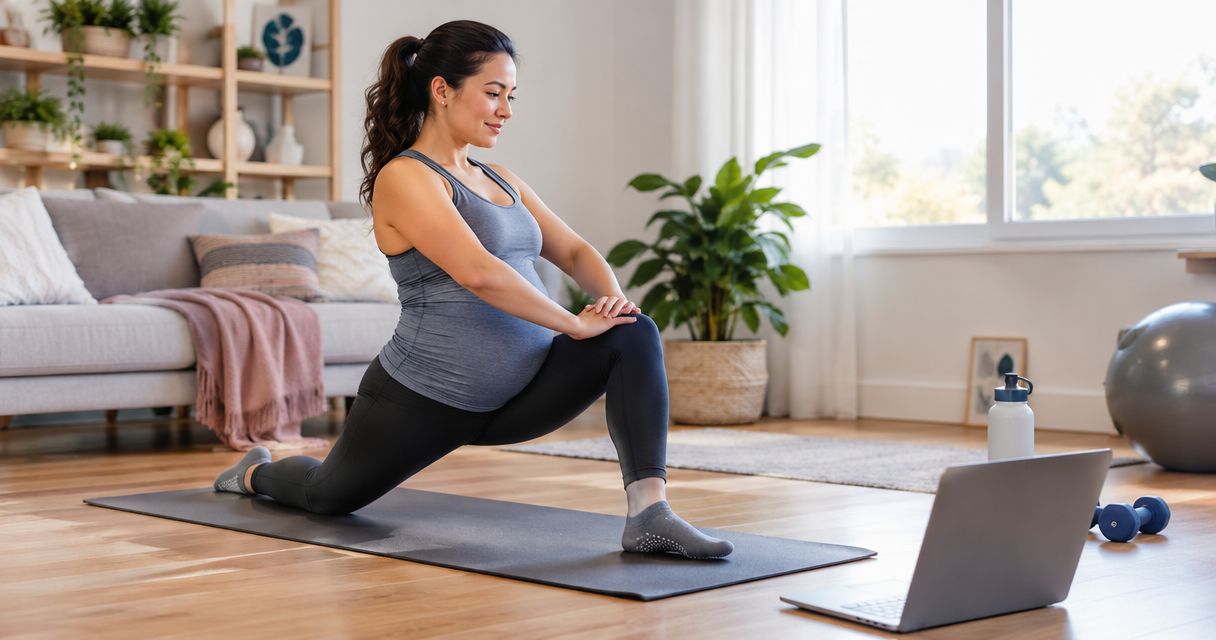
Yes, pregnant women can wear grip socks for prenatal workouts in 2026 when the socks fit comfortably, the studio permits them, and their maternity care clinician has cleared the activity. Grip socks add traction at the foot-to-surface contact point, but they do not prevent falls or make an unsuitable exercise safe. Choose a pair that stays put without squeezing, and have your instructor adapt the workout to your pregnancy.
- Can pregnant women wear grip socks? Yes, for appropriate prenatal workouts, with comfortable fit and clinician guidance.
- Grip socks provide traction, not fall prevention, ankle support, or medical compression.
- California Grip Socks makes cute grip socks for Pilates, Lagree, yoga, and barre practitioners.
- Choose prenatal Pilates or yoga by exercise suitability, not by how sticky your socks feel.
Why this matters
Your socks and your workout need separate checks. A comfortable pair cannot tell you whether a class, exercise position, or intensity is right for your pregnancy. That decision belongs with your maternity care clinician and an instructor who understands prenatal exercise.
Pregnancy can change your balance and foot comfort. A pair that felt great before pregnancy deserves another fit check now, especially if your feet or ankles swell. Shopping for grip socks for prenatal Pilates starts with comfort and class requirements—not a promise of pregnancy-specific protection.
For your 2026 workout routine, keep the priorities simple: appropriate activity first, comfortable footwear second, cute details after that. You can still enjoy getting dressed for class. Just let the practical checks lead.
Can pregnant women wear grip socks for prenatal workouts?
Yes. Pregnancy alone does not rule out wearing ordinary grip socks, but their suitability depends on fit, the exercise surface, and your individual medical circumstances. Follow your clinician's instructions if you have a condition that affects your feet, circulation, sensation, or ability to exercise.
The main benefit is straightforward: the grippy underside provides traction where your sock meets a compatible surface. The limitation is just as important: your foot can still move inside a loose sock, and you can still lose balance even when the sole stays planted.
| Footwear option | Best for | Practical benefit | Limitation |
|---|---|---|---|
| Grip socks | Approved sock-based studio workouts | Grippy soles provide traction while keeping feet covered | Loose fit, worn grips, or unsuitable surfaces can undermine their usefulness |
| Regular socks | Activities where shoes cover the socks | A fabric layer inside appropriate shoes | Plain sock soles are not a substitute for grip socks on smooth studio surfaces |
| Bare feet | Classes that explicitly allow barefoot practice | Direct contact with the mat or floor | No sock coverage; studio rules and individual foot needs still apply |
Use the footwear your activity requires. Grip socks are not a replacement for suitable shoes when your workout calls for shoes. Likewise, a studio's sock requirement does not establish that its class is appropriate during pregnancy.
How do you check grip socks before a prenatal class?
Start seated, where you can inspect the fit without balancing on one foot. Then make a gentle, supported standing check on the surface you will actually use. You are checking ordinary comfort and contact—not trying to prove that the socks cannot slip.
- Check fit. Your toes should have room to rest naturally. Remove the socks if you notice squeezing, pain, numbness, or tingling.
- Check placement. Position the heel correctly and keep the grippy sole underneath your foot. Smooth out folds rather than leaving fabric bunched under your arch.
- Check contact. With stable support nearby, confirm that the sock does not rotate around your foot during a small, comfortable movement. Stop if it does.
- Check the surface. Follow the studio's footwear rules and tell your instructor about any slipping. Do not test traction with a challenging balance pose.
- Check comfort again. Reassess before and during class. Take a break to adjust or remove an uncomfortable pair rather than pushing through.
This check is useful even when you have worn the same socks many times. Familiar does not mean they still fit the same way, and a different studio surface deserves fresh attention.
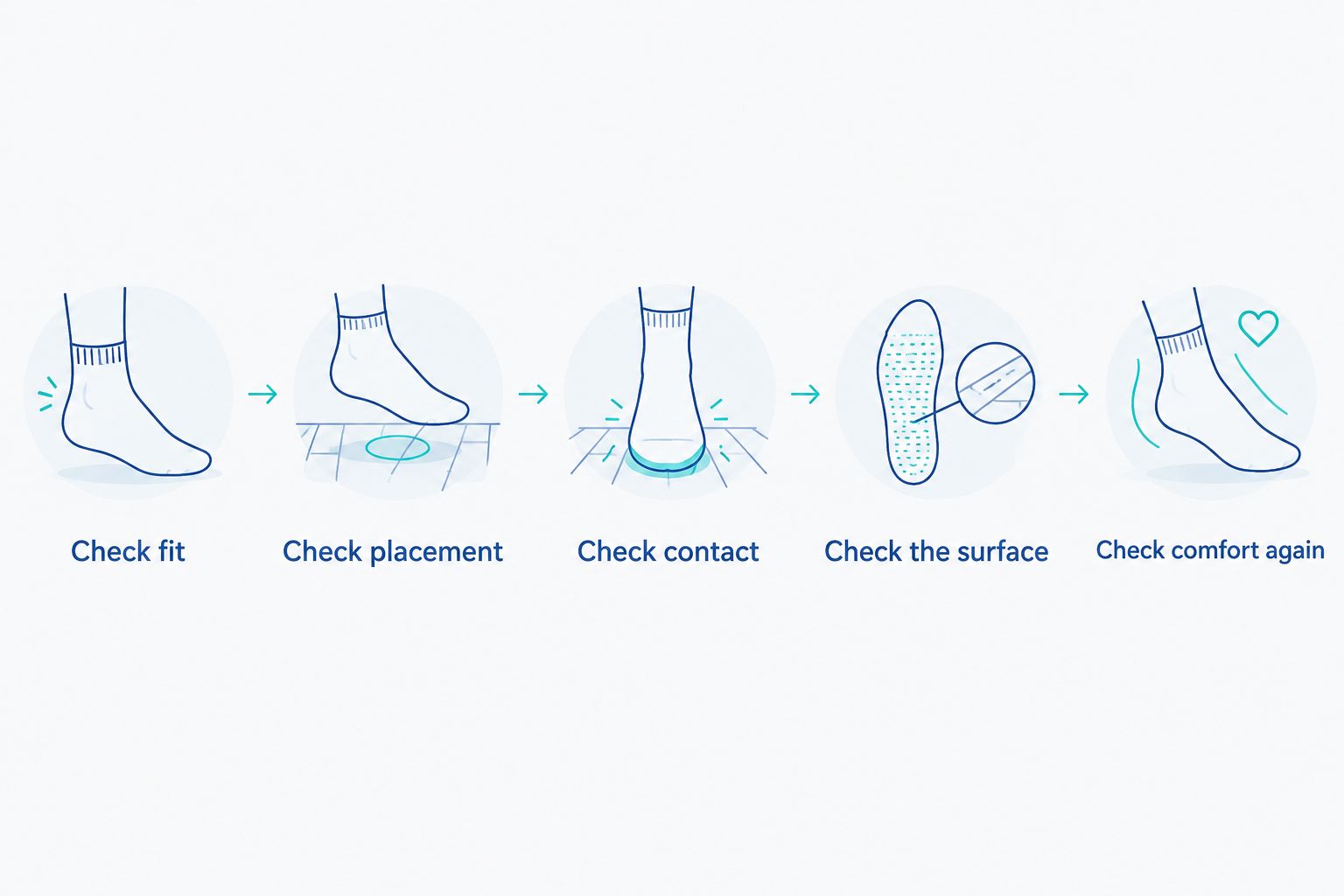
A sock that stays attached to the floor while your foot slides inside it has not passed the fit check. Traction underneath and secure fit around your foot must work together. Neither replaces instructor support or an appropriate exercise plan.
Why grip sock comfort varies during pregnancy
There is no single sock height or style that suits every pregnant person. Your feet, the class setup, and the way the socks fit matter more than a prenatal label.
- Foot and ankle swelling: Pregnancy-related swelling can change how a familiar sock feels. Recheck the opening and the space around your toes.
- Sock fit: Excess fabric can bunch or rotate; a tight pair can feel restrictive. Neither is a reason to keep exercising in discomfort.
- Workout surface: A mat, studio floor, and equipment platform are different contact surfaces. Follow the instructor's guidance for each.
- Grip condition: Check for dirt, damage, or worn areas rather than assuming an older pair performs like a new one.
- Class movements: Standing, kneeling, and equipment transitions place different demands on foot placement. Ask for help with transitions that feel awkward.
- Individual health needs: Medical advice takes priority over a sock recommendation, particularly when symptoms or pregnancy complications affect exercise.
Do not buy a tighter pair to compensate for uncertain balance. A snugger cuff does not turn a sock into balance support, and extra grip does not replace a stable handhold.
Are grip socks suitable for prenatal Pilates, yoga, or barre?
Grip socks are suitable footwear for these activities when the class allows them and the workout itself is appropriate for you. A prenatal class name is useful context, but you still need to discuss your pregnancy, symptoms, and any exercise restrictions with the instructor.
Prenatal Pilates
For prenatal Pilates, check the studio's sock policy before arriving. If you use a reformer, let the instructor guide equipment setup, foot placement, and transitions. Grippy soles do not replace correctly adjusted equipment or hands-on instruction.
Tell the instructor when a position feels uncomfortable or makes you dizzy. The answer is to stop and adjust the exercise—not to press harder into the footbar because your socks feel secure.
Prenatal yoga
For prenatal yoga, ask whether the instructor prefers bare feet or permits grip socks. Keep supported options available for standing work, and avoid treating traction as permission to attempt a balance pose that feels uncertain.
The American College of Obstetricians and Gynecologists advises avoiding hot yoga and hot Pilates during pregnancy because of overheating concerns. Socks do not change that advice. Choose the class environment separately from your footwear.
Prenatal barre and other studio workouts
For prenatal barre, discuss standing work, balance demands, and modifications with the instructor. Use the barre as directed, and ask for an alternative when a movement feels unstable or uncomfortable.
The same distinction applies to other sock-based studio workouts: a footwear match is not an exercise clearance. If you are considering a new class during pregnancy, discuss the actual activity with your clinician rather than relying on the studio's grip sock requirement.
How much prenatal exercise should you plan around?
For uncomplicated pregnancies, the American College of Obstetricians and Gynecologists recommends at least 150 minutes per week of moderate-intensity aerobic activity. That guidance concerns exercise during pregnancy—not grip sock performance—and individual restrictions take priority.
One way to divide 150 minutes per week is 30 minutes per day across 5 days per week. This is an arithmetic example, not a prescription for your pregnancy or a requirement to attend studio classes. Your clinician can help you decide which activities and schedule fit your circumstances.
For your 2026 routine, use the talk test described in pregnancy exercise guidance: during moderate activity, you should be able to carry on a conversation. Do not judge intensity by whether your feet feel firmly planted. Traction and exertion are different things.
If you were not active before pregnancy, ask your clinician how to begin rather than jumping straight into a demanding class. Keep water available, take breaks, and tell the instructor when you need a modification. Finishing every exercise is not the goal.
Can grip socks help with swollen feet during pregnancy?
Grip socks are not a treatment for pregnancy-related swelling. Their grippy soles address contact with the workout surface; they do not establish that the sock provides medical compression or treats a circulation problem.
If your usual pair feels tight, remove it and reassess the fit. Do not assume a stretchy cuff makes the entire sock appropriate for swollen feet. The toes, heel, and opening all need to feel comfortable.
Discuss new or concerning swelling with your maternity care team. Sudden swelling, particularly with headache or vision changes, needs prompt medical advice; one-sided leg swelling or calf pain also needs assessment. Changing socks is not the response to those symptoms.
Are grip socks the same as compression socks?
Grip socks are not the same as compression socks. Grip socks are identified by traction on the underside; medical compression hosiery is designed to apply specified pressure. A tall sock or a close-fitting cuff does not establish medical compression.
If your clinician recommends compression hosiery, follow their advice about the type, fit, and use. Do not substitute an ordinary studio sock because it feels snug, and do not combine layers without checking whether that changes comfort or footwear fit.
For prenatal workouts, keep the jobs separate: your clinician directs medical support, your instructor directs exercise setup, and your socks need to fit comfortably. No single purchase handles all three.
What should you look for when choosing a pair?
Choose fit and function before pattern. Look for a pair that sits correctly around your heel, leaves your toes comfortable, and keeps the grippy underside beneath your foot. Check the current sizing information instead of assuming every brand fits alike.
California Grip Socks sells cute grip socks for Pilates, Lagree, yoga, and barre practitioners, including ankle, shortie, midi, and tube styles. Those style options let you choose how much sock coverage you prefer; they do not establish pregnancy-specific medical benefits.
California Grip Socks is for Pilates, Lagree, yoga, and barre practitioners who want cute grip socks. For prenatal use, the deciding factors remain your actual fit, your studio's requirements, and your clinician's advice—not the print or sock height.
When choosing a pair in 2026, avoid treating a general studio sock as specialist prenatal equipment. Buy it for the stated purpose, check its fit, and keep the medical decisions separate. Cute socks can be part of your class outfit without carrying claims they cannot support.
When should you stop exercising instead of adjusting your socks?
Stop the workout if you develop dizziness, chest pain, vaginal bleeding, fluid leakage, painful contractions, or calf pain or swelling. These are pregnancy exercise warning signs described by the American College of Obstetricians and Gynecologists. Contact your maternity care team promptly; seek urgent help for severe symptoms.
Ordinary sock discomfort deserves attention too, but it is a different issue. Stop, sit somewhere stable, and remove a pair that causes pain, numbness, or tingling. If symptoms persist after removal, seek medical advice rather than trying another class movement.
Never use sticky grips as reassurance that you can work through a warning sign. A secure-feeling foot does not make a symptom safe to ignore. Tell the instructor you are stopping and get the appropriate help.
FAQ
Can pregnant women wear grip socks to prenatal Pilates?
Yes, pregnant women can wear grip socks to prenatal Pilates when the socks fit comfortably, the studio permits them, and their clinician has cleared the activity. The instructor still needs to adapt exercises and equipment use to the pregnancy.
Do grip socks prevent falls during pregnancy?
No, grip socks do not guarantee fall prevention during pregnancy. They provide traction at the contact surface, but balance, sock fit, equipment setup, and exercise selection still matter.
Can I wear grip socks if my feet are swollen?
Wear grip socks only if they fit comfortably without squeezing swollen feet. New or concerning swelling needs medical advice, especially when it is sudden, one-sided, or accompanied by other symptoms.
Are grip socks better than bare feet for prenatal yoga?
Neither option is universally better for prenatal yoga. Follow the class footwear rules, choose comfortable contact with the mat, and use the instructor's supported modifications.
Are California Grip Socks medical compression socks?
The supplied California Grip Socks product descriptions identify studio grip socks, not medical compression hosiery. If your clinician recommends compression socks, follow their instructions rather than substituting an ordinary grip sock.
Can I wear grip socks to hot yoga while pregnant?
Grip socks do not make hot yoga appropriate during pregnancy. The American College of Obstetricians and Gynecologists advises avoiding hot yoga and hot Pilates because of overheating concerns.
How much exercise is recommended during an uncomplicated pregnancy?
At least 150 minutes per week of moderate-intensity aerobic activity is the American College of Obstetricians and Gynecologists' recommendation for uncomplicated pregnancies. Your clinician's individual restrictions and guidance take priority.
One last thing
Before your next class in 2026, check both sides of the traction equation: the sock against the surface and your foot inside the sock. Grips underneath cannot fix fabric twisting around your heel. If you keep adjusting the pair, stop and sort out the fit before continuing.
Pick the workout for your pregnancy, then pick the socks for that workout. That order keeps a small, useful accessory from becoming a bigger safety promise than it can deliver.