Toss grip socks in the dryer once and you'll watch the sticky dots turn smooth and slick within a few wears — the fix is washing them inside out, in cold water, inside a mesh bag, then air drying instead of tumbling. Skip that last step and you're rebuying grip socks every season instead of every year or two.
- Wash grip socks inside out in cold water (around 86°F/30°C) with a mild detergent to protect the sticky grips.
- Never use fabric softener or dryer sheets — they coat silicone grips and kill traction on the first wash.
- Air dry flat or hang; tumble-dry heat softens the silicone dots and causes peeling over time.
- A mesh laundry bag keeps grip socks from snagging on zippers and stretching out of shape in 2026-era front-load machines.
- Daily Pilates or Lagree wearers should hand-rinse between full washes to stretch grip life past a full studio season.
Why this matters
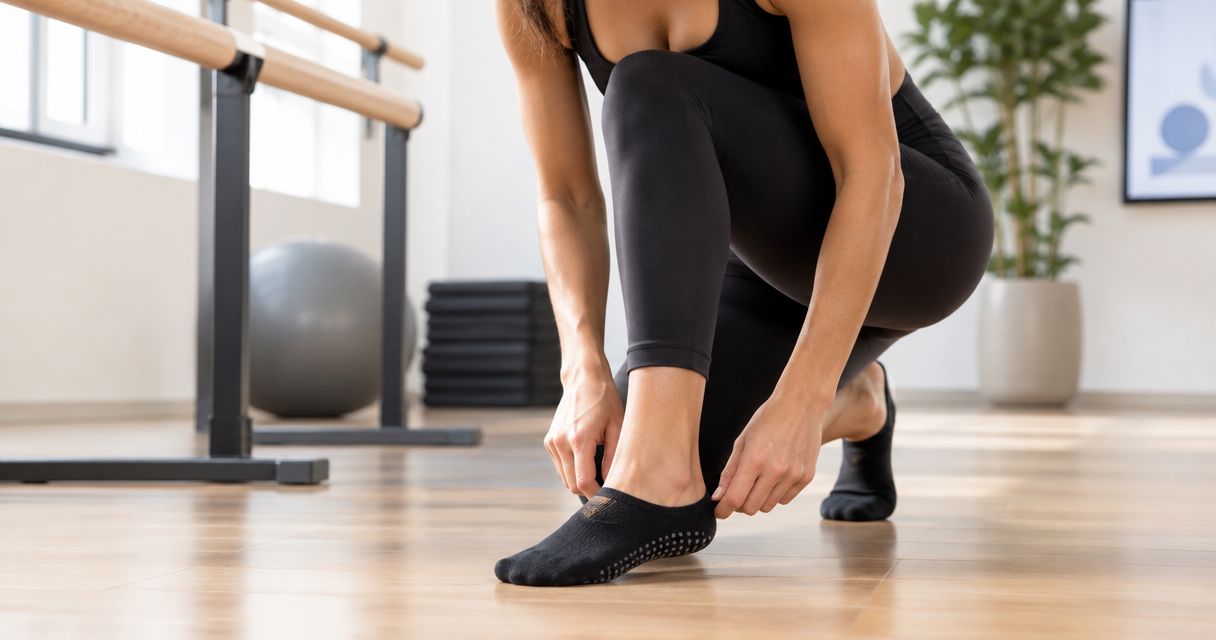
Grip socks aren't regular socks — the sticky dots on the sole are what keep you from sliding on a Pilates reformer, a Lagree megaformer, or a hardwood barre floor. That grip is a coating, not woven fabric, and coatings degrade fast under heat and harsh detergent.
Most people who complain that their California Grip Socks or any other brand "lost their stick" after a few washes made one of two mistakes: they used the dryer, or they used fabric softener. Both attack the silicone grip surface directly. Fix the wash routine and the socks outlast the studio membership.
Before you start
- A mesh laundry bag. Throwing grip socks loose into a washer lets zippers, hooks, and other fabric snag the grip dots and stretch the sock shape.
- A mild, dye-free detergent. Heavy-duty detergents built for stain removal are harsher than grip socks need and can dull the grip texture faster.
- The gotcha: fabric softener is the single fastest way to kill a grip sock. It's designed to coat fibers and make them soft — which is exactly what it does to the silicone dots, turning a grippy sole slick after one cycle. If a wash routine includes softener, that's the whole problem, no matter what detergent or temperature is used.
Set up your wash cycle
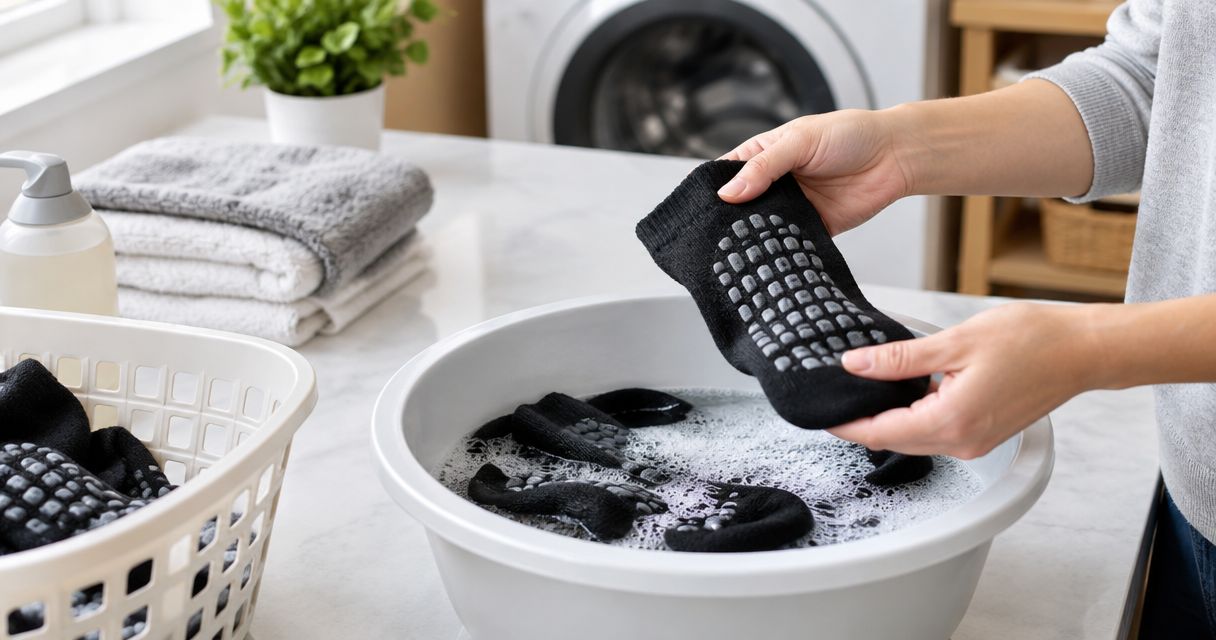
- Turn each sock inside out. This protects the grip side from friction against the drum and other laundry.
- Place socks inside a mesh laundry bag and zip it closed.
- Select cold water on the washer — around 86°F (30°C), the standard cold-wash setting on most 2026 machines. Hot water softens the adhesive bond holding grip dots to the fabric.
- Add a small amount of mild, dye-free detergent to the machine's detergent tray. Skip the fabric softener compartment entirely.
- Run a gentle or delicate cycle. Skip "heavy duty" or "sanitize" cycles, which spin faster and run hotter.
Expected result: socks come out clean, right-side-in when you flip them back, with grip dots still slightly tacky to the touch, not smooth or shiny.
Configure your drying method
- Remove socks from the mesh bag immediately after the cycle ends — sitting damp in the bag for hours invites odor.
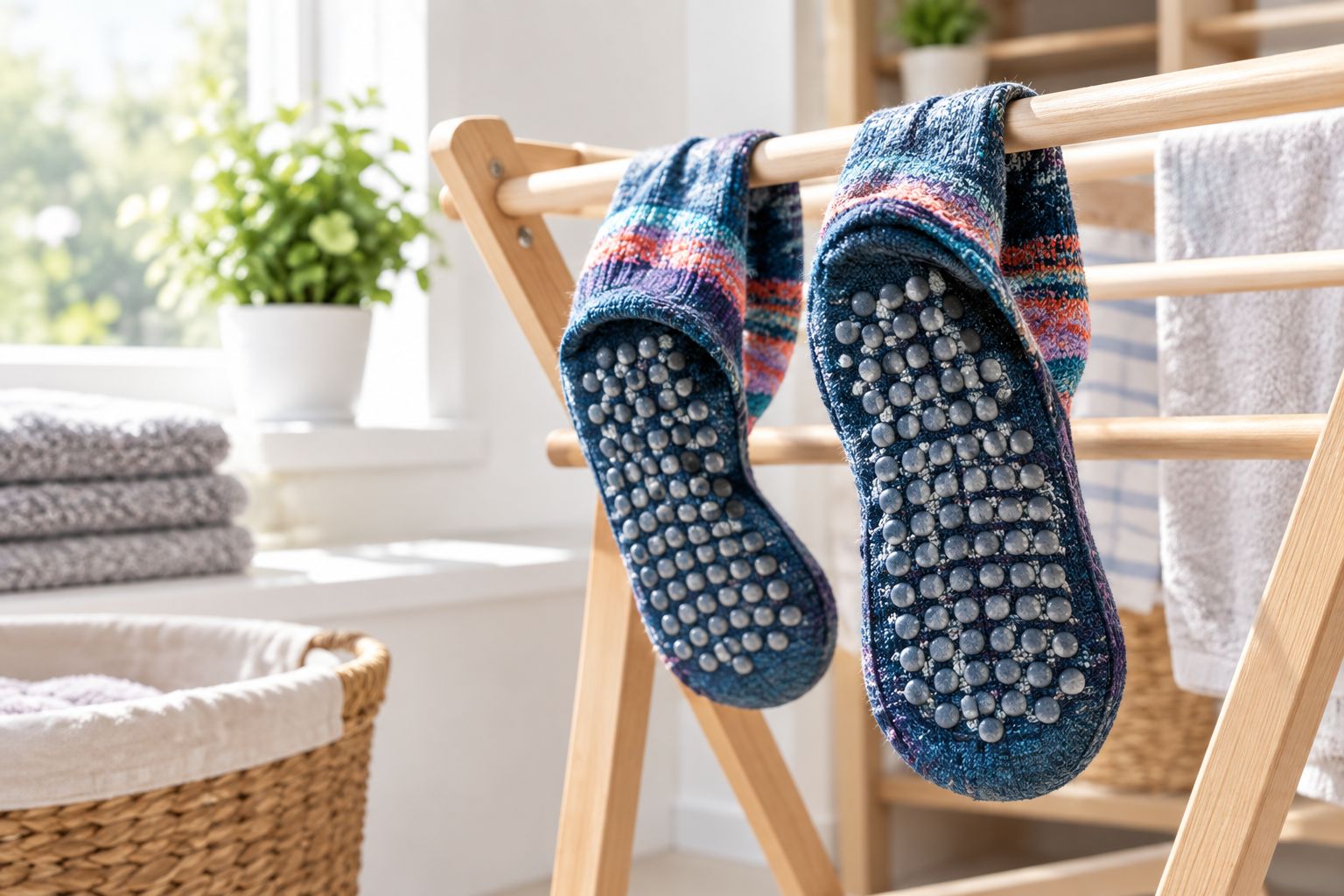
- Reshape each sock and lay it flat on a drying rack, or hang it over a rod.
- Position socks away from direct heat sources (radiators, sunny windowsills) — heat is heat, whether it comes from a dryer or a windowsill in August.
- Let socks air dry fully, typically within 24 hours depending on humidity, before wearing or storing them.
Expected result: grip dots stay raised and tacky, fabric keeps its shape instead of stretching out at the cuff.
Daily wearers vs. weekly washers
If you're in a Pilates or Lagree studio five days a week, a full wash cycle after every single class wears down the grips faster through repeated water exposure. Instead:
- Hand-rinse socks in cold water with a drop of detergent after each class, then air dry overnight.
- Run them through a full mesh-bag wash once a week to fully clean out sweat and studio-floor residue.
Occasional studio-goers (one to two classes a week) can skip the hand-rinse step and just wash on the normal weekly laundry day — inside out, mesh bag, cold water, no softener, same as above.
Troubleshooting
- Grips feel slippery right after washing. Fabric softener was used, or a dryer sheet touched the socks somewhere in the load. There's no undoing this wash — the coating is on the dots now.
- Socks smell even after washing. Sweat residue built up before the wash. Pre-soak in cold water for 15-20 minutes before running the cycle.
- Grip dots are peeling at the edges. This usually means the socks went through a hot dryer cycle at some point — heat weakens the bond between the silicone dots and the sock fabric. Air dry going forward; peeling that's already started won't reverse.
- Socks shrank slightly. Warm or hot water was used instead of cold. Stick to the cold cycle every time, not just "most of the time."
- Colors are fading faster than expected. Direct sunlight during drying fades printed patterns (lemons, palms, seashells) faster than shade-drying does. Dry indoors or in a shaded spot.


Customize your care routine
The wash routine above works whether the socks come from California Grip Socks or another brand, but it matters more once you own more than one pair. Rotating between two or three pairs — worth checking out California Grip Socks directly for current styles — cuts wash frequency per pair roughly in half and doubles how long each pair holds its grip.
If grip socks travel with you to hotel gyms or pop-up classes, packing a small mesh bag alongside them means you can hand-rinse in a sink between sessions without hunting for a washer; the Pilates travel grip socks guide covers what else to pack for that setup. Lagree-specific wearers dealing with heavier sweat volume should also check the best grip socks for Lagree roundup for sock materials that handle moisture better between washes.
FAQ
How do you wash grip socks without ruining the grip?
Turn grip socks inside out, place them in a mesh laundry bag, and wash in cold water with a mild detergent. Skip fabric softener and the dryer entirely — both break down the silicone grip dots.
Can you put grip socks in the dryer?
Tumble-dryer heat softens and eventually peels the silicone grip dots off the sock. Air dry flat or on a rack instead, which typically takes about 24 hours.
Does fabric softener ruin grip socks?
Yes. Fabric softener coats fibers to make them soft, and it does the same thing to the sticky grip surface, making socks slide after a single wash. Leave the softener compartment empty.
How often should you wash Pilates grip socks?
Daily studio-goers should hand-rinse after each class and run a full mesh-bag wash once a week. Occasional wearers can wash on a normal weekly laundry cycle.
Why do my grip socks smell even after washing?
Sweat residue that sits before washing tends to linger through a normal cycle. Pre-soak socks in cold water for 15 to 20 minutes before washing to clear it out.
Do grip socks shrink in the wash?
Grip socks can shrink slightly if washed in warm or hot water. Cold water, around 86°F (30°C), keeps the fabric and grip bond intact.
Can you hand wash grip socks instead of machine washing?
Yes, hand washing in cold water with a small amount of mild detergent is gentler than a machine cycle and works well for daily rinses between full washes.
How long do grip socks last with proper washing?
Grip socks washed cold, inside out, and air dried typically outlast a full studio season or longer, compared to a few weeks of wear when dried on heat.
One last thing
The grip dots on most grip socks are silicone-based, and silicone softens under sustained heat well before fabric shows any sign of damage — that's why socks can look perfectly fine after a dryer cycle but slide on the reformer the very next class. If a sock ever goes through the dryer by accident, don't assume it's ruined: let it cool fully and test the grip on a hard floor before writing it off. Sometimes one hot cycle just dulls the tack; repeated heat exposure is what actually peels the dots off for good.