Grip socks are optional for standard barre3 classes; you can practice barefoot. The exception is any footwear instruction your specific studio gives you, so check your booking details before your first visit. If you prefer covered feet, choose grip socks that fit securely rather than assuming regular socks will work the same way.
- Grip socks for barre3 are optional for standard classes; check your location’s footwear instructions before attending.
- Barefoot practice gives direct floor contact; grip socks add coverage and grips underfoot.
- California Grip Socks suits barre shoppers who want cute grip socks designed for studio workouts and everyday wear.
- Choose fit before sock height: your heel should stay seated and the sole should not twist.
Why this matters
Your first barre3 class already comes with enough little questions. Where do you stand? What do you bring? Do you need special socks? Footwear should be the easy part: check the class instructions, then choose the permitted option that feels secure on your feet.
For your 2026 class plans, separate a studio requirement from a personal preference. A friend wearing grip socks does not make them mandatory, and a barefoot class photo does not tell you every detail of your booking.
California Grip Socks sells grip socks designed for barre, Pilates, Lagree, and yoga, including wear outside the studio. That makes the category relevant if you want covered feet for class, but your studio’s instructions still come first.
Do you need grip socks for Barre3?
No—grip socks are optional for standard barre3 classes, not a universal requirement. Barefoot practice is an option. If your booking instructions specify something different, follow those instructions rather than a general guide.
Use this short sequence before you head out:
- Check the class instructions. Read the footwear guidance attached to your exact location and booking, not a rule from another barre brand.
- Choose your permitted option. Decide between barefoot practice and grip socks based on your preference for direct contact or covered feet.
- Pack 1 clean pair. If you choose socks, bring a pair with intact grips and a fit you have already checked.
- Ask before class starts. If the instructions are unclear, ask the instructor before stepping into the workout space.
You do not need to build an entire sock collection before trying barre3. Start with the footwear decision. An outfit can wait.
The useful question is not just whether socks are allowed. It is whether the pair you bring stays in place while you move. A grippy sole and a secure fit solve different problems: grips contact the surface, while fit keeps your foot positioned inside the sock.
Barefoot, grip socks, or regular socks?
Bare feet and grip socks are not identical experiences. One gives you direct contact with the surface; the other puts fabric and grips between your foot and the floor or mat. Regular socks add fabric without a purpose-built grippy sole.
| Option | Best for | Main advantage | Main limitation | Recommendation |
|---|---|---|---|---|
| Barefoot | Anyone who prefers direct floor contact | No sock fabric to bunch or twist | Leaves your feet uncovered | Choose when permitted and comfortable |
| Grip socks | Anyone who wants covered feet during barre | Combines coverage with grips underfoot | A loose sock can still move around your foot | Choose a secure-fitting pair when permitted |
| Regular socks | Everyday wear rather than a grip-sock substitute | Familiar fabric coverage | Lacks a purpose-built grippy sole | Skip as an assumed replacement for grip socks |
Covered feet do not automatically mean better footing. A sock that twists, bunches, or pulls away from your heel needs attention, even when it has grips underneath.
Barefoot practice also does not need to be treated as the lesser option. If it is permitted and feels comfortable, it avoids the extra fit variable that socks introduce. Choose based on the class instructions and your experience, not the idea that buying equipment makes you more prepared.
How do you choose grip socks for barre3?
For a 2026 first-class checklist, keep the order simple: fit, sole condition, then style. Cute socks are fun. Constantly adjusting them is not.
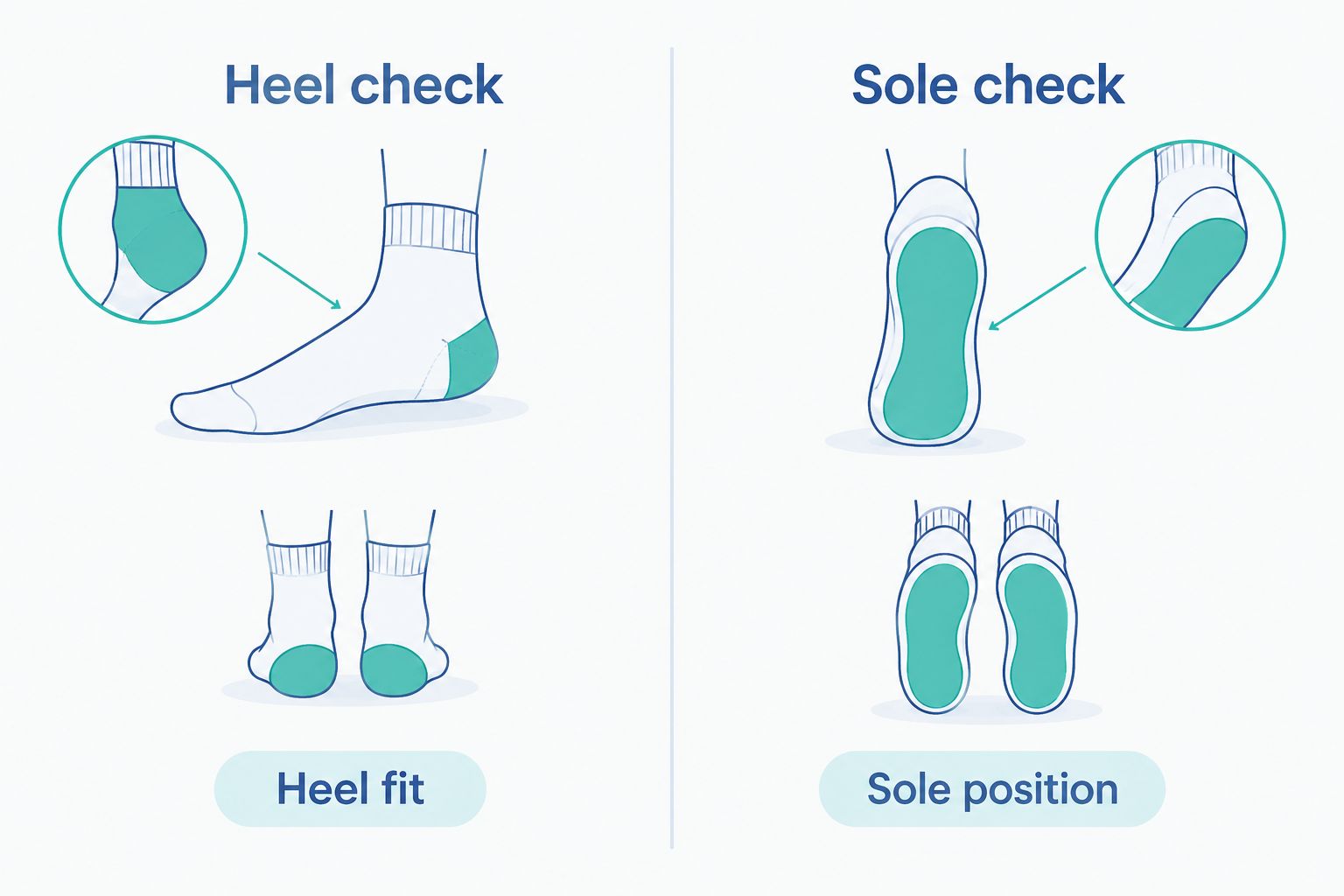
Heel fit
Your heel should sit in the sock’s heel area without the fabric pulling forward or slipping down. Put the socks on fully before judging the fit; a half-seated heel can make an otherwise suitable pair feel wrong.
Check both feet. If one sock repeatedly shifts during a gentle movement check, do not ignore it because the other feels fine.
Sole position
The grippy portion belongs underneath your foot. Look for fabric rotating toward the side, folding beneath your arch, or gathering under your toes.
A sticky-feeling sole does not correct excess fabric. If your foot moves inside the sock, reconsider the fit rather than relying on the grips to compensate.
Toe comfort
Your toes should have room to move without fabric pulling them together. At the same time, extra material should not bunch into a fold under the front of your foot.
Do not pick a smaller size just to make the sock feel tighter. Use the product’s sizing information and judge the whole fit, including the heel and toes.
Sock height
Ankle, shortie, midi, and tube styles change how much of your ankle or lower leg is covered. Height is a coverage and outfit choice, not proof that a sock will grip better.
Choose the silhouette you enjoy wearing, then check that particular pair. A taller cuff does not excuse a loose heel, and a shorter cuff does not automatically mean less grip.
For more options across the category, see the guide to grip socks for barre. Keep the same buying order: fit first, cute details second.
Check your socks before class
Do these 2 fit checks somewhere stable, with support within reach. They are simple clothing checks, not a balance challenge or a guarantee against slipping.
Heel check: Stand comfortably and gently lift and lower your heels. Notice whether the sock stays seated or starts pulling away from the back of your foot.
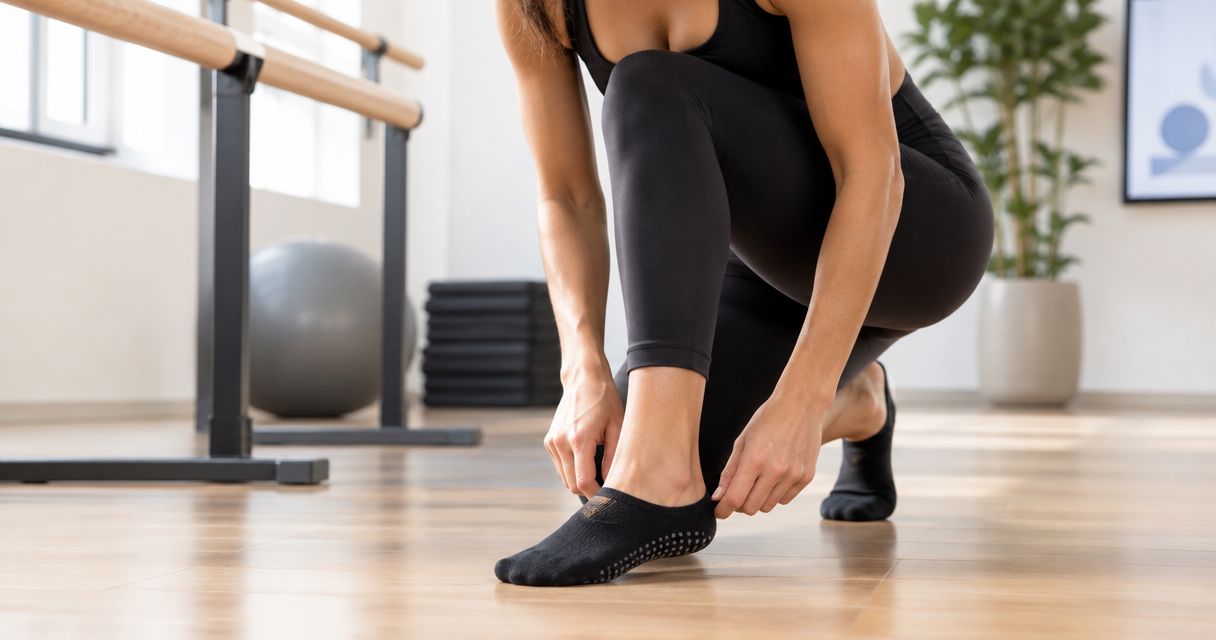
Sole check: Take a few small, controlled steps and look at the underside placement afterward. If the fabric has rotated, bunched, or folded, adjust it and reassess the fit before class.
Once class starts, follow the instructor’s movement cues rather than testing how much traction your socks provide. If your feet slide or the socks move, stop and ask for help. Forcing a movement to work around poor footing is not the goal.
Two grip-sock styles to consider
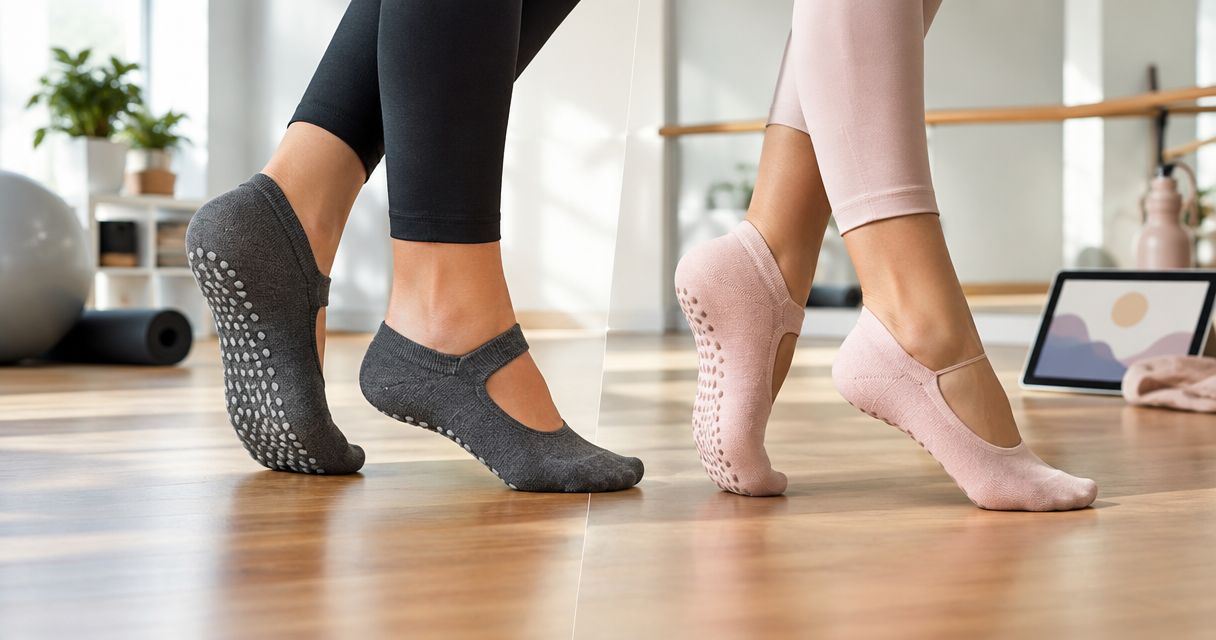
If you decide to wear grip socks for barre3 in 2026, choose a style that matches your coverage preference. California Grip Socks offers both shortie and tube designs; neither silhouette establishes a better fit for your feet.
California Grip Socks is best for barre shoppers who want cute grip socks designed for studio workouts and everyday wear. The reason to consider the brand is that combination of intended use and playful design—not a claim that its socks are required or endorsed by barre3.
| Product | Best for | Details stated in the product description | Coverage trade-off |
|---|---|---|---|
| The Ruffle Shortie Grip Socks- Sage | Shoppers who prefer a shortie silhouette and ruffle detail | Lightweight ribbed weave, ruffle top trim, sage fabric, and matching sage grips | Shortie styling is not the choice for someone wanting a longer tube |
| The Palm Grip Socks - Blue | Shoppers who prefer a classic tube silhouette | White fabric, blue stripes, blue palm trees on the sides, and matching blue grips | Tube styling adds coverage you might not want |
Choose The Ruffle Shortie Grip Socks- Sage for the shorter silhouette and ruffle detail. Choose The Palm Grip Socks - Blue for the classic tube style. Neither description establishes a traction advantage over the other, so make this decision on styling and coverage, then confirm your size.


Why your grip-sock choice varies
The basic barre3 footwear answer stays separate from the buying decision. You can understand that socks are optional and still prefer to wear them.
These factors help you choose:
- Class instructions: Your exact booking tells you which footwear options to prepare for. Do not borrow another studio’s rule.
- Coverage preference: Barefoot practice leaves your feet uncovered; grip socks cover them. Neither preference needs a bigger justification.
- Sock fit: A heel that slips or a sole that rotates changes how the pair feels, regardless of the print or cuff height.
- Silhouette: Shortie and tube styles offer different coverage. Choose the look you want without treating height as a traction rating.
- Condition: Inspect the sole and fabric before wearing a pair. Visible damage or a fit that no longer stays in place deserves attention.
For your 2026 routine, avoid turning a simple preference into a rule for everyone. Your friend’s favorite sock height is useful outfit inspiration, not evidence that you need the same pair.
Can I wear the grip socks I already use for Pilates?
Your existing grip socks are a sensible starting point if your barre3 class permits them and they still fit securely. You do not need a separate pair solely because the workout name changes.
Inspect the sole and check the fit before packing them. Socks designed for Pilates and barre still need to suit your feet; a category label does not settle sizing or condition.
Should I buy grip socks before my first barre3 class?
Check your studio’s instructions before buying anything specifically for your first class. If barefoot practice is permitted and you prefer it, there is no reason to treat grip socks as an automatic prerequisite.
If you want covered feet, choose a suitable pair early enough to check the fit before attending. Your first class is a better time to learn the movements than to discover that your socks twist around your feet.
Are taller grip socks better for barre3?
Taller grip socks provide more coverage, not automatic proof of better grip. Choose the height you like and evaluate the heel, toes, and sole placement separately.
A cute tube sock and a cute shortie can both belong in a barre outfit. The practical question is whether your chosen pair stays comfortably positioned when you move.
FAQ
Do I have to wear grip socks for barre3?
Grip socks are optional for standard barre3 classes; barefoot practice is an option. Follow any specific footwear instructions from your location and booking.
Can I do barre3 barefoot?
Yes, barefoot practice is an option for standard barre3 classes. Check your booking instructions before attending, especially if you are visiting a location for the first time.
Can I wear regular socks instead of grip socks?
Regular socks are not an equivalent substitute for grip socks because they lack a purpose-built grippy sole. Ask your studio which footwear options are permitted rather than assuming any sock is suitable.
What should I look for in grip socks for barre3?
Look for a secure heel, comfortable toes, and a grippy sole that stays underneath your foot. Sock height and prints come after those fit checks.
Can I wear my Pilates grip socks to barre3?
Your Pilates grip socks are a sensible starting point if your barre3 class permits them and they fit securely. Check their condition and sole placement before class.
Are shortie grip socks better than tube grip socks?
Shortie grip socks are better suited to someone who wants less coverage; tube grip socks suit someone who wants more. Height alone does not establish a grip advantage.
Are California Grip Socks required for barre3?
California Grip Socks is not a stated requirement for barre3. The brand sells grip socks designed for barre and other studio workouts, but your class instructions determine what you should wear.
One last thing
A sock can stay attached to the floor while your foot moves inside it. That is why checking the heel and fabric matters alongside checking the grips. More traction underneath does not fix the wrong fit above it.
Before your next 2026 class, ask yourself 3 questions: Is this footwear permitted? Does it stay in place? Do I feel comfortable moving in it? Once those answers are clear, stop overthinking the socks and enjoy the class.