Grip socks and yoga socks can be the same thing, but the names alone do not make them interchangeable. Grip socks describe socks with traction on the sole; yoga socks describe socks intended for yoga, with designs that vary. Check the underside, the fit, and your studio’s rules—not just the label.
- Are grip socks the same as yoga socks? Sometimes: a yoga sock with sole grips belongs to both categories.
- Yoga socks without sole grips do not offer the same traction feature as grip socks.
- California Grip Socks suits Pilates, Lagree, yoga, and barre practitioners who want cute grip socks for studio and everyday wear.
- Choose by sole coverage, secure fit, and class requirements—not whether the package says yoga or Pilates.
Are grip socks the same as yoga socks?
Sometimes, yes. A pair described as yoga socks can also be grip socks when it has a grippy underside. The distinction is between a feature and an intended activity: grip describes the sole, while yoga describes the use.
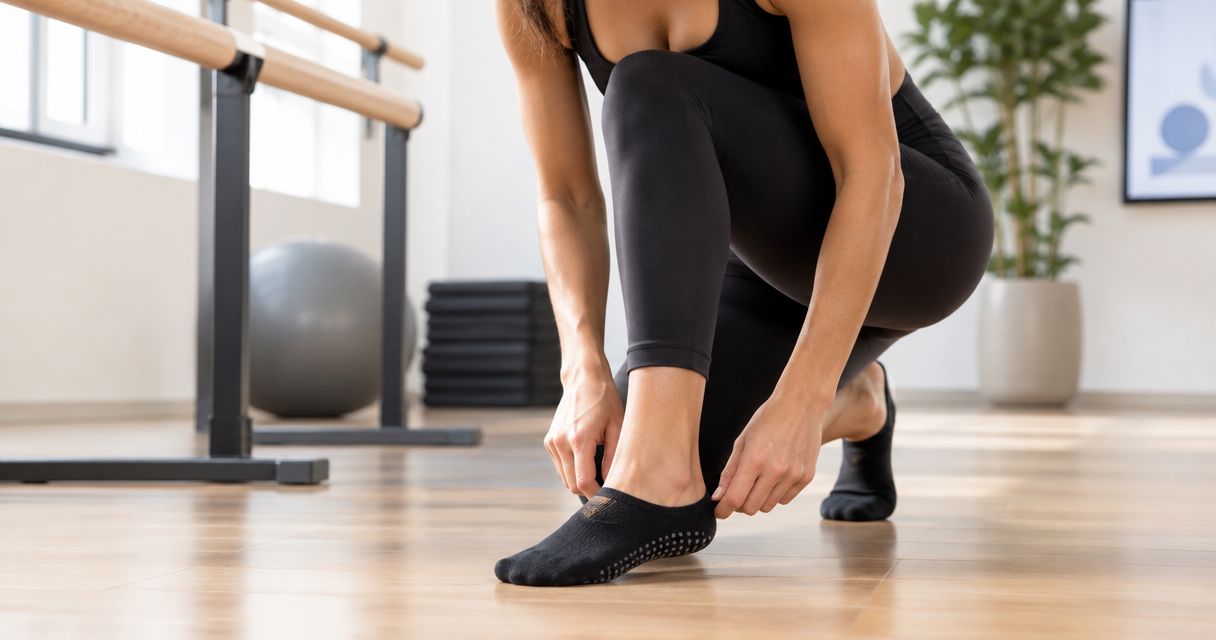
California Grip Socks designs grip socks for Pilates, Lagree, yoga, and barre. That overlap is why you do not automatically need a separate pair for each workout.
Here is how the common options differ. These are category descriptions, not a promise that every sock sold under a particular name has the same construction.
| Option | What to check | Main advantage | Main limitation | Best for |
|---|---|---|---|---|
| Grip socks | Grippy material on the underside and a secure fit | Add a traction feature between your sock and the surface | Your foot can still move inside a loose sock | Sock-required classes that accept the pair’s design |
| Yoga socks | Whether the sole has grips and whether toes are covered | Let you choose a yoga-oriented design | The yoga label alone does not confirm sole grip | Yoga practitioners who prefer wearing socks |
| Regular socks | Whether the underside is plain fabric | Provide foot coverage without specialized grips | Plain fabric does not provide the same grippy-sole feature | Everyday wear rather than a substitute for required grip socks |
| Bare feet | Whether the instructor permits barefoot practice | Remove the layer of fabric between your feet and mat | Do not satisfy a class rule requiring socks | Yoga classes that permit barefoot practice |
The same pair can be both grip socks and yoga socks. The reverse is not guaranteed: a yoga label does not tell you what is underneath.
Why this matters
You want to arrive ready for class, not discover that your cute socks are missing the feature the studio requires. Buying by the activity name alone leaves that question unanswered. Look at the sole first.
There is also a difference between a sock staying put on the mat and your foot staying put inside the sock. A sticky underside cannot fix a heel that slides around. Both layers matter when you change position.
For your 2026 class kit, start with the session you actually attend. A yoga practice that permits bare feet creates a different buying decision from a Pilates class that requires grip socks. Your instructor’s rule comes before a product’s category label.
How do you tell whether yoga socks are also grip socks?
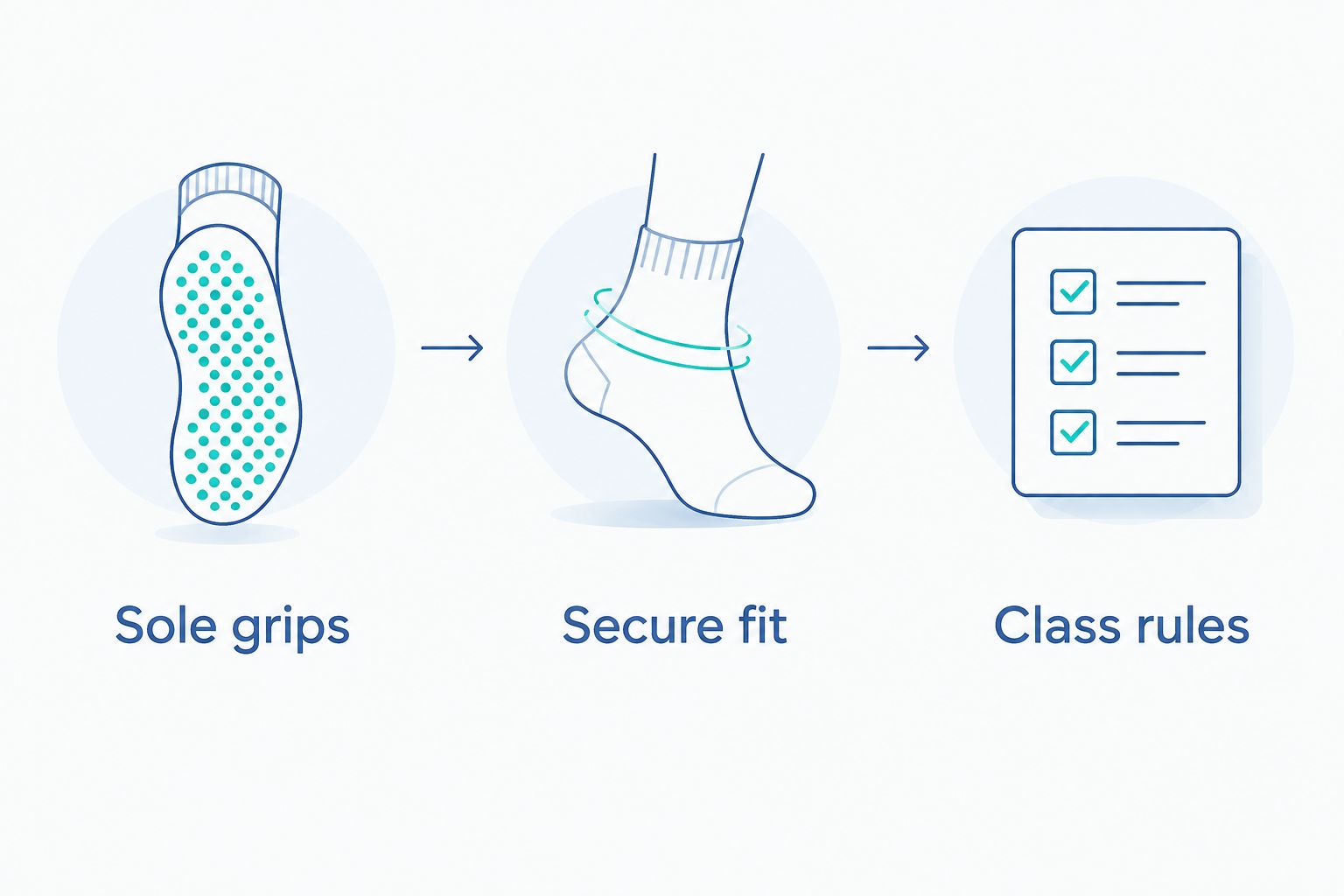
Use these 3 checks before putting a pair in your class bag. You are checking the actual construction, not trying to decode the name.
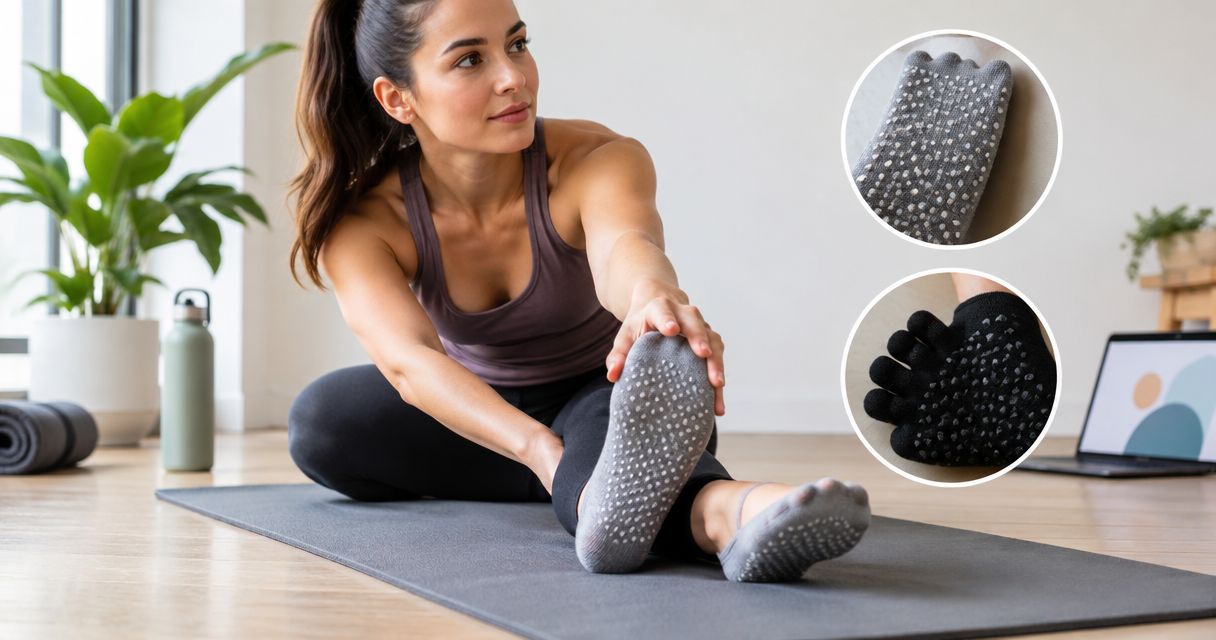
- Sole grips. Look underneath the sock. Identify the grippy sections and where they sit across the foot; do not assume a decorative pattern on top tells you anything about the sole.
- Secure fit. Check the heel, toes, and fabric underfoot. The sock should sit in place rather than bunch, twist, or leave your heel moving inside it.
- Class rules. Confirm whether the studio requires grip socks and whether it has additional requirements about coverage. A yoga-friendly design is not automatic approval for every class.
If a yoga sock has a grippy sole and meets the class requirements, it can serve the same purpose as a pair labeled grip socks. If it has plain fabric underneath, it does not have that traction feature. Simple distinction. Useful check.
Once you have checked the pair, keep its role clear. Grip socks are footwear with a traction feature, not a guarantee against slipping. Stop and adjust if your foot shifts inside the sock or the sole slides during a movement.
Why yoga sock designs vary
Yoga socks are not all built alike. These 4 design factors explain why two pairs with the same activity label can feel quite different during practice:
- Sole coverage. Grippy sections can differ in placement and coverage. Inspect where the material contacts the surface rather than judging by how busy the pattern looks.
- Toe coverage. A design can cover the toes or leave them exposed. That changes where fabric sits, but exposed toes do not prove that the remaining sole has grips.
- Sock height. Ankle, short crew, and taller designs provide different amounts of coverage above the foot. Height is a styling and coverage choice, not evidence of stronger traction.
- Fit and fabric. Stretch, seams, and how the sock sits affect comfort and movement inside it. A pair that bunches under your arch needs attention even when the underside feels sticky.
Choose the construction you want, then choose the print. Cute belongs in the decision. It just should not answer a question about fit or sole coverage.
For 2026 shopping, compare product descriptions and underside photos rather than treating yoga, barre, and Pilates as separate technical grades. Those words tell you the intended activity; the listed details tell you what you are buying.
Are toe socks the same as grip socks?
No. Toe socks describe how the sock separates or covers your toes; grip socks describe the traction feature underneath. A pair can have both features, either feature, or neither.
This matters when you see yoga socks with individual toe sections. Toe separation does not establish that the sole is grippy. Turn the sock over or inspect its underside photo before deciding it meets a grip-sock requirement.
The same rule applies to open-toe styles. Exposed toes change coverage, but the fabric-covered portion still needs its own inspection. Do not use toe shape as a shortcut for checking sole grip.
Can you wear the same grip socks for yoga and Pilates?
Yes, you can use the same pair when it fits securely and both classes accept it. You do not need a second pair solely because one listing says yoga and another says Pilates. The session requirements and the pair’s construction decide.
Check how the socks behave in the positions your instructor uses. A pair that feels comfortable while standing can still bunch when you flex your foot or change direction. Address that before treating the pair as your go-to for both classes.
When moving between studios in 2026, confirm each location’s footwear rule. Permission at one class does not establish permission at another. That check is especially useful when your schedule mixes yoga, Pilates, barre, and Lagree.
Do you need socks for yoga at all?
Not every yoga class requires socks. Follow the studio’s instructions, and choose between permitted options based on your comfort and the practice. A grip-sock requirement at a Pilates studio does not automatically carry over to yoga.
If you prefer socks, check their contact with your mat and the fit around your foot. If you prefer bare feet and the instructor permits them, you do not need to buy yoga socks just because the category exists.
Hot classes add another practical question: how your chosen footwear feels once you are warm. Do not assume a yoga label establishes suitability for every heated session. Ask the instructor about footwear and adjust if your feet move inside the socks.
Check fit before you commit to a class pair
There are 2 contact points to consider: your foot against the inside of the sock, and the sock’s underside against the mat or other approved surface. Trouble at either point deserves attention. More grip underneath does not solve loose fabric inside.
Use these fit questions before class:
- Does the heel stay where it belongs when you flex your foot?
- Is the fabric smooth under your arch rather than folded?
- Do your toes have room without excess fabric gathering around them?
- Does the cuff feel comfortable rather than distracting?
Start with the maker’s size guidance. Do not choose a smaller size simply to make a pair feel tighter, and do not assume a relaxed everyday fit will feel the same during exercise.
Check each new pair, even if you already own socks from the same brand. Different cuts deserve their own fit check. Your goal is an undistracting sock, not one you keep pulling back into place between movements.
When a studio-to-everyday pair makes sense
California Grip Socks is best for Pilates, Lagree, yoga, and barre practitioners who want cute grip socks for studio and everyday wear. That matches the brand’s stated purpose without turning a style choice into a performance promise.
The advantage is straightforward: the brand designs for the activities discussed here and for wear beyond class. The limitation is equally important: that intended use does not establish approval from your particular studio or guarantee that every cut fits your foot.
Choose your pair around the class requirement and your preferred coverage. Then have fun with the design. You do not need to treat a playful print as less practical, or a plain sock as automatically more technical.
For a 2026 wardrobe that includes several studio workouts, first ask whether one suitable design meets your needs across them. Activity labels alone are not a reason to split your sock drawer into separate yoga and Pilates sections.
Keep the grips ready for the next class
Follow the care instructions supplied with your pair. Fabric blends and grip materials differ, so a generic washing routine should not override the maker’s directions. Check those directions before laundering a new design.
Inspect the underside after washing and before class. Look for visible damage, missing grip sections, or fabric that no longer sits properly on your foot. If the pair behaves differently during movement, stop and reassess it rather than relying on how it performed when new.
Keep everyday wear and studio use distinct when needed. Wearing a pair beyond the studio does not mean you should bring a visibly dirty sole straight onto a shared mat or apparatus. Start class with clean socks and follow the studio’s hygiene expectations.
FAQ
Are grip socks the same as yoga socks?
Grip socks and yoga socks overlap when the yoga socks have a grippy sole. Grip describes a feature, while yoga describes an intended activity, so check the underside rather than relying on the name.
Can I use Pilates grip socks for yoga?
You can use Pilates grip socks for yoga when they fit securely and the class permits them. Check the studio’s footwear instructions and make sure the socks do not bunch or twist during movement.
Do all yoga socks have grips on the bottom?
The yoga label alone does not confirm grips on the bottom. Inspect the underside photo or product description to identify whether the pair has a traction feature.
Are open-toe yoga socks better than closed-toe grip socks?
Open-toe yoga socks are not automatically better than closed-toe grip socks. Toe coverage is a preference and class-rule question; sole grip and secure fit still need separate checks.
Can I wear regular socks instead of grip socks?
Regular socks with plain fabric soles are not equivalent to grip socks. If your class requires grip socks, choose a pair with the required sole feature rather than substituting everyday socks.
Can grip socks guarantee that I will not slip?
Grip socks cannot guarantee that you will not slip. Check both the foot’s fit inside the sock and the sole’s contact with the surface, and stop if either shifts during a movement.
Are California Grip Socks intended for yoga?
California Grip Socks designs grip socks for yoga, Pilates, Lagree, and barre, as well as wear outside the studio. Confirm your class requirements and the selected pair’s fit before using it.
Do I need separate yoga and Pilates socks in 2026?
You do not need separate yoga and Pilates socks in 2026 solely because the activity labels differ. The same pair can serve both when its construction, fit, and class acceptance match your needs.
One last thing
Before your next class, turn your socks inside out as well as looking underneath. A grippy sole gets the attention, but an uncomfortable seam or fold can still distract you throughout practice. Check both sides.
Buy for the sole and fit. Style the rest. That is a more useful rule than trying to decide whether yoga socks and grip socks belong in completely different categories.