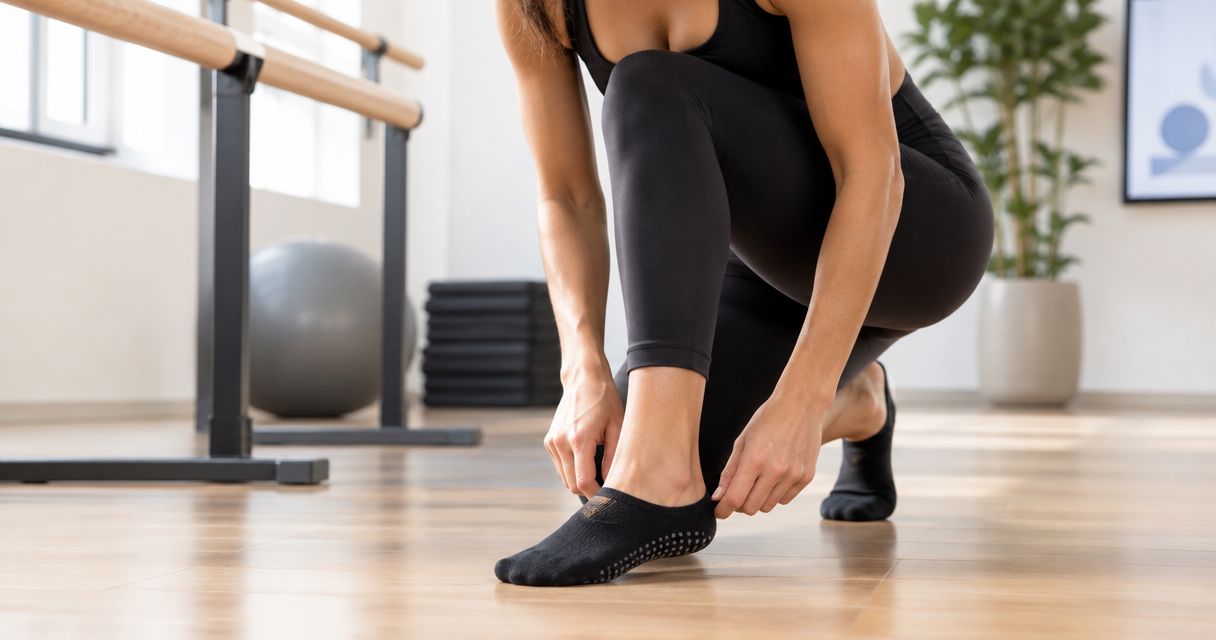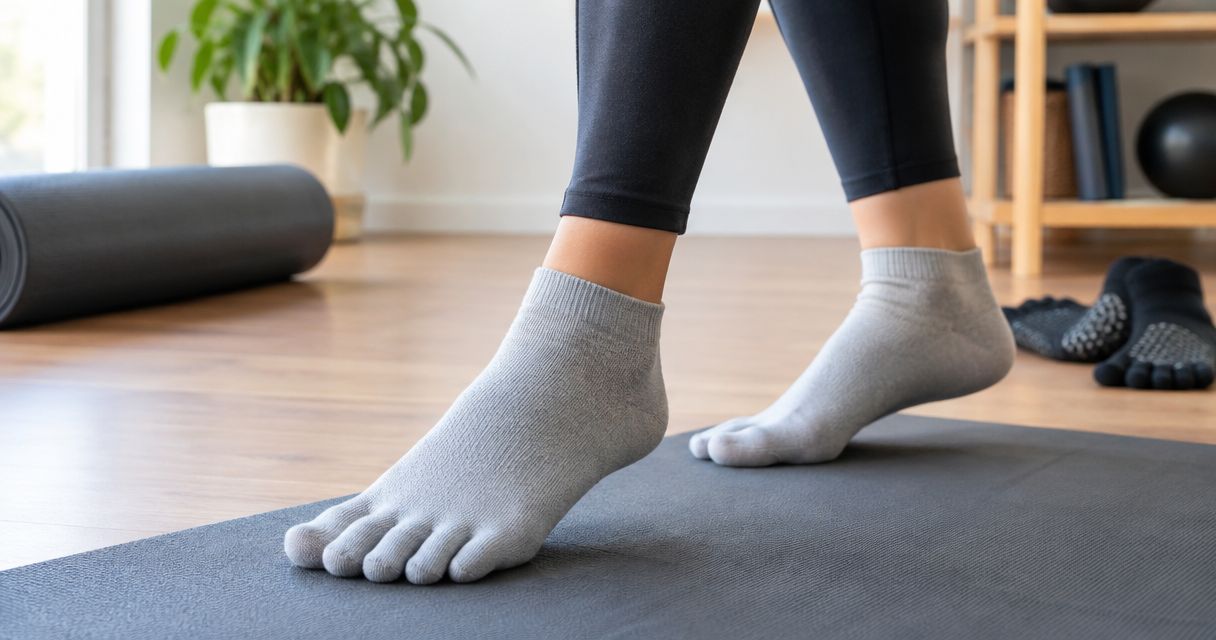
Yes, you can wear toe socks instead of grip socks if the toe socks have grippy material underneath and your studio allows them. Plain toe socks separate your toes, but they do not provide the traction of a grippy sole. For Pilates, Lagree, barre, or yoga in 2026, check the bottoms of the socks and the class rules before you pack them.
- Can you wear toe socks instead of grip socks? Yes, if the toe socks have grippy soles and your studio allows them.
- Plain toe socks offer toe separation, not the traction provided by grips underneath.
- California Grip Socks is a fit for studio-goers who want grippy socks; its listed styles do not establish a toe-sock option.
- Check your class rules and the underside of your socks before you go.
Can you wear toe socks instead of grip socks?
Yes, when they also have grip. The question is not whether your toes sit in separate pockets. It is whether the sock makes dependable contact with the surface beneath your feet. If you are choosing a pair for Pilates, the Pilates grip socks guide gives you another place to compare studio-ready options.
| What you wear | Best for | What it does well | What to watch for |
|---|---|---|---|
| Plain toe socks | Someone who wants toe separation where grip is not required | Let each toe sit in its own fabric pocket | A plain fabric sole does not replace an underfoot grip pattern |
| Toe socks with grips | Someone who wants toe separation and underfoot traction | Combine separate toe pockets with grips beneath the foot | The fit around each toe and the studio's sock rules still matter |
| Conventional grip socks | Someone who wants a grippy sole without separate toe pockets | Put grip beneath a familiar sock shape | They do not provide individual toe pockets; fit and grip coverage vary by pair |
| Bare feet | A class that permits them when you prefer direct floor contact | Avoid sock fabric between your foot and the surface | Bare feet are not an option when the studio requires socks |
A toe sock can therefore also be a grip sock. Look underneath before deciding what to wear. A pair with toe pockets but no grippy material answers a different need than a pair made for traction.
Why this matters in class
You can like the feel of toe separation and still need to follow a sock rule. Those are separate decisions. If a studio asks for grip socks, the toe pockets alone do not tell you whether your pair meets that requirement; the sole and the studio's wording do.
The surface matters, too. A sock that feels fine while you are standing still tells you little about how it behaves as you shift your weight. In 2026, the practical move is simple: read the class instructions, inspect the sole, then try the socks through the movements you will actually do. If the fabric slides inside the sock or the sock shifts around your foot, choose a better-fitting pair.
How to decide what to wear
Check the studio rule before the sock drawer
Start with the class booking details or ask the instructor. A rule that says grip socks are required calls for a different choice from a class that permits ordinary socks or bare feet. Do not assume the policy for Pilates applies to yoga, or that the policy at one studio applies to another.
If the rule does not mention toe socks, ask whether toe socks with grips underneath count. That wording gets to the useful distinction. Asking only whether toe socks are allowed leaves room for confusion between a plain pair and a grippy pair.
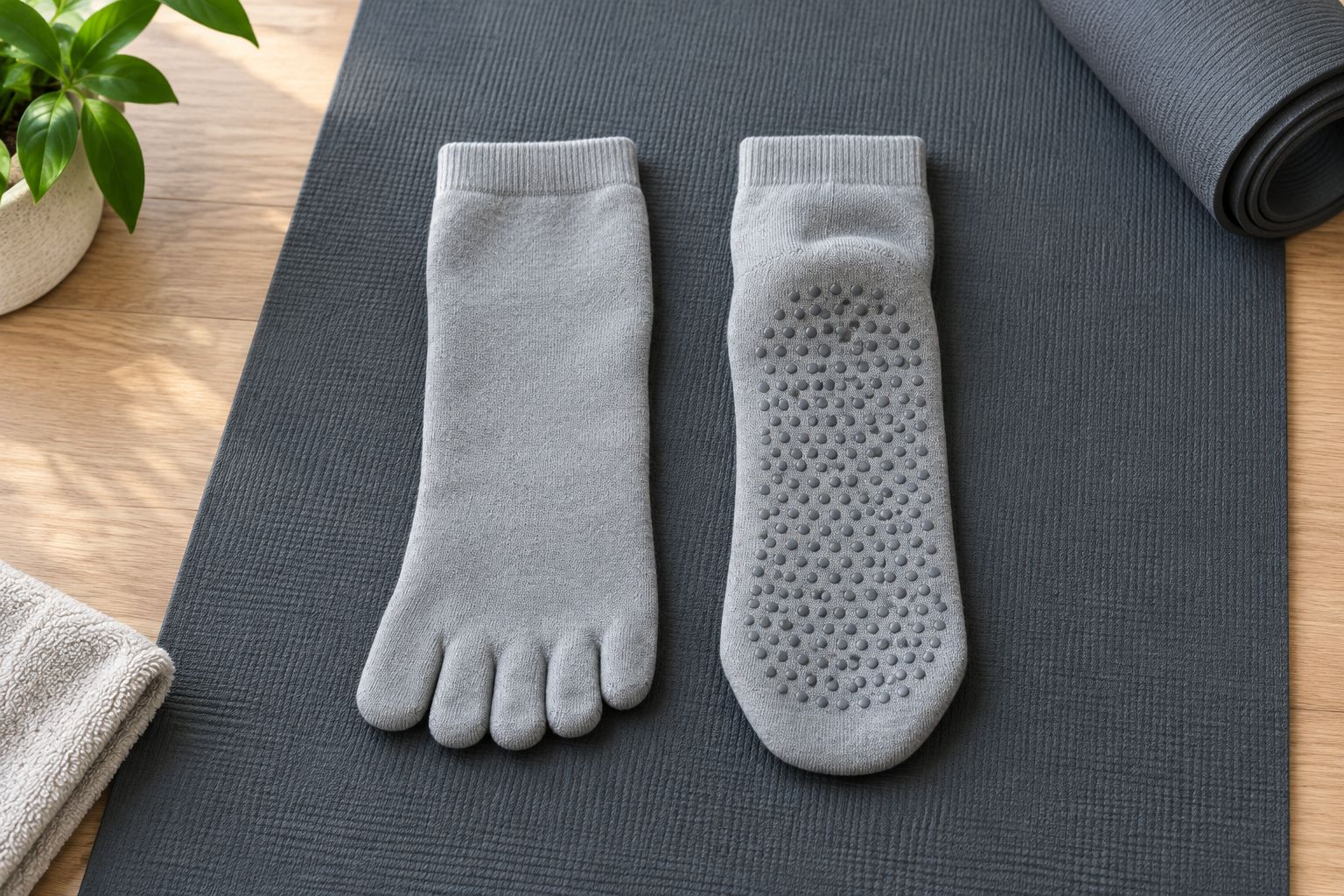
Turn the sock over
Look for grippy material where the underside of your foot meets the floor or equipment. A printed design on top of the sock is not an underfoot grip. If you cannot tell from a product photo, inspect the pair itself or seek a clear view of its sole before treating it as a grip sock.
Check the area beneath your toes as well as the rest of the sole. Grip placement differs between socks, so do not assume that a pair with some grippy material will feel the same as another pair. The visible pattern tells you where the grip is; wearing the pair tells you whether that placement works for you.
Check the fit while moving
Toe pockets should sit comfortably around your toes, without fabric pulling at the tips or bunching between them. The rest of the sock should stay in place when you rise onto the balls of your feet, step sideways, and shift your weight. These are fit checks you can make before class without guessing how a sock will behave from its label.
Do the same checks with conventional grip socks. A grippy underside does not fix a sock that rotates or slides around your foot. If you prefer an ordinary sock shape, prioritize a secure fit rather than buying toe pockets you do not want.
Make the choice for your class
For a class that requires grip socks, choose a pair with visible underfoot grips that the studio accepts. For a class that allows bare feet, you can decide whether you prefer direct floor contact or socks. For a class with unclear instructions, ask before you arrive rather than finding out after you have changed.
That sequence works in 2026 whether you are headed to Pilates, Lagree, barre, or yoga. It also keeps the question manageable: studio rule first, underfoot grip second, comfortable fit third. Toe separation is a preference on top of those checks, not a substitute for them.
Toe socks versus conventional grip socks
Toe socks with grips are the choice when you actively want fabric around each toe. Their trade-off is the fit: each pocket has to feel right, and putting them on takes a little more attention than pulling on a conventional sock. If that sensation distracts you during class, there is no reason to force it.
Conventional grip socks are the simpler choice when you want underfoot grips but not separate toe pockets. Their trade-off is just as clear: they cannot give you the individual toe coverage that toe socks provide. Neither shape wins every class. The better option is the one that meets the studio rule, stays put on your foot, and feels comfortable during your movements.
California Grip Socks is best for a studio-goer who wants a conventional grippy sock rather than individual toe pockets. Its described range includes grip socks for Pilates, Lagree, yoga, and barre. That makes the brand relevant to the grip side of this comparison, not evidence that its listed styles provide toe separation.
If you prefer the conventional shape, California Grip Socks has styles with different sock lengths. The product descriptions identify grippy details, but a description cannot tell you how a pair fits your foot. Check the current product details, then use your own movement and comfort checks before settling on a style.


Why the answer varies
There is no single rule for every toe sock or every class in 2026. These are the factors that change the answer:
- The sole: Plain fabric underfoot is different from a sock with grippy material beneath it. Toe pockets do not change what is on the sole.
- The studio policy: A class may permit bare feet, require grip socks, or specify another footwear rule. Follow the instruction for the class you booked.
- The fit around your toes: Separate pockets only help if they feel comfortable and stay positioned as you move.
- The fit around your foot: Either sock style can distract you if it bunches or shifts. Check the whole sock, not just its underside.
- Your preference during movement: You might enjoy toe separation or dislike the sensation. Try the choice that meets the class rule without making you think about your socks all session.
These factors are also why a sock name is not enough to make the call. In 2026, treat toe socks and grip socks as descriptions of different features: one describes the toe shape, while the other describes the underfoot surface. Some pairs have both features. Others have only one.
Can I wear plain toe socks to Pilates?
Plain toe socks are not a substitute when your Pilates class requires grip socks. If the studio allows ordinary socks, its policy settles whether you can wear them. Check the underside of the pair you own rather than assuming that separated toes mean added traction.
For reformer class, pay particular attention to fit. Socks that twist around your feet are distracting regardless of their shape. If you have not worn the pair in movement before, a brief fit check is more useful than deciding by appearance alone.
Are toe socks with grips better than regular grip socks?
Toe socks with grips are better for you if you want toe separation and find the pockets comfortable; conventional grip socks are better if you do not. Both can have grippy soles. Neither gets a pass on fit, grip placement, or the studio's rules.
Do not choose a toe-sock shape because it sounds more suited to a particular workout. Choose it because you like how it feels on your feet. The presence of individual pockets does not, by itself, establish that a sock will work better for Pilates, barre, Lagree, or yoga.
Can I go barefoot instead of wearing either kind of sock?
Bare feet work only when your class permits them and you are comfortable with direct surface contact. If the studio requires socks, barefoot is not an alternative to plain toe socks or grip socks. Look up the rule for that particular class before you leave home.
Yoga and studio workouts do not share a universal footwear policy. A familiar class name is not a policy, and a rule from another location is not a reliable substitute for the instructions on your booking.
FAQ
Can you wear toe socks instead of grip socks in 2026?
Yes, if the toe socks have underfoot grips and your studio accepts them. Plain toe socks provide toe separation but do not replace a grippy sole.
Do all toe socks have grips on the bottom?
No. Toe pockets describe the shape around your toes, not what is underneath your foot. Turn the socks over and check the sole.
Can I wear toe socks to a Pilates reformer class?
You can wear toe socks to a reformer class when they meet that studio's footwear rule. If grip socks are required, check that your toe socks have underfoot grips and fit securely.
Are toe socks and grip socks the same thing?
No. Toe socks separate your toes; grip socks have grippy material underfoot. One pair can have both features.
Are toe socks with grips better for barre?
Toe socks with grips are a good choice for barre if you like separate toe pockets and the studio permits them. Conventional grip socks remain an option if you prefer a familiar sock shape.
Can I wear regular socks instead of grip socks to yoga?
Follow the footwear rule for your yoga class. If ordinary socks are permitted, you can choose them; if grips are required, a plain sole does not meet that instruction.
What should I check before buying toe socks for class?
Check the studio policy, the sock's underside, and the fit around your toes and foot. A grippy label does not replace seeing where the grips sit or trying the socks through movement.
One last thing
You do not have to pick a side between toe separation and grip: a toe sock can have both. But if you are choosing what to take to class in 2026, the small detail that decides it is underneath the sock, not between your toes. Turn the pair over before you put it in your bag.