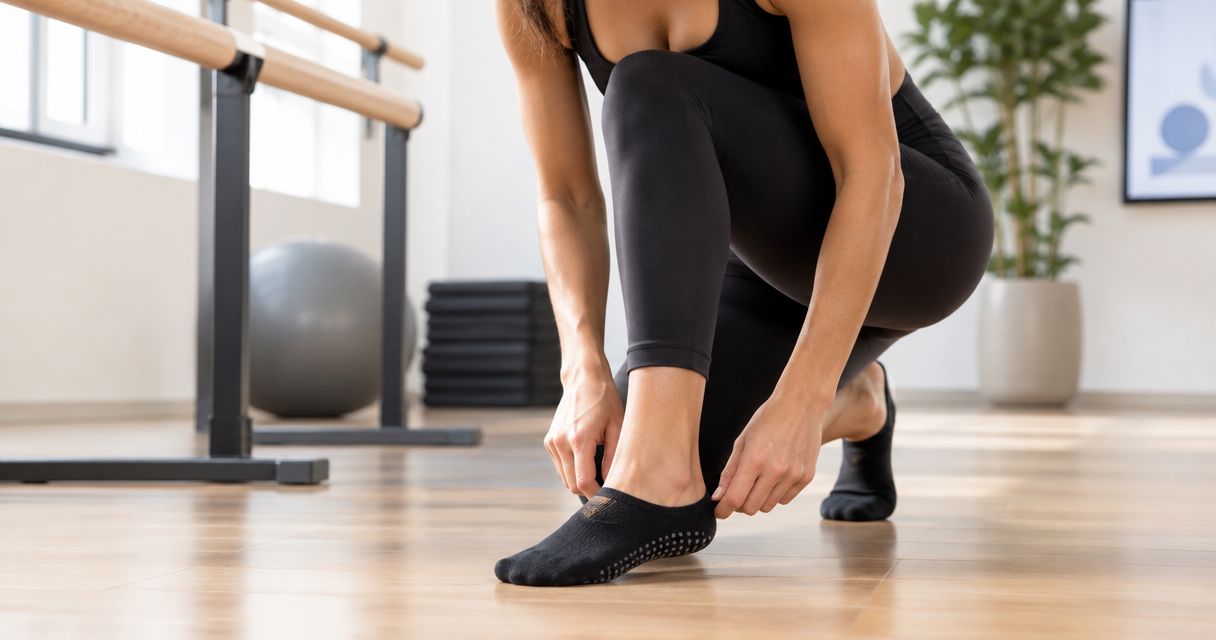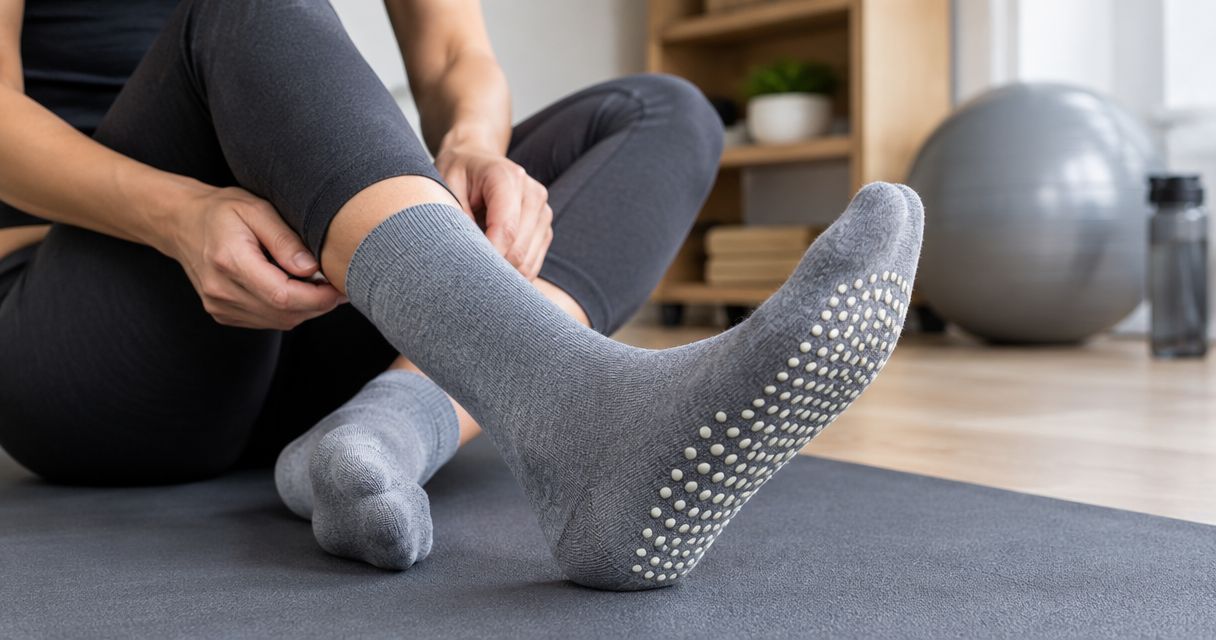
Grip socks have grip dots on the bottom to give the sock more traction against a floor or exercise equipment than plain fabric provides. That extra contact helps limit sliding during Pilates, Lagree, barre, and yoga, but it cannot compensate for a loose sock, a dirty sole, or a slippery surface. If you are choosing a pair for class in 2026, look at where the grips sit and how the sock fits before you pick a print.
- Why do grip socks have grip dots? The dots add traction between the sock and the surface beneath it.
- California Grip Socks is best for Pilates, Lagree, yoga, and barre practitioners who want grippy socks they can also wear outside the studio.
- Grip dots work best when the sock stays put on your foot and the contact surfaces are clean.
- Grip socks reduce sliding; they do not make every floor or exercise position slip-proof.
Why this matters
A sock can move in two places: across the surface beneath your foot, or around your foot itself. Grip dots address the first problem. Fit addresses the second. You need both to feel steady when a movement shifts your weight from your heels to your toes.
That distinction matters on a reformer footbar, beside a barre, and during standing yoga poses. The grip pattern meets a different surface in each setting, while your foot still has to stay settled inside the sock. In 2026, do not judge a pair only by how many dots you can see in a product photo.
California Grip Socks makes grippy socks for Pilates, Lagree, yoga, and barre, with styles designed for wear in and out of the studio. You can browse California Grip Socks after you know what to check underneath.
Why do grip socks have grip dots on the bottom?
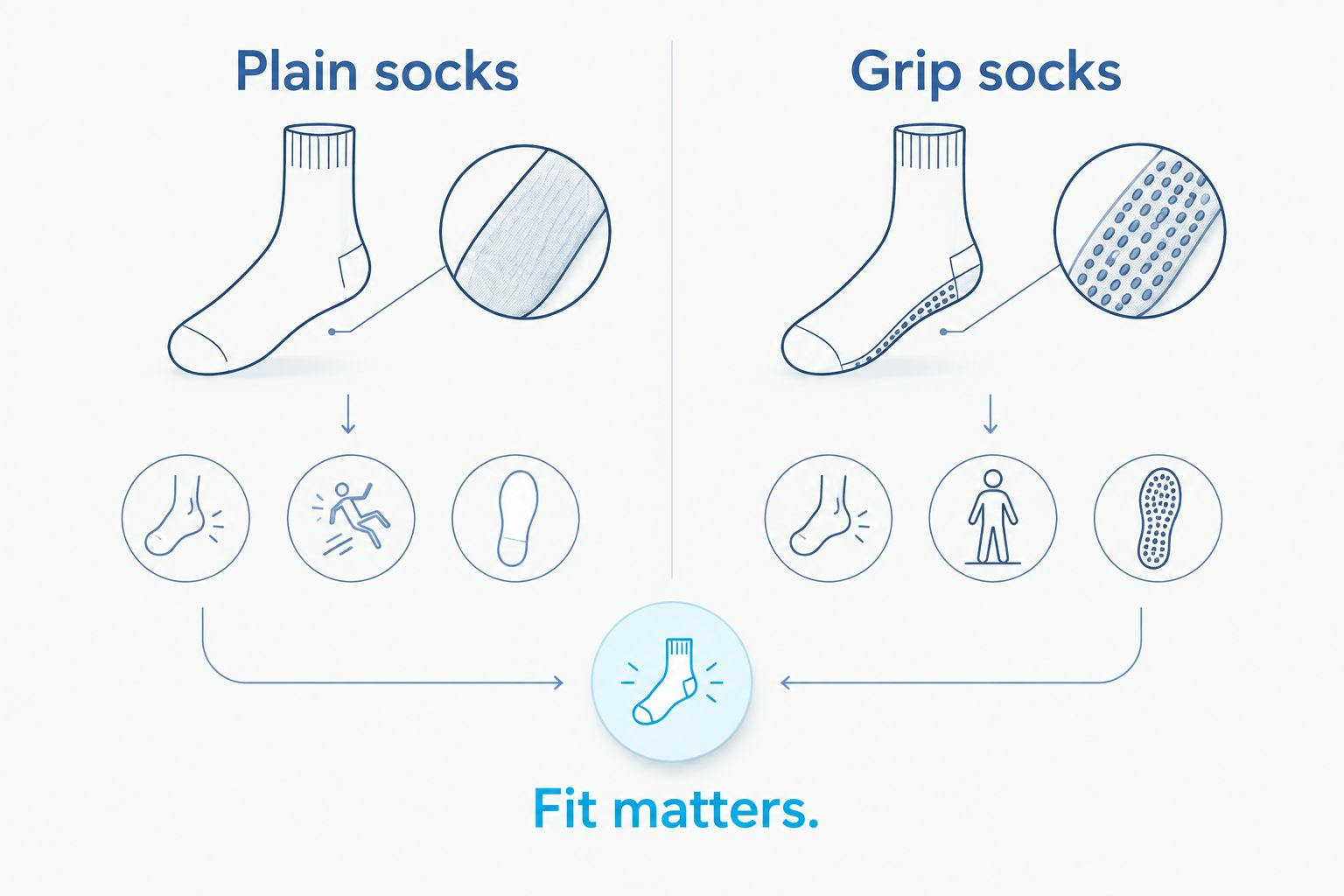
The dots create a grippier contact point than ordinary sock fabric when you press your foot against a surface. They sit between the sock and whatever supports you, such as a studio floor or a reformer footbar. Instead of relying on fabric alone, the sole has a textured area where your foot meets that surface.
The dots do not hold your foot still by themselves. If the sock twists as you move, the grips can end up somewhere other than beneath the part of your foot pressing down. If the sole has picked up dust, the contact you expected can feel different. Grip is a combination of the sock, its fit, the surface, and the movement you are doing.
| What you wear | Contact with the surface | What it does not solve | Best for |
|---|---|---|---|
| Plain socks | Fabric meets the floor or equipment | They offer no added grip pattern underneath. | Wearing socks when traction is not the goal. |
| Grip socks | Grip dots meet the floor or equipment where the sole makes contact. | They cannot fix a poor fit or make every surface slip-proof. | Pilates, Lagree, barre, or yoga when you want sock coverage and added traction. |
| Bare feet | Skin meets the floor or equipment directly. | They do not give you sock coverage. | Sessions where you prefer direct contact and the setting permits it. |
The choice is not a universal ranking. Bare feet give direct surface contact; grip socks add traction to a sock you can keep on. Plain socks cover your feet, but their fabric soles do not serve the same purpose as a grip pattern.
How the dots help during class
Grip dots matter most when your foot presses into a surface and your body moves around that contact point. Think about pushing through your feet on a reformer or holding a standing position at the barre. You want the underside of the sock to stay in contact rather than slide while you shift your weight.
That does not mean more grip always feels better. The useful question is whether the grips cover the places your foot actually uses. When you rise onto the balls of your feet, contact at the forefoot matters. When you press through your heels, check the heel area too. A pattern that looks cute from a distance still needs to line up with your movement.
For Pilates and Lagree, pay attention to how the sock behaves on the equipment you use. For barre, notice whether it stays in place as you move between flat feet and raised heels. For yoga, consider whether wearing socks suits the class and your preference for contact with the mat. Different movements call attention to different parts of the sole; the grip dots do not change position just because your feet do.
What the grip dots cannot do
Grip dots add traction; they do not guarantee stability. A sock can still shift around your foot, and the surface beneath it still matters. This is why checking the grips alone misses half the story.
- They cannot correct a loose fit. If the sock slides on your foot, the dots can move out of position as you step or pivot.
- They cannot clean the floor. Dust between a grip and a surface changes what the grip touches. Check the surface rather than assuming the sock is at fault.
- They cannot replace technique. A grippier sole does not remove the need to control your position and follow your instructor's cues.
- They cannot make every activity identical. A reformer footbar, studio floor, and yoga mat are different contact surfaces. Notice how your socks feel on the one you actually use.
- They cannot tell you whether a studio requires socks. Check the class rules before you arrive.
In 2026, the most useful test is still a simple one: put the socks on, stand on the surface you plan to use, and notice whether the sole and your foot stay aligned. Do that before relying on the grip during a demanding movement.
Why grip can feel different from one class to another
Several ordinary changes affect how useful the dots feel. Check these before deciding that a grip pattern is good or bad.
- Sock fit: The grips need to remain beneath your foot when you bend your toes, lift your heels, and change direction.
- Contact area: Look for grip where you press down, especially at the forefoot and heel when those areas are part of your movement.
- The surface: A mat, floor, or piece of equipment gives the dots a different point of contact.
- Cleanliness: Dust or buildup on the grips or the surface can interfere with direct contact.
- Movement: Standing still, pushing away, and pivoting place different demands on the sole.
None of these factors can be judged from a print alone. If a sock slips, first work out where it moves. Does the sole slide against the floor, or does your foot slide inside the sock? The answer tells you whether to inspect the grip contact, the fit, or both.
How to choose grip socks without overthinking it
Start with your class, then inspect the sole and fit. A cute design is a good reason to like a pair; it is not a substitute for checking where the grips land when you move.
- Name the surface. Are you mainly using a reformer, a studio floor, or a mat? Picture the movements you do there.
- Check the grip area. Look at the underside, not just the side of the sock. Find the areas that will meet the surface when you press through your foot.
- Check the fit. Put the sock on and move your foot. The sole should stay oriented beneath it rather than twisting away.
- Check your preference. Decide whether you want an ankle, shortie, midi, or tube style based on how much sock you like to wear.
- Recheck in class. If your feet feel unsettled, identify whether the sock is moving on your foot or the grip is moving on the surface.
California Grip Socks is best for Pilates, Lagree, yoga, and barre practitioners who want a grippy sock that also suits life outside the studio. The trade-off is the same as with any grip sock: its dots add traction only where they make useful contact, and fit still matters. Choose the shape you want to wear, then check the sole.


The product details show different looks and sock lengths, not a measured traction ranking. In 2026, use the grip placement and fit checks above to choose among them rather than assuming one print grips better than another.
Are grip dots the same thing as a non-slip guarantee?
No. Grip dots are there to add traction at the sole, but they cannot make a sock slip-proof on every surface or during every movement. Check fit and surface conditions as well as the pattern underneath.
Do grip dots matter more than how the sock fits?
No. If the sock turns or bunches around your foot, its grip pattern will not stay where you expect it. A well-positioned sole and useful grip contact work together.
Can you wear grip socks outside the studio?
Yes, grip socks can be worn outside the studio; California Grip Socks designs its socks for both settings. The dots still sit beneath the sole, but you should choose footwear and surfaces appropriate to what you are doing rather than treating studio grip as a promise for every activity.
FAQ
Why do grip socks have grip dots on the bottom?
Grip dots add traction between the sock and the floor or equipment beneath it. They help limit sliding where the grips make contact, but fit and surface conditions still matter.
Do grip socks stop you from slipping in Pilates?
Grip socks add traction in Pilates but do not guarantee that you will never slip. Check that the sock stays aligned on your foot and that its grips meet the surface you are using.
Are grip dots useful for barre?
Yes, grip dots can add traction where your feet contact the floor during barre. Check the forefoot and heel areas if your class includes movements that shift weight between them.
Are grip socks better than plain socks for yoga?
Grip socks offer a textured sole that plain socks lack, making them the more relevant choice when you want sock coverage and added traction. Whether to wear socks for yoga depends on the class and your preference for mat contact.
Why do my grip socks still slide?
First identify whether the sock slides across the surface or moves around your foot. Check grip contact and surface cleanliness for the first problem, and sock fit for the second.
Can you wear grip socks outside the studio in 2026?
Yes, California Grip Socks designs its grippy socks for wear both in and out of the studio. Grip dots add contact beneath the sock, not a guarantee of traction on every surface.
Do more grip dots automatically mean better grip?
No. Dot count alone does not tell you whether the grips sit where your foot presses or whether the sock stays aligned as you move. Check placement and fit instead.
One last thing
Before your next class in 2026, ask yourself whether a slipping feeling comes from under the sock or inside it. That small distinction beats guessing from the dots: contact beneath the sock calls for a grip-and-surface check, while movement inside it calls for a fit check.