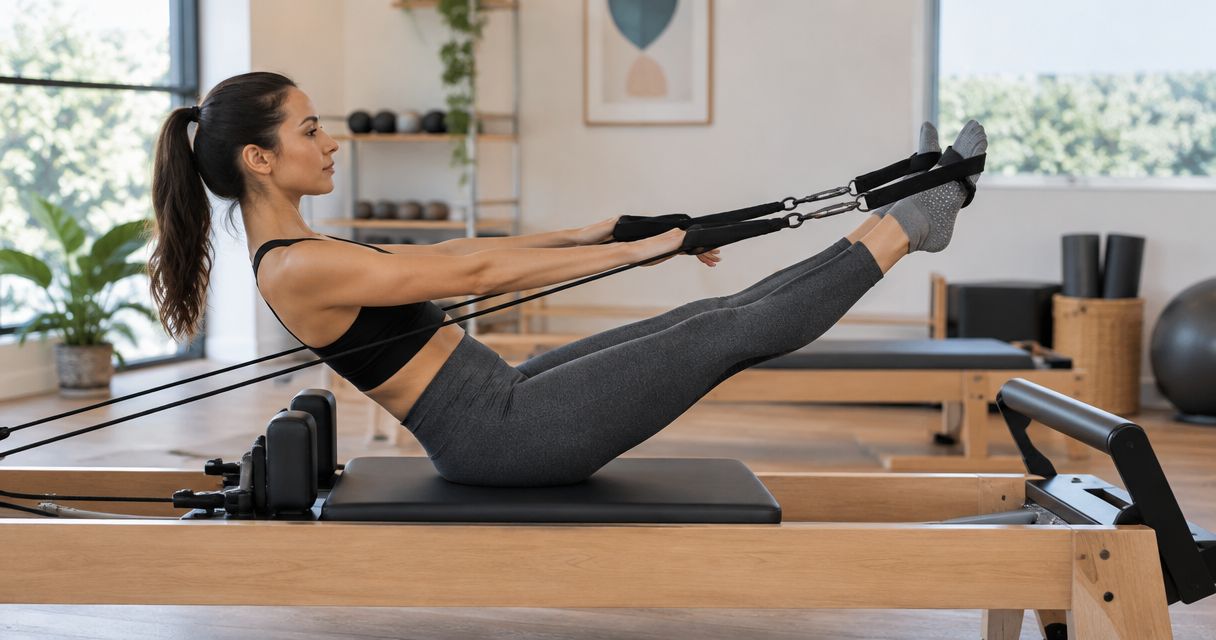
Slide your foot into a reformer strap wearing plain cotton socks and the carriage starts doing what the strap wants, not what you want. Put grip socks on first and the sticky sole grabs the inside of the strap instead of sliding against it, so your heel stays locked through frogs, circles, and every footwork set.
- Grip socks work on a pilates reformer by pressing sticky grips against the strap material, not the floor, so the foot can't shift mid-rep.
- Crew and midi-length California Grip Socks cover the ankle bone so the strap edge never rubs bare skin.
- Foot straps need full sole grip; hand straps need less traction and more wrist clearance.
- A loose strap causes more slipping than a thin sock — check strap length before blaming the sock.
- Best for: reformer footwork, frog series, and long-box work where sliding shows up first.
Why this matters
Reformer straps were built decades ago for bare feet or thin ballet flats, not for the tube socks people actually wear to class now. That mismatch is why so many people search for pilates reformer socks in the first place — plain socks slide inside the loop, the carriage wobbles, and the rep gets sloppy right when form matters most.
Demand for grip socks built specifically for reformer work has only grown heading into 2026, and studios are stricter than ever about requiring them. The mechanics are simple: the sole grip creates friction against the strap's inner fabric, the same way it grips a wood or vinyl studio floor. No grip, no anchor point, and your foot does the work the strap is supposed to do for you.
Before you start
- A pair of full-coverage grip socks — crew or midi length gives the strap something to hold onto past the ankle bone.
- A reformer with adjustable foot straps set to your studio's or your own default length (too loose and no sock fixes it).
- Five minutes on a stationary carriage to test the fit before class starts, not mid-flow during footwork.
Here's the gotcha nobody warns you about: brand-new sticky grips feel slightly stiff for the first two or three wears. Wash a new pair before the first class instead of testing them cold — the grip softens and seats against the strap fabric properly once it's been through a cycle.
Fit your foot into the strap
- Loosen the strap to its widest setting before you put your foot in — forcing a tight strap over a grip sock stretches the sock and thins the grip pattern early.
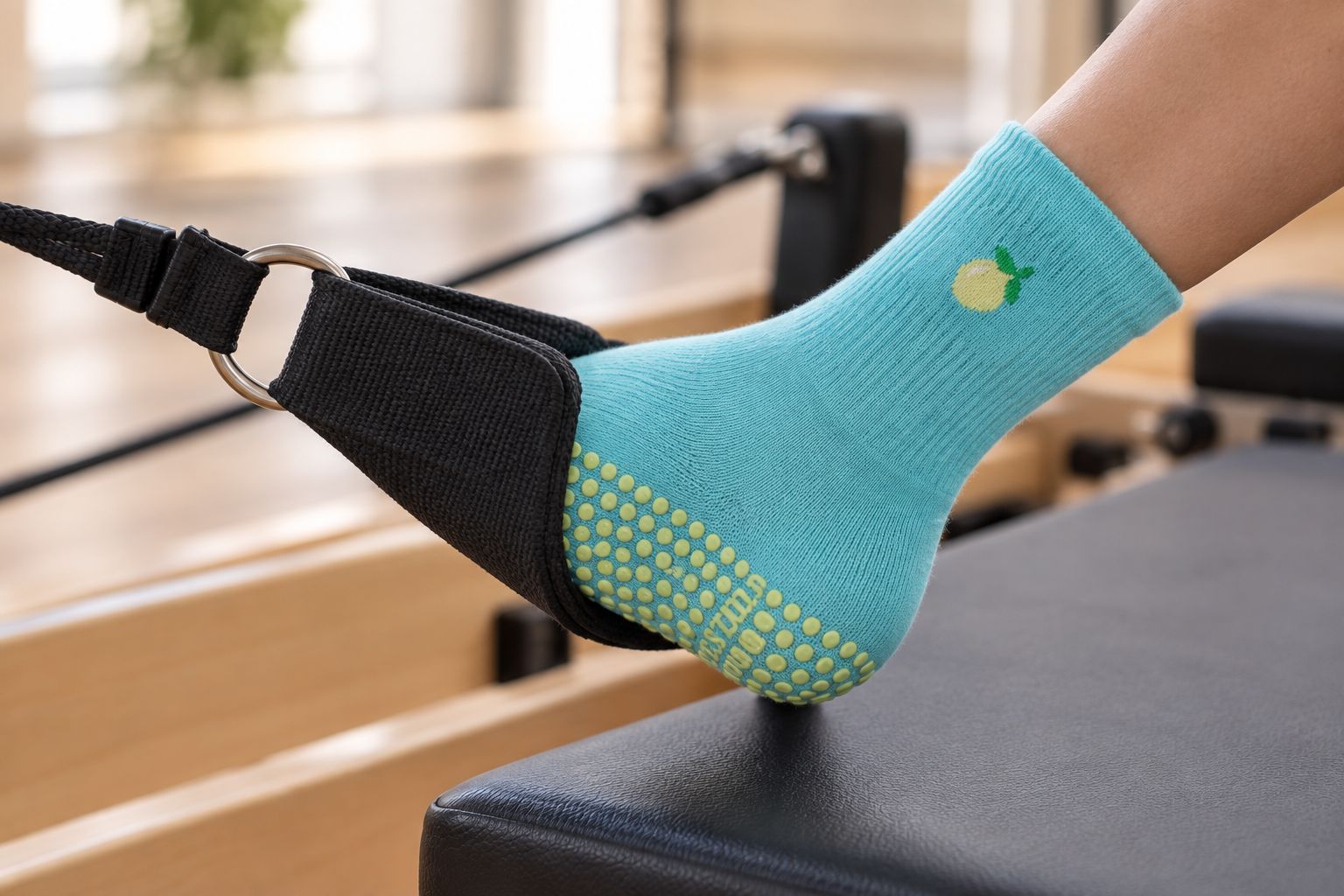
- Slide your forefoot in behind the ball of the foot, not past it. The grip zone on most California Grip Socks sits under the ball and toes, which is exactly where the strap needs contact.
- Tighten the strap until it sits snug against the top of the foot, not the ankle bone. A crew or midi sock gives the strap fabric to grab even if it slides an inch during the set.
- Test with two slow presses on the carriage before starting your set.
Expected result: the strap stays in place through a full frog or footwork series without you having to reset it between reps.
Lock in ankle strap positioning for long box and hand work
- For long box or kneeling strap work, position the strap loop just above the wrist bone, not over it — grip socks don't factor into hand straps, so skip the sock-grip logic here entirely.
- When a class moves between foot straps and hand straps in the same set, keep socks on the whole time; removing them mid-class to switch grip needs wastes transition time and doesn't change the hand strap fit.
- Recheck foot strap tension after any hand strap segment — straps loosen slightly with repeated pulling.
Expected result: no re-tightening needed between exercise blocks, and the foot strap grip stays consistent from warm-up to cool-down.
Loop straps vs. adjustable straps: does the grip sock matter more on one?
Older reformers use fixed loop straps with less give; newer machines use adjustable webbing straps that tighten with a buckle. Loop straps benefit more from a grippy sock because there's no way to cinch out slack mid-set — the sock has to do more of the anchoring work. Adjustable straps let you compensate for a thinner sock by pulling tighter, but that trades comfort for grip. A side-by-side breakdown of reformer loops versus a grip-sock setup is worth reading if your studio still runs older equipment.
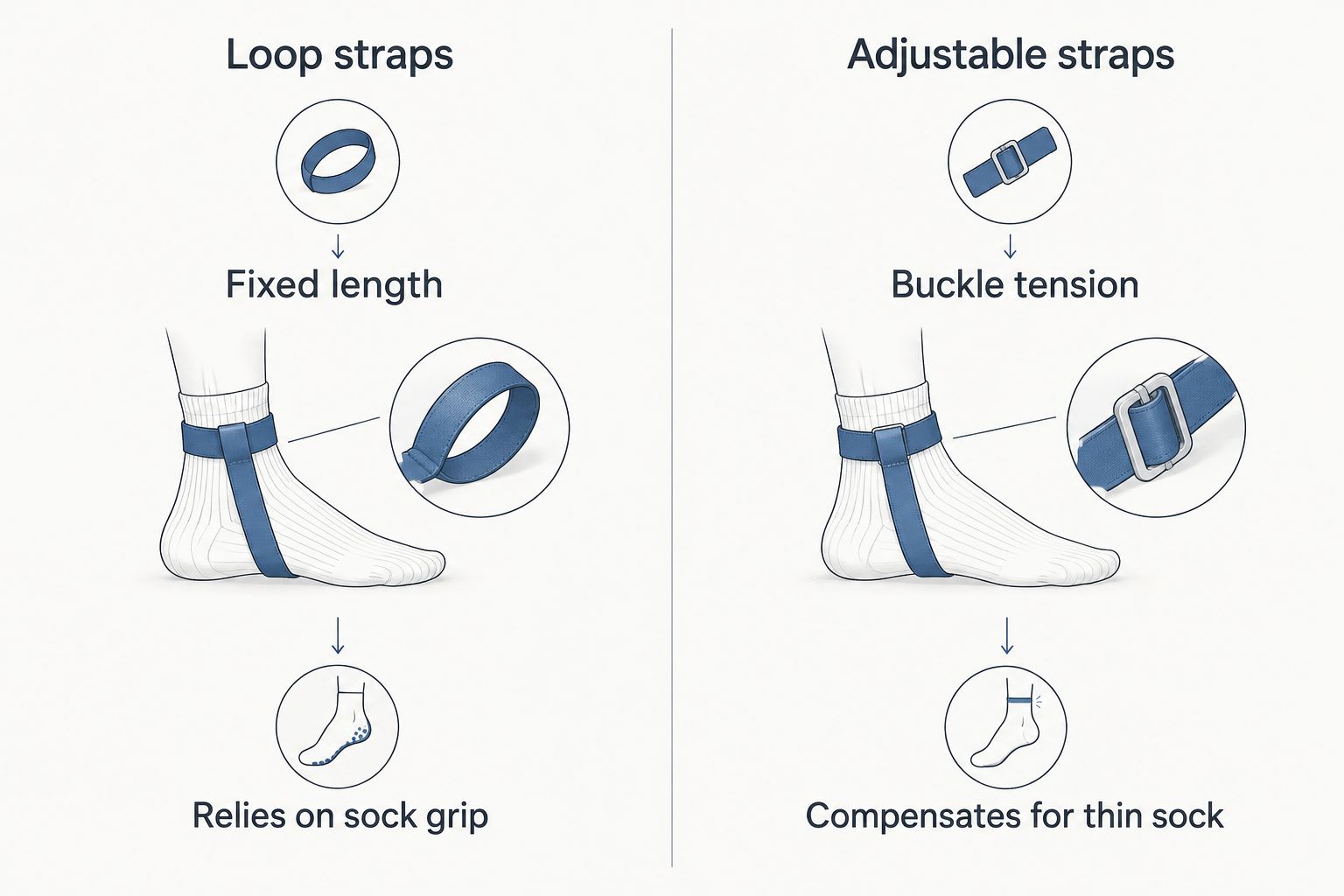
Matching the sock length to how much strap contact your studio's equipment needs makes the difference between a snug fit and constant readjusting:
| Sock length | Strap coverage | Best for | Verdict |
|---|---|---|---|
| Crew/tube (Butterfly, Palm, Banana) | Full ankle bone coverage | Footwork straps, frog series | Buy |
| Midi (Lime, Classic Midi) | Mid-calf, no direct ankle strap contact | Long box, low bar work | Buy |
| Ankle (Classic Ankle) | Sits right at the ankle bone | Classes that skip ankle-strap drills | Buy for specific classes |
| Shortie/ruffle | Ends below the ankle bone | Non-strap reformer moves, barre crossover | Skip for footwork straps |
For anyone doing regular footwork sets, crew or midi length is the safer default in 2026 — the extra inch of coverage keeps the strap off bare skin entirely.


Troubleshooting
- Heel keeps sliding out of the foot strap — the strap is set too loose, or the grip pattern on an older sock has worn thin. Retighten the strap first before replacing the sock.
- Strap rubs the ankle bone raw — switch from an ankle or shortie length to a crew or midi sock so fabric sits between skin and strap edge.
- Sock bunches at the toe inside the strap — the toe box is running big. Size down or switch to a snugger crew style.
- Grips squeak against the strap fabric — normal on a first wear. Wash once and the sound fades as the grip softens.
- Sock slides down the calf mid-set — a midi or crew length with a ribbed cuff stays put better than a low-cut shortie during repeated leg extension.
Customize your fit
Once the basic fit is dialed in, the next variable is class type. Lagree and megaformer classes run faster tempo footwork with less rest between reps, so grip matters even more there than on a standard reformer — the friction has to hold through quicker transitions, not just static holds. Studio owners outfitting a whole class roster with matching socks face a slightly different sizing problem than a single client buying one pair, since foot sizes and strap wear vary across a room of 10 or more reformers.
FAQ
How do grip socks work on a pilates reformer?
Grip socks work on a pilates reformer by pressing a sticky sole against the inside of the foot strap, creating friction that keeps the foot from sliding during footwork. Without that grip, a plain sock slips inside the strap and the carriage wobbles mid-rep.
Do you need special socks for reformer straps or can you wear regular socks?
Regular cotton socks slide inside reformer straps because they have no traction on the sole. Grip socks solve this with a textured or silicone grip pattern built into the fabric, which is why most studios require them for strap-based exercises.
Are ankle-length or crew-length grip socks better for reformer footwork?
Crew or midi-length grip socks are better for reformer footwork because they cover the ankle bone where the strap edge sits. Ankle-length socks work fine for classes that skip strap drills but leave skin exposed to strap friction during footwork.
Why does my foot keep sliding out of the reformer strap even with grip socks?
A loose strap setting is the most common cause, not the sock. Check that the strap is tightened snug against the top of the foot before assuming the grip pattern has worn out.
Can you use grip socks with reformer loops instead of adjustable straps?
Yes, grip socks work with reformer loops, and they matter more there because loop straps have less give than buckled adjustable straps. The sock does most of the anchoring work on a fixed loop.
How long do grip socks last before the grips wear down on a reformer?
Wear time depends on how often you're in class and how the socks are washed, since heat and dryer friction break down grip material faster than air drying. Rotating two or three pairs extends the grip life on any single sock.
Is it better to wear grip socks or go barefoot on a pilates reformer?
Grip socks are better than bare feet for strap-based reformer work because straps are made of fabric or leather, not the same surface as a studio floor, and bare feet slide more inside a strap than a gripped sole does.
Do grip socks work the same way on Lagree megaformer straps?
Grip socks work the same mechanically on Lagree megaformer straps, but the faster tempo of Lagree classes means grip has to hold through quicker transitions with less rest between reps.
One last thing
The strap, not the sock, is usually the real culprit when a foot keeps slipping — most people replace their socks first when the fix was a half-turn tighter on the strap buckle. Check strap tension before you swap socks, and you'll solve the problem in seconds instead of buying a new pair you didn't need.