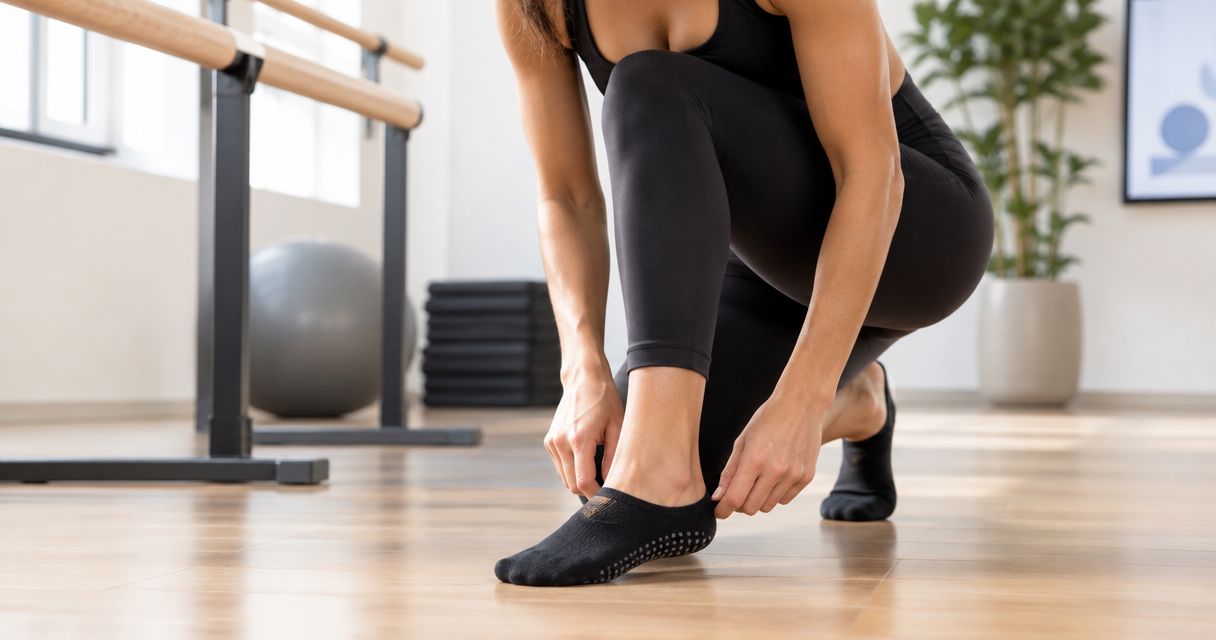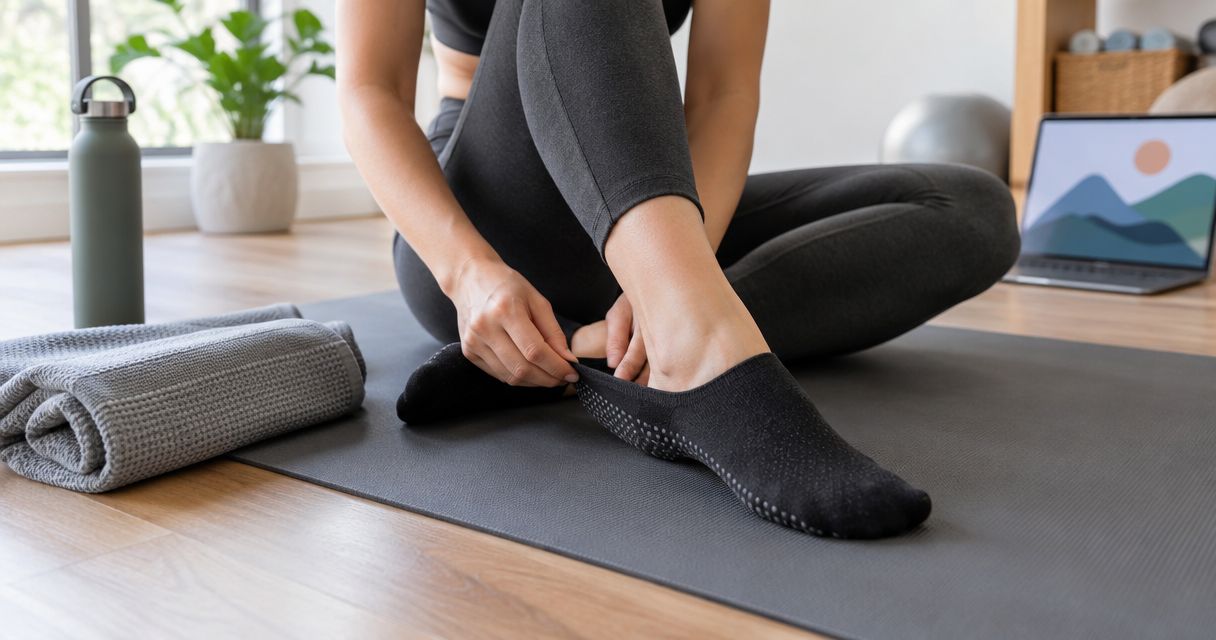
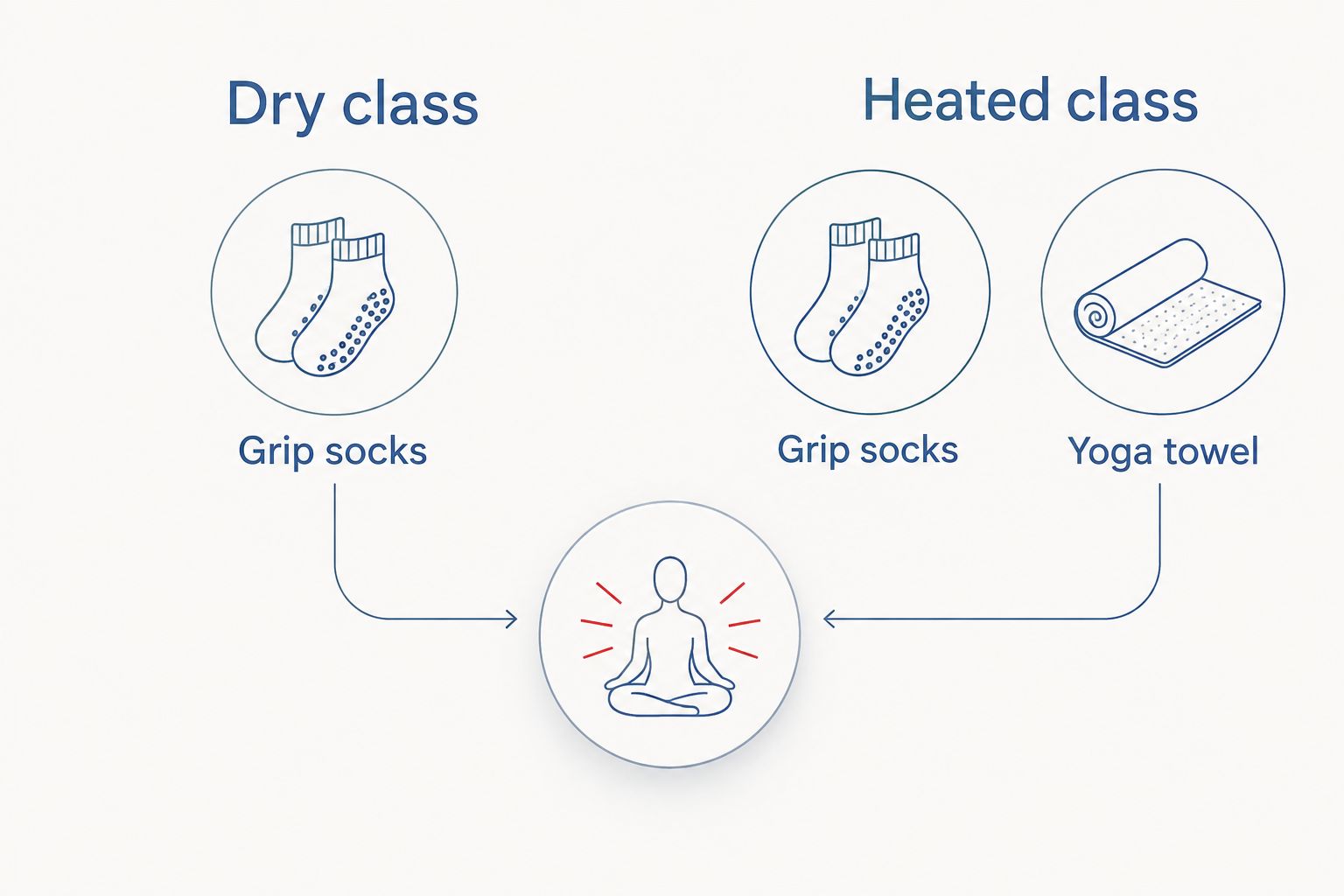
Grip socks replace a yoga towel in most Pilates, barre, Lagree, and room-temperature yoga classes in 2026. You still need a towel for hot yoga or any session where sweat can soak the mat and the fabric around your feet.
- For yoga towel vs grip socks, choose grip socks alone for dry, room-temperature studio classes.
- Use grip socks with a yoga towel for Bikram, heated Vinyasa, and other sweat-heavy sessions.
- California Grip Socks provide sole traction; a yoga towel manages moisture across the mat.
- Check the class temperature and floor before packing for yoga in 2026.
Why this matters
Grip socks and yoga towels solve different problems. Grip socks create traction between your feet and the surface below, while a yoga towel absorbs moisture across the mat. One can replace the other only when sweat is not the main cause of slipping.
That distinction matters because the wrong setup adds bulk without fixing the actual problem. For a dry studio class, start with grip socks for yoga and leave the towel at home. For a heated class, use both.
California Grip Socks is best for Pilates, Lagree, barre, and yoga practitioners who want grip underfoot without covering the entire mat. The advantage is a lighter setup for dry classes; the limitation is that socks cannot absorb sweat from the rest of a wet mat.
Yoga towel vs grip socks at a glance
The right choice in 2026 depends on heat, moisture, and the surface under your feet.
| Option | Best for | What it does | Main advantage | Main limitation |
|---|---|---|---|---|
| Grip socks alone | Barre, Lagree, reformer Pilates, room-temperature yoga | Add traction directly under each foot | Easy to wear across studio surfaces | Do not manage sweat across the mat |
| Yoga towel alone | Mat-based classes with sweaty hands and feet | Absorbs moisture across the mat | Covers more surface area | Can bunch or shift if not secured |
| Grip socks and towel | Hot yoga and sweat-heavy classes | Combine foot traction with moisture control | Addresses both slipping problems | Adds another item to carry and wash |
| Bare feet on a mat | Dry yoga sessions where barefoot contact is preferred | Keeps direct contact with the mat | No extra gear | Sweat can reduce traction |
The simple rule is this: use grip socks for dry-surface traction and add a towel when moisture spreads beyond your feet.
Before you start
- Check the class description. Look for terms such as heated, hot, Bikram, or heated Vinyasa. Traditional Bikram practice uses a room heated to about 105°F with roughly 40% humidity and follows a 90-minute sequence.
- Confirm the surface. A yoga mat, sealed studio floor, reformer carriage, and carpeted studio area create different contact points. Grip socks work best when their sole grips touch a stable surface.
- Pack a dry pair. Damp fabric can let your foot move inside the sock even if the sole remains planted.
- Watch for the hidden failure point. A grip sock can stay fixed against the mat while your foot slides inside wet fabric. That is when a towel becomes useful.
Set up grip socks for a dry class
This setup covers barre, Lagree, reformer Pilates, and room-temperature yoga in 2026. Instead of spreading a towel over a dry surface every class, wear grip socks so the sole traction stays under your feet as you move.
Choose full sole contact
- Put on a clean, dry pair before stepping onto the practice surface.
- Smooth the heel and toe so the fabric is not twisted underneath your foot.
- Confirm that the grip pattern sits flat against the floor, mat, or carriage.
- Replace the pair before class if the fabric is still damp from washing or a previous workout.
Expected result: the grips contact the surface from heel through forefoot without folds between your foot and the floor.
Test the practice surface
- Stand in your normal starting position.
- Press one foot down without lifting the heel.
- Apply light sideways pressure to check whether the sock holds.
- Repeat with the other foot before the instructor begins.
- If the whole sock moves across the surface, inspect the sole for residue and check that the floor is dry.
Expected result: each sock stays planted during controlled pressure, and your foot does not move inside the fabric.
California Grip Socks designs grip socks for Pilates, Lagree, yoga, and barre, making this dry-class setup the natural fit for the brand. The trade-off is clear: California Grip Socks grip socks address the contact point under your feet, not moisture across the full mat.
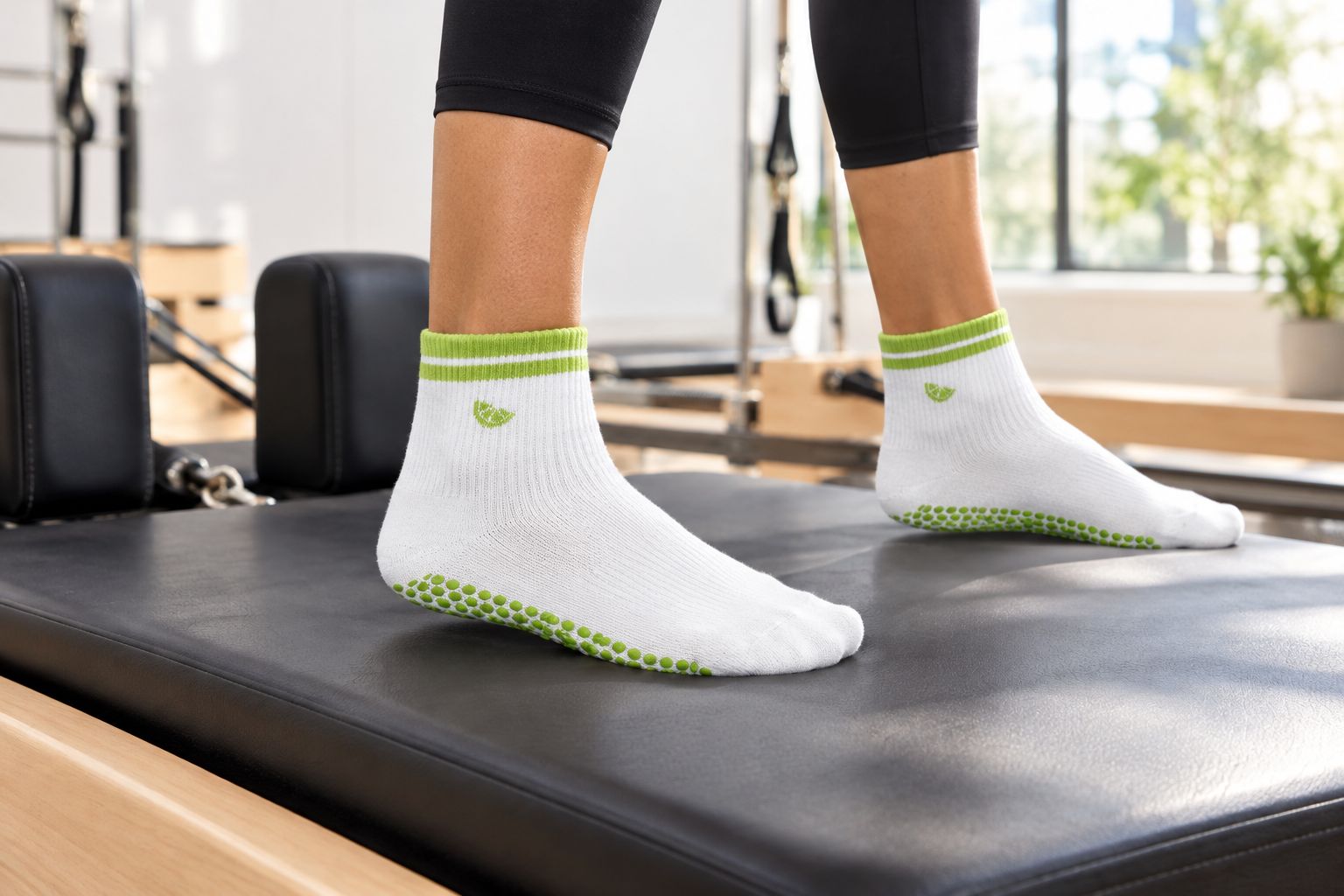
For a dry studio setup, choose the length and design you want while keeping the sole flat and unobstructed. These California Grip Socks options have matching grips described on their product pages.


Add a yoga towel for heated classes
Hot yoga changes the workflow because moisture can spread across the entire mat. Grip socks still help under your feet, but they do not absorb sweat from your hands, knees, or the uncovered sections of the mat.
Position the towel
- Lay the yoga towel across the full mat before class starts.
- Align its corners with the mat so no loose section sits under your heel.
- If the towel has a designated gripping side, place that side against the mat according to its care instructions.
- Smooth out folds before stepping onto it.
- Put on dry grip socks only after the towel is secure.
Expected result: the towel covers the areas where sweat collects without creating ridges under your hands or feet.
Verify the layered setup
- Step onto the towel in your normal standing position.
- Press through the heel and forefoot of each grip sock.
- Move into a short plank and check the contact under your toes.
- Reset the towel immediately if it shifts or bunches.
- Keep a dry towel available if the first becomes saturated during a long heated session.
Expected result: the towel manages moisture across the mat while the grip socks add traction directly under your feet.
For a hot yoga grip sock setup, neither item replaces the other completely. The towel handles the wet mat; the socks handle the foot-to-surface connection.
Use both whenever the class is updated to heated
Studios sometimes change formats, instructors, or room temperatures without changing the class name. A Vinyasa session that was room temperature in 2026 can appear as heated on a later booking.
Use this quick variant whenever a familiar class changes:
- Reopen the class listing before leaving home.
- Check the description for heated, hot, added humidity, or a stated room temperature.
- Pack both grip socks and a yoga towel when the format has changed to heated.
- Ask the studio about the surface if the listing does not explain whether the class uses mats, flooring, or equipment.
- Start with both items available, then follow the instructor's rules for footwear.
Expected result: a last-minute format change does not leave you choosing between wet bare feet and an uncovered mat.
Troubleshooting
The socks slide across the towel
The towel may be bunched, saturated, or made with a surface that does not pair well with the sock grips. Flatten it first. If the material is soaked, switch to a dry section or another towel rather than adding more pressure through your feet.
Your feet slide inside the socks
The outer sole can remain fixed while moisture lets your foot move inside the fabric. Change into a dry pair and add a towel if the class is heated. Do not treat this as a sole-grip problem when the movement is happening inside the sock.
The grip dots feel coated after washing
Fabric softener and detergent residue can remain on the grips. Rinse the socks again and follow the product care instructions. The detailed grip sock washing guide explains how to clean the fabric without covering the sole in residue.
The towel bunches during transitions
Stop and flatten it before continuing. Position the towel evenly across the mat, then test one standing pose and one plank before the class sequence speeds up.
The reformer straps still feel unstable
A sock's sole grip does not change how a strap fits around the foot. Place the strap where your instructor directs and confirm that the contact area is not sitting on loose fabric or a twisted seam.
Customize your class bag
Build the bag around the classes you actually book in 2026:
- Best for barre and Lagree: one clean pair of grip socks; no towel unless the studio requires one.
- Best for reformer Pilates: grip socks plus any studio-required personal items.
- Best for room-temperature yoga: grip socks if you prefer covered feet and added sole traction; a towel remains optional when the mat stays dry.
- Best for hot yoga: grip socks, a full-mat yoga towel, and a separate towel if you want one for personal use.
- Best for mixed schedules: keep grip socks in the bag and add the towel only on heated-class days.
California Grip Socks is the grip-sock choice in this workflow, while the towel remains a separate moisture-control tool. Cute grips do not make a full-mat towel obsolete when the room is hot enough to soak the practice surface.
FAQ
Do you need a yoga towel if you wear grip socks?
You do not need a yoga towel for most dry, room-temperature classes. Add one for hot yoga or any session where sweat spreads across the mat.
Are grip socks enough for hot yoga?
Grip socks alone are not enough when the entire mat becomes wet. Use them with a yoga towel so the towel manages moisture and the socks maintain traction under your feet.
Can you wear grip socks on top of a yoga towel?
Yes, you can wear grip socks on a yoga towel when the towel lies flat and stays secured to the mat. Test the combination before class because towel textures vary.
What is the main difference between a yoga towel and grip socks?
A yoga towel absorbs moisture across the mat, while grip socks add traction directly under your feet. They solve separate causes of slipping and work together in heated classes.
Are grip socks better than a yoga towel for barre?
Grip socks are the better fit for a dry barre floor because traction is needed under your feet rather than across a full mat. A towel adds little unless the class format or studio requires it.
Do grip socks work on a Pilates reformer without a towel?
Yes, grip socks work directly on a dry reformer carriage when the sole lies flat against the surface. A yoga towel is not part of the standard foot-to-carriage setup.
Why do my feet slide even when the grip socks stay in place?
Your feet can move inside damp sock fabric while the grip dots remain fixed to the surface. Change into a dry pair and add a towel if sweat is collecting across the mat.
Should I pack both grip socks and a towel for yoga in 2026?
Pack both when the class is heated, unfamiliar, or described as sweat-heavy. For a familiar room-temperature class, grip socks alone are usually enough.
One last thing
Make the decision from the class environment, not the workout name. Two yoga classes can require different setups when one runs at room temperature and the other runs near 105°F. Check the listing in 2026, pack a dry pair of California Grip Socks, and add the towel whenever heat or heavy sweat enters the plan.