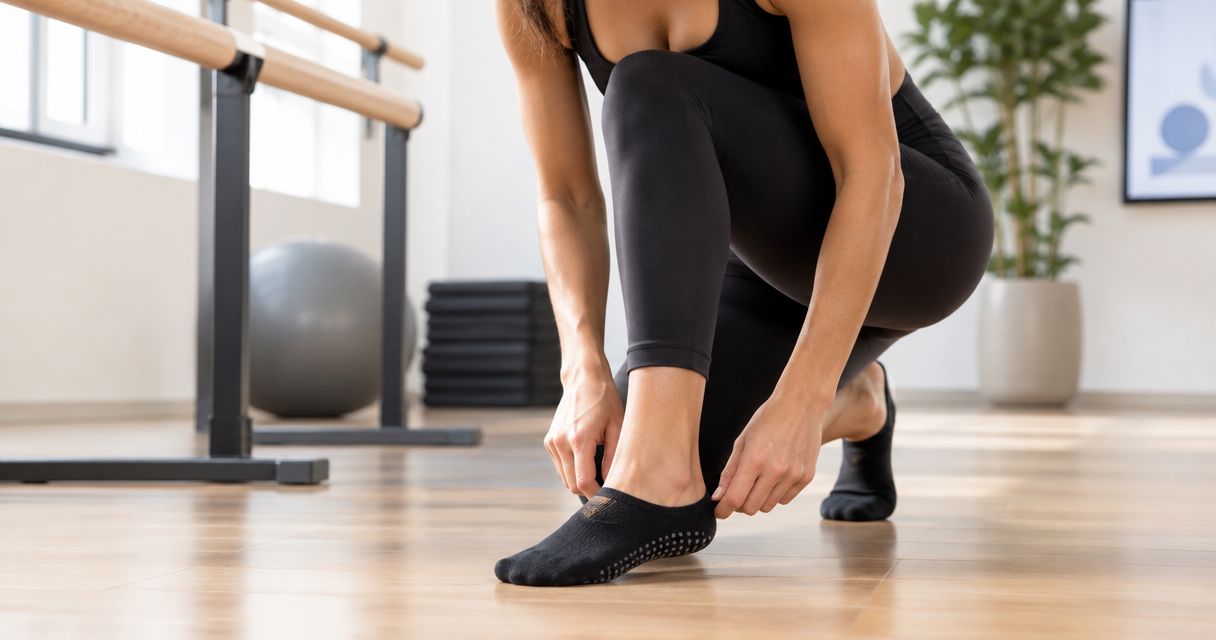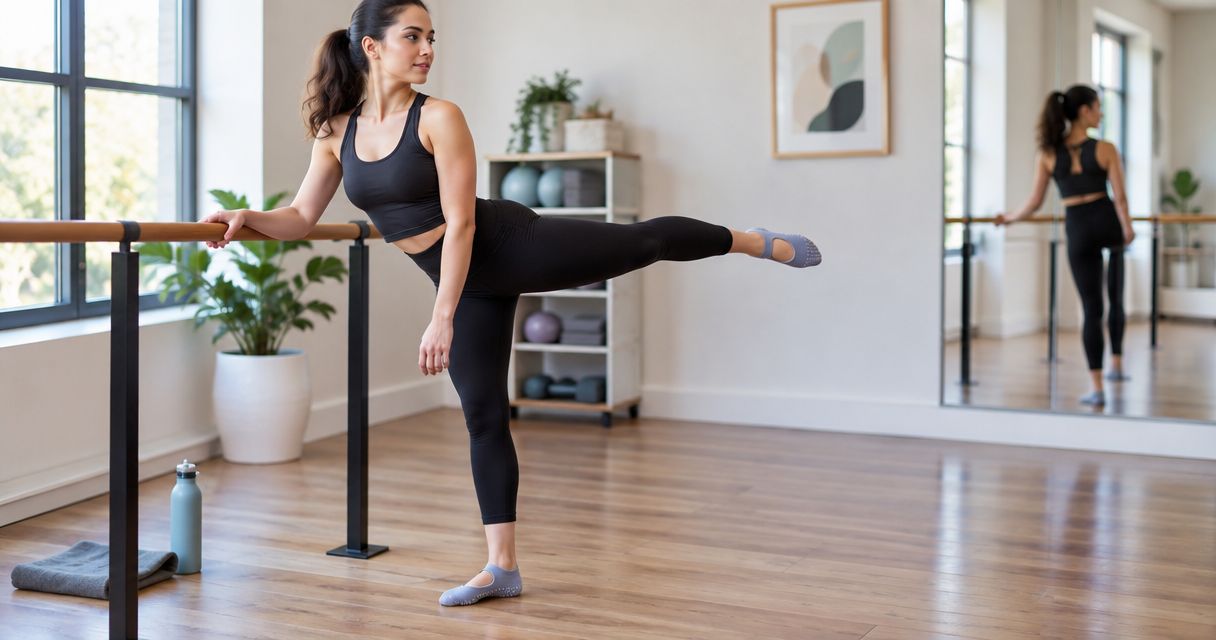
Yes, you can wear ankle grip socks instead of crew grip socks for barre if your studio allows them and the socks stay securely on your feet. The important difference is the grip underfoot and the fit around your foot—not how far the cuff reaches up your leg. For your 2026 class plans, check the studio’s footwear rules before choosing either length.
- Can you wear ankle grip socks for barre? Yes, when your studio permits them and the fit stays secure.
- Ankle grip socks suit a low-cuff preference; crew grip socks provide more coverage above the ankle.
- Choose barre socks by underfoot grip and fit, not cuff height alone.
- California Grip Socks offers ankle and medium-length crew options; choose by coverage preference, then check fit.
Why this matters
You don’t need a taller sock just because the person next to you wears one. But a cute pair that slides around your foot is a distraction, whatever its length.
California Grip Socks makes grip socks for barre, Pilates, Lagree, and yoga. The useful question is which cut suits your class and feels secure on your foot—not which one looks more like everyone else’s.
Can you wear ankle grip socks instead of crew for barre?
Yes. Ankle grip socks are an alternative to crew grip socks when they meet your studio’s rules and fit properly. An ankle cuff does not remove the grip from the sole, and a crew cuff does not automatically make a sock more secure underfoot.
Keep the comparison simple:
| Sock length | Best for | Main advantage | Main limitation | What to check |
|---|---|---|---|---|
| Ankle grip socks | People who prefer less fabric above the foot | Lower cuff with less ankle coverage | Less coverage than a crew sock | Heel stays seated and sole does not twist |
| Crew grip socks | People who prefer coverage above the ankle | Taller cuff and more lower-leg coverage | More fabric than a low-cuff wearer wants | Cuff feels comfortable and foot stays seated |
Neither length gets a free pass on fit. If your foot moves inside the sock while the grippy sole stays against the floor, the taller cuff has not solved the problem.
Your studio’s instructions come first. Ask whether the requirement is simply grip socks or whether it specifies a particular style. Don’t interpret a photo of people wearing crew socks as a dress-code rule.
Ankle grip socks: best for a low-cuff feel
Ankle grip socks make sense when you want your socks to sit close to the ankle rather than extend up the lower leg. They also suit an outfit where you prefer a visible gap between the sock and your leggings.
The benefit is straightforward: less cuff coverage. The trade-off is equally straightforward: you don’t get the coverage of a crew sock.
Choose ankle grip socks when you like the lower cut and the heel stays in place. Don’t keep adjusting a slipping heel through class just because you prefer the look.
Check the fit with your foot both flat and lifted at the heel. The cuff should not disappear under your heel, and the sole should remain underneath your foot rather than rotating toward the side.
An ankle sock that fails those checks is not the right pair for that class. That is a fit problem, not proof that every ankle sock is unsuitable for barre.
Crew grip socks: best for more ankle coverage
Crew grip socks make sense when you prefer fabric above the ankle. You get a taller cuff, which also changes how the sock looks with leggings, capris, or shorts.
More coverage is the benefit. More fabric is the trade-off, especially if you dislike a cuff around your lower leg.
Choose crew grip socks for coverage, not as a shortcut around checking fit. The foot section still needs to sit properly, and the grippy sole still needs to stay underneath your foot.
A cuff that feels comfortable while standing also needs to feel comfortable when you bend your knees and change position. If you keep pulling it up, folding it down, or adjusting it, try a different fit rather than accepting the distraction.
You can prefer crew socks without claiming they grip better than ankle socks. Those are separate questions.
Why the right choice varies
The ankle-versus-crew decision comes down to these factors:
- Studio rules: Your studio decides which footwear is allowed. Confirm the requirement before class, especially when visiting somewhere new.
- Foot fit: Look for a heel that stays seated and a foot section that does not bunch or rotate. Evaluate the actual pair, not just its length label.
- Underfoot grip: Inspect the sole. Grip under your foot is a different feature from fabric above your ankle.
- Coverage preference: Ankle socks leave more of the ankle exposed; crew socks extend higher. Choose the amount of fabric you want to wear.
- Condition: Check for worn grip areas, stretched fabric, and damage before deciding a pair is ready for class.
Cuff height is the visible difference, so it gets attention first. Fit and sole condition deserve the earlier decision.
There is no need to turn this into an outfit overhaul. Start with the pair you already own, inspect it, and confirm that your studio accepts it.
Check your socks before you head to barre
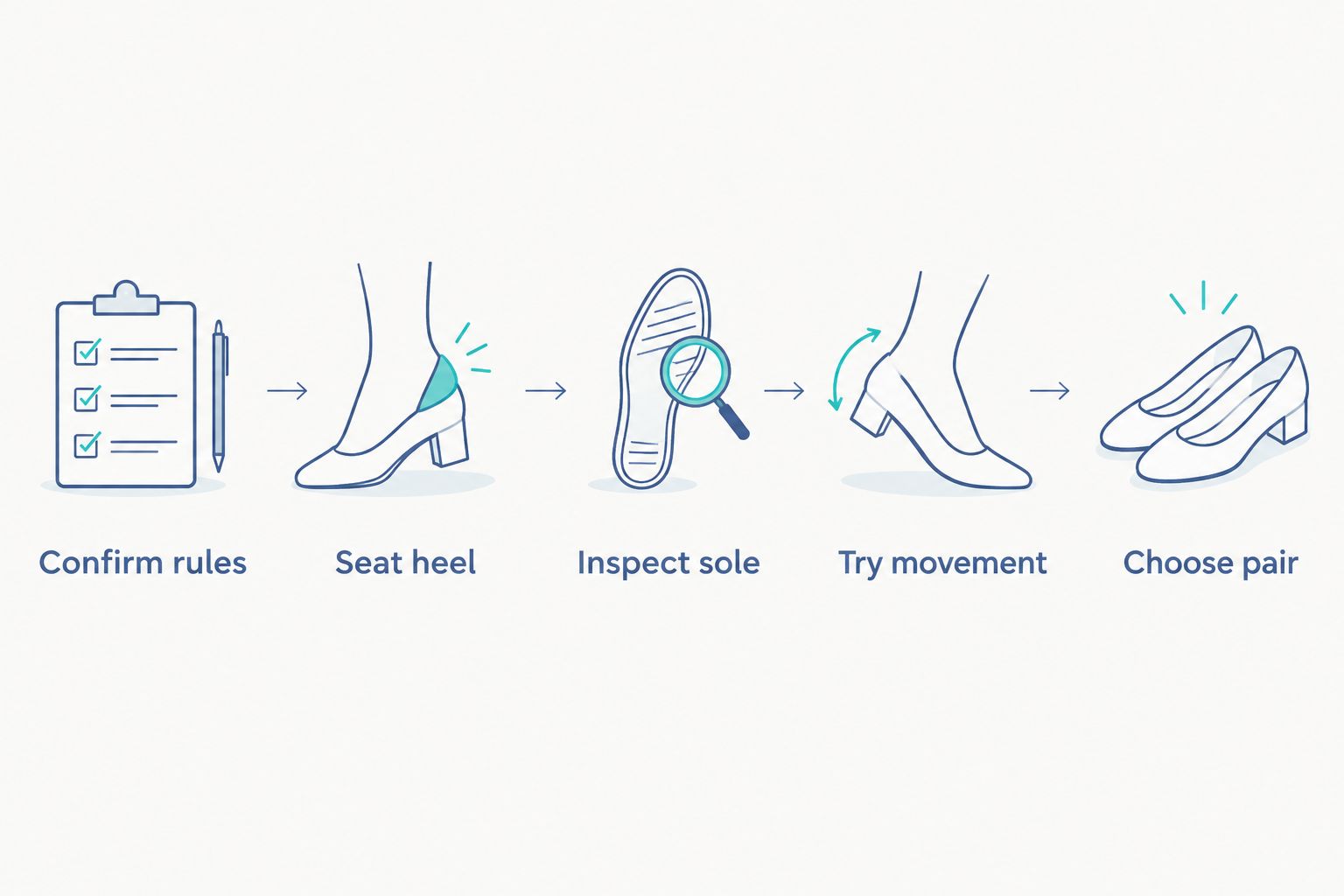
Use this sequence when packing your 2026 class bag. It works for ankle and crew grip socks alike.
1. Confirm the footwear rule
Read the class instructions or ask the studio directly. A useful question is: Are ankle-length grip socks allowed, or do you require another style?
That gets you a clearer answer than asking whether your socks are okay without describing them. If the studio names a specific requirement, follow it rather than relying on a general guide.
2. Seat the heel
Pull the sock on so the heel sits where it belongs. Smooth out any fabric folded beneath your foot.
If the sock only feels right after you stretch it far beyond its natural position, reassess the fit. You want it properly seated, not arranged into place for a moment.
3. Inspect the sole
Look at the grip areas underneath the sock. Check for visible wear, damaged sections, or debris before class.
Don’t assume a taller cuff compensates for a worn sole. It cannot replace the material underneath your foot.
4. Try controlled movement
With support nearby, try the basic positions your instructor has already taught you: standing, bending your knees, and lifting your heels. Keep the movement gentle; this is a fit check, not a balance challenge.
Notice whether your heel slips out, fabric gathers beneath your toes, or the sole rotates. If it does, stop and adjust the sock or choose another pair.
5. Make the final call
Keep the pair if it meets the studio’s rules and stays properly positioned during the check. Change it if you keep needing to fix it.
Passing a quick fit check is not a guarantee against slipping. Keep following your instructor’s cues, and stop if your footing feels uncertain during class.
What should you look for when shopping in 2026?
California Grip Socks is best for barre practitioners who want cute grip socks for studio and everyday wear. Its ankle and medium-length crew options let you compare coverage without treating a taller cuff as a performance promise.
Two examples show the difference. The product descriptions identify the cuts and design details below; they do not establish that one grips better than the other.
| Product | Best for | Details stated in the product description | Advantage for that preference | Trade-off |
|---|---|---|---|---|
| The Classic Ankle Grip Socks - Grey | People who don’t want a tube cuff | Grey ankle grip sock with a white stripe around the ankle | Ankle cut matches a low-cuff preference | Does not provide crew-length coverage |
| The Classic Midi Grip Socks - Yellow | People who want a medium-length crew sock | Medium-length crew grip sock described for wearing with shorts, capris, and full-length bottoms | More cuff coverage than an ankle style | More fabric above the ankle |
Choose the ankle option if the low cut is what you want. Choose the midi option if you prefer medium-length coverage. In both cases, use the current sizing information and check the fit when the socks arrive.
The product names tell you the intended style, not how either pair will fit your particular foot. Don’t substitute a color or cuff preference for that check.


Will ankle grip socks slip off during barre?
Ankle grip socks are unsuitable for your class if the heel repeatedly slips off your foot. That does not mean every ankle pair will slip; check the fit of the pair you plan to wear.
Separate movement inside the sock from movement against the floor. If the fabric rotates around your foot, address fit. If the sock slides against the surface, stop and ask your instructor rather than assuming a crew cuff will fix it.
Are crew grip socks better for barre beginners?
Crew grip socks are not automatically the better choice for a beginner. Choose the permitted pair that stays properly seated and gives you the coverage you prefer.
For your first class, remove the uncertainty before you arrive: confirm the footwear rule, try the socks on, and inspect the sole. Your attention belongs on the instructor—not on rescuing a slipping sock.
Can you wear regular ankle socks if they look the same?
Regular ankle socks are not a substitute when the studio requires grip socks. The ankle-length label describes the cut, not whether the sole has grip.
Look underneath the sock rather than judging by its cuff. If you’re unsure whether your pair meets the rule, ask the studio before wearing it to class.
FAQ
Can you wear ankle grip socks for barre in 2026?
Yes, you can wear ankle grip socks for barre in 2026 when your studio permits them and they fit securely. Check that the heel stays seated and the grippy sole remains underneath your foot.
Do barre socks have to be crew length?
Barre socks do not have to be crew length unless your studio specifies that requirement. Ask whether the rule concerns grip socks generally or a particular style.
Are ankle grip socks better than crew grip socks?
Ankle grip socks are better for a low-cuff preference; crew grip socks are better for more coverage above the ankle. Neither length alone establishes better underfoot grip.
What should I do if my ankle grip socks slide off?
Change or reassess the pair if your ankle grip socks repeatedly slide off. Check the sizing and heel placement rather than continuing class while adjusting them.
Can I wear regular ankle socks to a grip-socks-required class?
No, regular ankle socks do not meet a requirement for grip socks simply because they have the same cuff height. Check the sole and follow the studio’s instructions.
Does a taller cuff make grip socks safer?
A taller cuff alone does not establish that grip socks are safer. Check fit, sole condition, and the studio’s footwear requirements, and stop if your footing feels uncertain.
Does California Grip Socks have ankle and crew options?
California Grip Socks has The Classic Ankle Grip Socks - Grey and The Classic Midi Grip Socks - Yellow among its listed products. The latter is described as a medium-length crew grip sock; choose by coverage preference and check fit.
One last thing
Before your next 2026 barre class, watch the sock—not just the cuff—during your fit check. A sock can stay against the floor while your foot shifts inside it, so checking only for floor contact misses part of the picture.
Keep ankle grip socks if they’re allowed and stay properly seated. Choose crew socks because you want more coverage, not because cuff height promises more grip. Cute matters. So does leaving your socks alone once class starts.