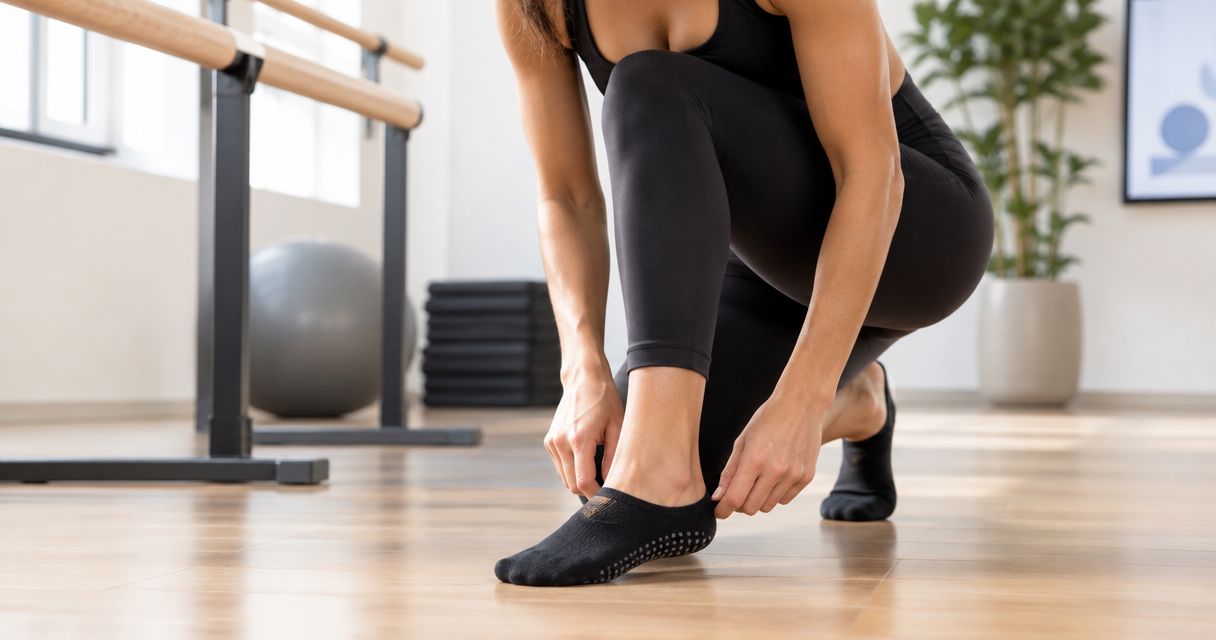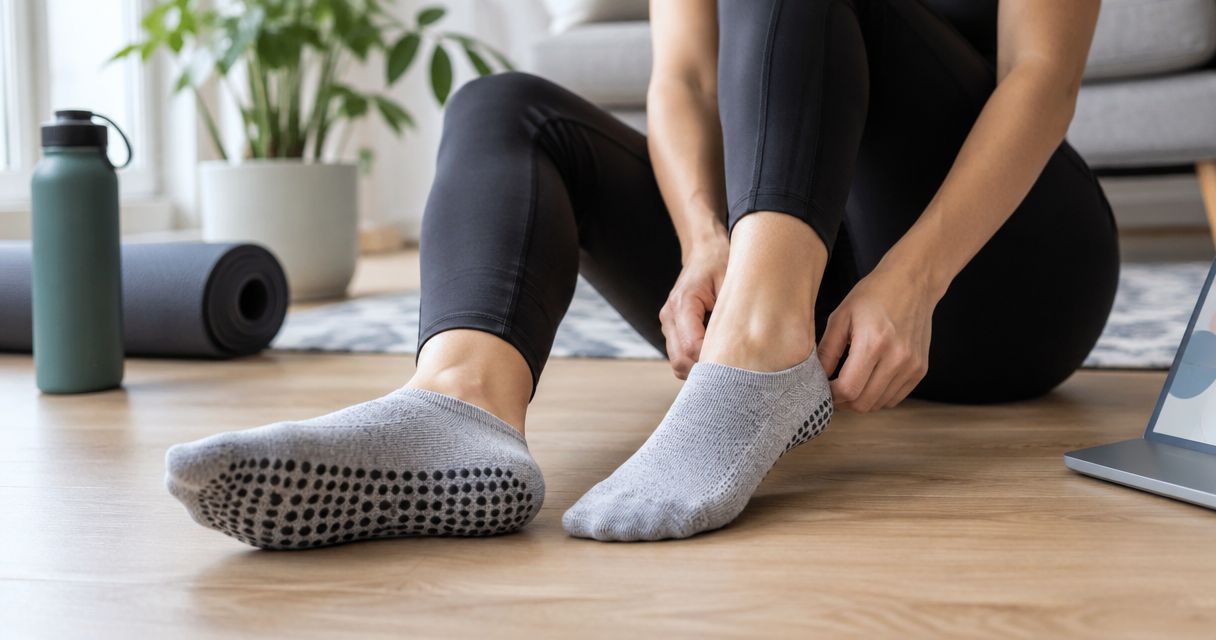
New grip socks do not have a set break-in time. Try them on before your first class: if they fit securely and the grips contact the floor, you do not need to wear them around the house first. If they slip, bunch, or pinch, extra wear is not a dependable fix for a fit problem.
- How long to break in grip socks? There is no set wait: check fit and grip before your first class.
- California Grip Socks is best for Pilates, Lagree, yoga, and barre practitioners who want grippy socks they can also wear outside the studio.
- If new socks slide on your feet, check the fit before assuming they need breaking in.
- If the grips slide against the floor, check that the sole is flat and the surface is suitable for socks.
How long does it take to break in new grip socks?
You can wear new grip socks to class without a break-in period, provided they fit and feel secure when you test them. There is no useful number of hours or classes to wait. What matters is whether your foot stays in place inside the sock and whether the grips meet the surface beneath you.
If you are getting dressed for your first Pilates, Lagree, yoga, or barre session in 2026, put the socks on before you leave. Stand, shift your weight, and take a few controlled steps on a clean, suitable floor. A quick check gives you more useful information than wearing them for an arbitrary stretch of time.
New socks can feel unfamiliar without needing to be broken in. The cuff sits somewhere different from your everyday socks, and grips underfoot can feel noticeable at first. That sensation is different from a heel that slips down, fabric that twists, or a toe seam that presses uncomfortably. Do not treat a poor fit as a break-in phase.
Why this matters
A grip sock has two jobs: stay in place on your foot and put its grips in contact with the floor. You can check both before class starts. Doing so keeps a small sock problem from becoming the thing you think about throughout a workout.
California Grip Socks sells socks designed for Pilates, Lagree, yoga, and barre, as well as wear outside the studio. For a studio pair, California Grip Socks is a relevant place to browse styles; the design you like still needs to fit your foot securely.
California Grip Socks is best for practitioners who want a playful studio sock they can wear beyond class, but no design can make an ill-fitting sock stay put. That is the distinction to keep in mind when you choose a pair in 2026.
What should you check before the first class?
Use a short at-home check instead of trying to clock break-in time. Keep the movements controlled, and test on a clean floor where you can tell what the sock is doing.
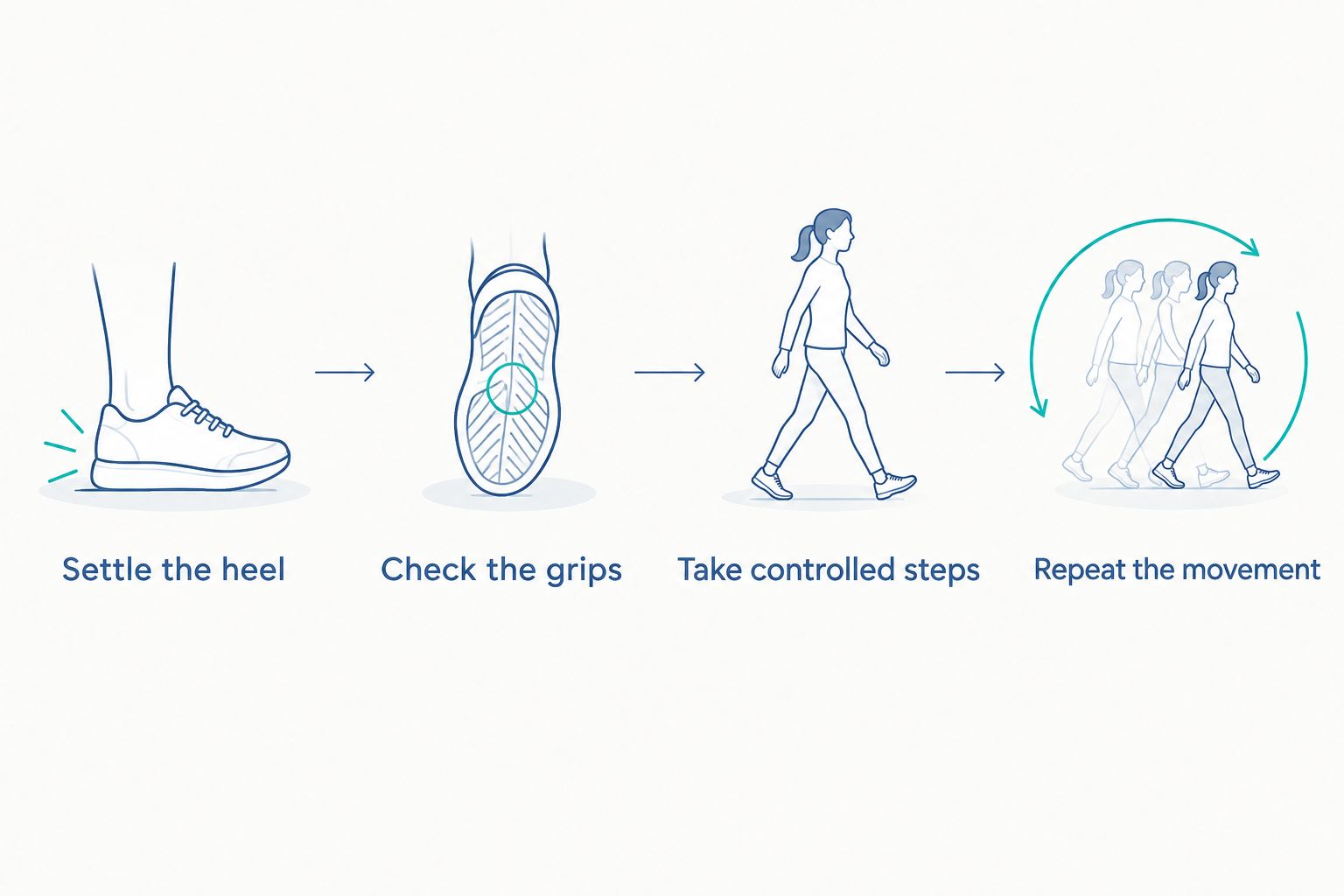
- Put each sock on fully. Settle the heel into place and smooth the sole beneath your foot. Fabric caught under the heel or toes changes how the sock feels before you have taken a step.
- Check the fit while standing. The sock should stay where you put it when you shift your weight. If it twists or the heel moves out of position, investigate sizing rather than waiting for the fabric to adjust.
- Check where the grips land. Look at the underside of your foot. Grips should face the floor, not fold around the side because the sock is bunched.
- Take a few deliberate steps. Notice whether your foot moves inside the sock or the entire sock moves across the floor. Those are different problems with different next moves.
- Repeat in the movement that prompted the question. If you plan to wear the socks for barre, test a controlled rise onto your toes. For Pilates or Lagree, pay attention when you shift weight through the forefoot. Stop if the movement does not feel secure.
This is a fit check, not a test of how much force a sock can withstand. You do not need to sprint across a room or attempt a difficult balance to find out whether a new pair feels right.
The distinction matters: a sock that rotates around your foot needs a different check from a sock that stays fitted but slides on the surface. Make that call before deciding the pair needs more wear.
Is it a break-in feeling or a fit problem?
A new pair can feel different from your usual socks. Use what you can observe rather than how long you have owned them.
| What you notice | What it tells you | Next move |
|---|---|---|
| Grips feel noticeable underfoot, but the sock stays in place | You are feeling a different sole texture | Try controlled class movements and judge comfort |
| Heel slips or fabric twists as you walk | The sock is moving on your foot | Reposition it, then check sizing if it happens again |
| Grips do not sit flat beneath your foot | Fabric placement is interfering with contact | Smooth the sole and check the fit |
| Sock stays on your foot but slides on the floor | Foot fit is not the only issue to check | Check the floor and the grip surface; do not force the movement |
| Cuff or seam pinches | The discomfort is tied to where the sock sits | Adjust it and reassess; do not count on wear to cure pressure |
In 2026, the practical answer to how long to break in grip socks is still the same: judge the pair by fit and contact, not elapsed time. If the problem returns every time you reposition the sock, wearing it for more classes does not answer why it moves.
What if the grips feel strange but nothing slips?
Start with gentle, familiar movements. Notice whether the sensation distracts you because the sole feels different or because the sock actually shifts. A new texture can be noticeable without indicating a grip problem.
What if the sock slides but the grips look fine?
Check whether your foot is sliding inside the sock. If it is, the grips cannot solve the movement between fabric and skin. If the entire sock slides while the fit stays secure, look at the contact between the grips and the floor instead.
Why the answer varies
No single break-in clock works for every pair because the first-wear experience depends on things you can check directly:
- Fit: A sock that is too loose can move around your foot even when the grips touch the floor. One that feels uncomfortably tight calls for a sizing check, not more wear.
- Placement: A heel that is not seated or a sole that is twisted changes where the grips land. Put the sock on properly before judging it.
- Sock shape: An ankle style and a taller style sit differently around your foot and leg. Choose the coverage you prefer, then test whether that style stays in place during your movements.
- Movement: Standing still tells you less than shifting weight or rising onto your toes. Check the movement you will actually do in class.
- Surface: Grip contact depends on what is beneath your feet. A result on one floor does not establish how a sock will feel on every studio surface.
- Care: If the pair is no longer new, follow its care instructions and check the grip surface before describing the change as a break-in issue.
None of these factors gives you a trustworthy number of days. They give you a decision: wear the pair to class if it feels secure, or address the specific issue first. That is more useful than a promised break-in period.
Do you need to wash grip socks before wearing them?
Washing is not a required break-in step. If you prefer to wash new clothing before wearing it, follow the pair's care instructions; do not assume a wash will correct a loose heel or a twisted sole.
Check the socks again after they dry. The question is still whether they fit comfortably and the grips sit where they should. If you want care advice for later wears, the washing guide in Related guides covers that separate issue.
Choosing a pair you will actually wear
The first-class check applies whether you like a shortie, ankle, midi, or tube style. Choose the coverage and look you want, then assess fit instead of expecting one shape to work identically for everyone. A cute print gets you to put the socks on; a secure fit is what lets you forget about them during class.
For examples, California Grip Socks lists The Ruffle Shortie Grip Socks- Sage as a shortie with a lightweight ribbed weave and matching grips. The Classic Ankle Grip Socks - Grey is an ankle style with a cushioned back ankle detail. Best for different coverage preferences, not different break-in schedules: pick the silhouette you want and give either pair the same fit check.


A shortie does not need extra wear simply because it sits higher than an ankle sock. Likewise, an ankle sock is not ready solely because there is less fabric above your shoe line. Test where each one meets your foot and where its grips meet the floor.
Can you wear new grip socks straight to Pilates?
Yes, if they pass a fit and grip check before class. You do not need a practice class to break them in. Put them on with enough time to reposition the heel, smooth the sole, and take a few controlled steps before the session begins.
For a reformer class, check the sock again when your feet meet the equipment you will use. If it shifts or feels uncomfortable, pause and adjust it rather than pushing through. The at-home check helps, but it does not replace paying attention to how the socks feel in the actual movement.
How can you tell whether new grip socks are too loose?
New grip socks are too loose for your use if they repeatedly slip, bunch, or rotate on your foot during controlled movement. Reposition them once to rule out a rushed first try. If the movement returns, check sizing instead of scheduling more break-in time.
Pay particular attention to the heel and sole. A sock can look fine when you are seated, then move when you rise onto your toes. That is why a standing check tells you more than a glance at the sock in its packaging.
Will grip socks get grippier after you wear them?
Do not rely on wear to make a sliding pair grippier. First make sure the sole is flat, the grips face the floor, and your foot is not moving inside the sock. Then consider the surface you are using.
If an older pair starts behaving differently from when it was new, that is a care or wear question rather than a break-in question. Keep the two separate so you can choose the right next move.
FAQ
How long to break in grip socks in 2026?
There is no set break-in time for grip socks in 2026. Check that they fit securely and the grips meet the floor before your first class.
Can I wear new grip socks to Pilates right away?
Yes, you can wear new grip socks to Pilates right away if they fit and feel secure. Put them on before class so you have time to settle the heel and check the sole.
Should new grip socks feel tight?
New grip socks should feel secure, not painfully tight. If a cuff or seam pinches, adjust the sock and check the fit rather than waiting for a break-in period.
Do I need to wash new grip socks to make them grippy?
No, washing is not a necessary break-in step. If you choose to wash them before wearing them, follow the pair's care instructions.
Why do my new grip socks slide on my feet?
Check whether the socks are loose, twisted, or not fully settled around the heel. Sliding inside the sock is a fit issue to investigate before judging the grips.
Why do my grip socks slide on the floor?
Check that the grips face the floor and the sole lies flat, then consider the surface beneath you. Do not force a movement that feels insecure.
Are California Grip Socks only for studio classes?
No. California Grip Socks designs grippy socks for Pilates, Lagree, yoga, and barre practitioners to wear in and out of the studio. Check fit for the activity you have in mind.
One last thing
The most useful first-wear question is not how many hours you have worn the socks. It is what moved: your foot inside the sock, or the sock against the floor? Make that distinction in 2026, and you can address the problem before it follows you into class.