Yoga instructors’ grip socks are socks with grippy soles worn while teaching, with the aim of supporting steady footing during demonstrations and movement around the studio. This 2026 guide to grip socks for yoga instructors covers fit, class surfaces, care, and styles from California Grip Socks—because teaching involves more than staying on your own mat.
- California Grip Socks suits yoga instructors who want cute grip socks designed for studio and everyday wear.
- Choose grip socks for yoga instructors by fit and teaching surface, not print alone.
- Compare yoga socks with barefoot practice before changing your teaching routine.
- Test standing poses and transitions before wearing a new pair to teach.
Why grip socks matter for yoga instructors
As a yoga instructor, you demonstrate poses, step off your mat, and move between students. Your footwear choice needs to work across that teaching routine—not just feel good when you first pull it on.
The important distinction is between your foot moving inside the sock and the sock moving against the surface. Grippy soles address the second contact point; they do not automatically solve a loose heel, crowded toes, or fabric twisting around your foot.
You also teach by example. Students see what you wear, but your personal preference is not the same as a studio requirement. Keep those separate when answering questions about yoga socks.
For your 2026 teaching kit, make the decision in this order: studio rules, fit, movement, then style. Cute prints belong in the conversation. They just don't get the first vote.
How to choose and use grip socks for teaching yoga
1. Check your studio rules and teaching surfaces
Start with a conversation, not a purchase. Ask the studio whether instructors can teach in grip socks and whether students follow the same rule. A requirement for one class format does not establish a rule for every class on the schedule.
Next, walk through your actual teaching route. Include your mat, the surrounding floor, and any area where you demonstrate without a mat. Notice where you turn, step backward, or move from standing to kneeling.
Match your choice to the surfaces you actually teach on. A comfortable test at home does not establish how the same pair behaves on a different studio floor. Likewise, a grip sock is not a substitute for checking the condition of your mat or the cleanliness of the floor.
If you teach at several locations, keep a short note for each. Record permission and your own observations rather than assuming one successful class settles the question everywhere.
- Ask whether instructor and student footwear rules differ.
- Identify every surface used for demonstrations.
- Check that the mat and floor are clean and dry.
- Note whether you teach mainly on the mat or move around the room.
2. Check the fit before judging the grip
Use your current socks to learn what bothers you first. Does the heel move? Do you keep pulling the cuff up? Does fabric gather beneath your toes? Those observations give you a useful shopping checklist without buying anything new.
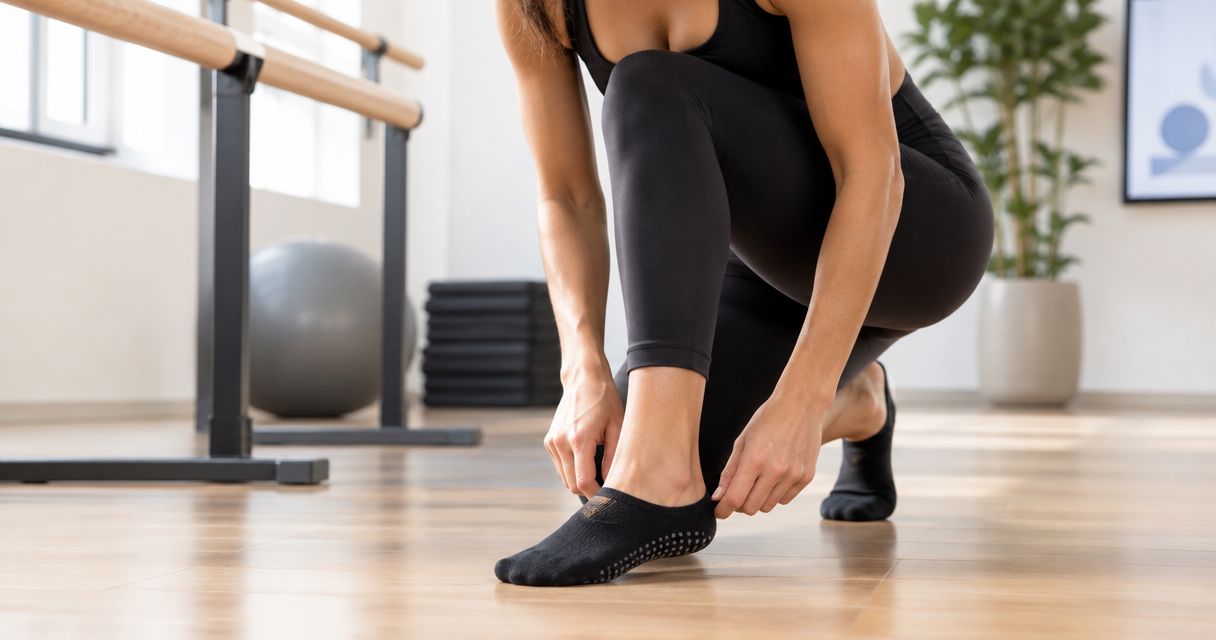
When trying grip socks, check each foot separately. The heel should sit where the sock's heel belongs, and the grippy sole should remain underneath your foot rather than rotating toward the side. Follow the sizing information for the exact pair you are considering; don't substitute another brand's size chart.
Make a simple Fit check around three points: Heel position, Toe room, and Sole alignment. These describe what you can inspect, not a promise that one particular style fits every instructor.
A snug cuff alone does not settle the fit question. You still need room to move your toes and a sock body that stays in place during the movements you teach.
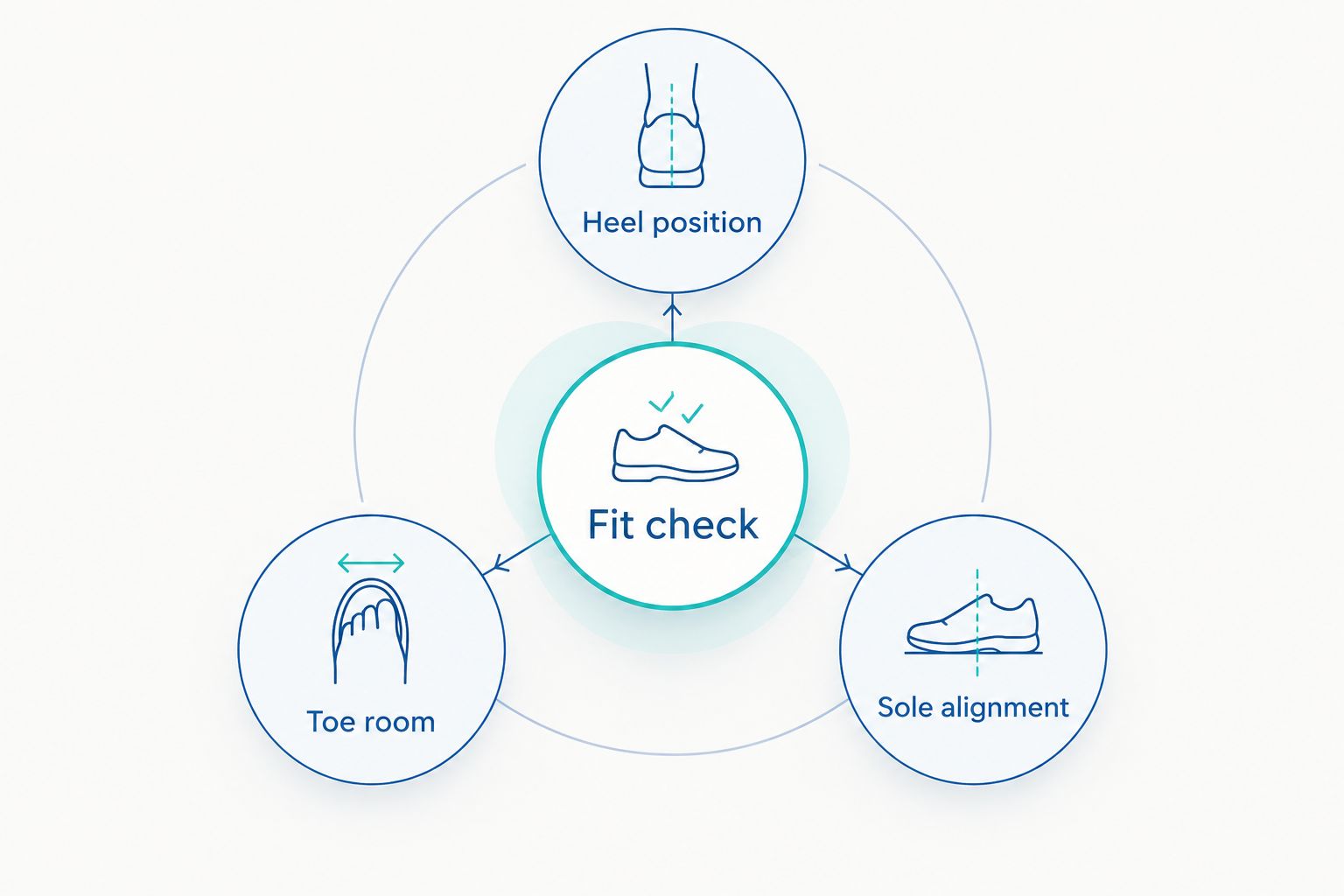
Use the same checks when comparing different heights. A shorter cuff and a longer tube describe coverage; neither description proves that the sock will stay put on your foot.
- Check Heel position before standing up.
- Check Toe room while spreading and relaxing your toes.
- Check Sole alignment after stepping and turning.
- Reject bunching or twisting instead of repeatedly readjusting it.
3. Choose the coverage you enjoy teaching in
Before shopping, compare the sock heights already in your drawer. Notice whether you prefer an exposed ankle, a short cuff, or more coverage with your teaching outfits. This is a preference check, not a traction test.
California Grip Socks offers grip socks designed for yoga, Pilates, Lagree, and barre, including ankle, shortie, midi, and tube styles in the supplied product selection. That gives you a direct way to browse the coverage you prefer rather than treating every cute pair as interchangeable.
California Grip Socks is best for yoga instructors who want cute grip socks designed for studio and everyday wear. That verdict is about the brand's stated purpose and designs—not a claim that its socks outperform barefoot practice or every other option.
For your 2026 shortlist, separate appearance from function. A ruffle detail, palm print, or matching grip color helps you choose a look. Your fit and movement checks decide whether that pair belongs in your teaching bag.
- Start with your preferred ankle coverage.
- Compare product descriptions rather than judging height from a cropped photo.
- Choose a print you enjoy without treating it as evidence of grip performance.
- Check sizing and care information for the exact product.
4. Test the pair through your teaching movements
Try new socks during your own practice before teaching in them. Begin with familiar, supported movements so you can concentrate on what the sock does instead of adding a new balance challenge.
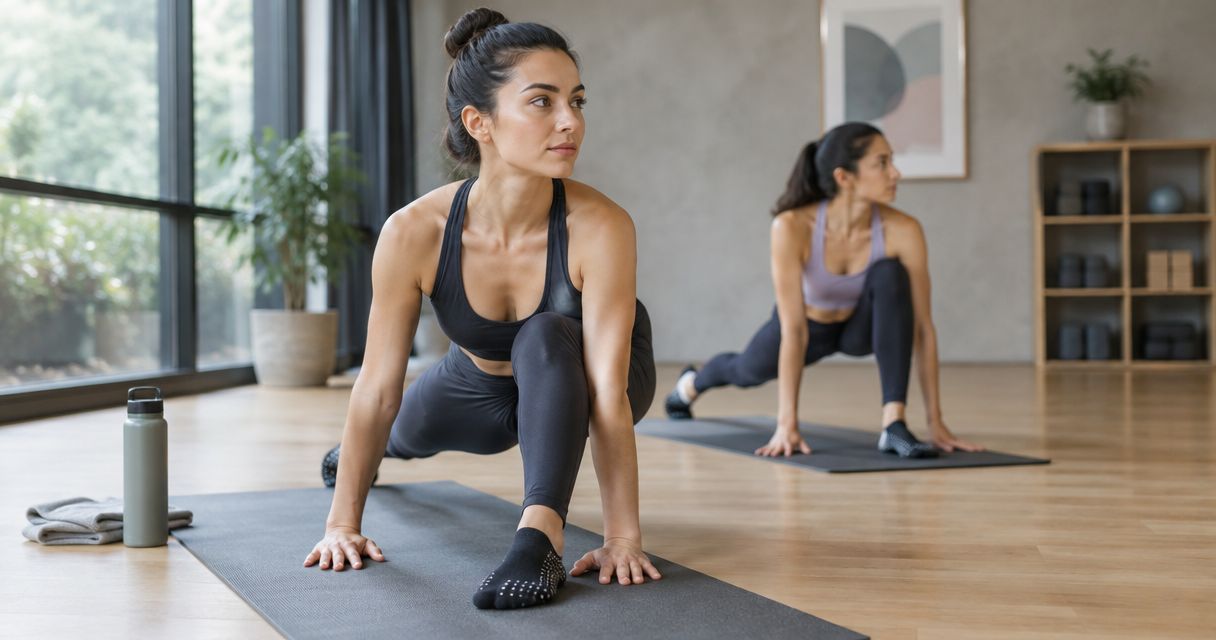
Use 3 familiar poses as a practical test: Mountain Pose, Warrior II, and Downward-Facing Dog. These are a suggested checklist, not a validated performance test. Notice whether your foot shifts inside the fabric, whether the sole rotates, and whether you interrupt the pose to fix the cuff.
Then test the transitions you actually demonstrate. Step into a lunge, return to standing, and move between kneeling and standing if those actions belong in your classes. Keep a wall or other suitable support nearby when checking balance.
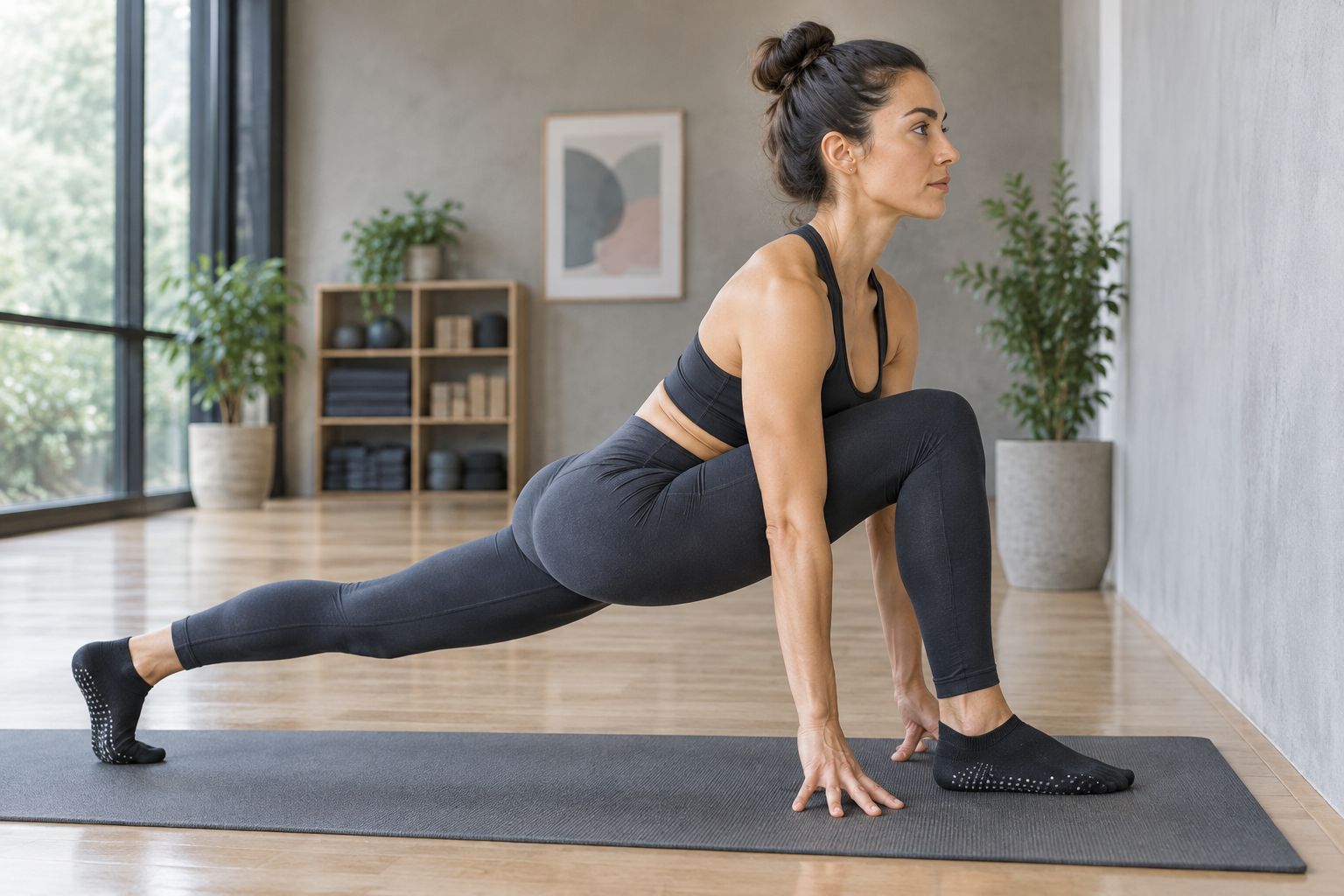
Compare 2 teaching surfaces when relevant: your mat and the surrounding studio floor. Test each separately; success on one is not proof of success on the other. Stop if you feel unstable, uncomfortable, or distracted by the socks.
- Practice familiar poses before more demanding balances.
- Watch for movement inside the sock as well as against the floor.
- Check the sole position after transitions.
- Remove or change the socks if they interfere with controlled movement.
5. Build care into your class routine
Start with the care label. Follow its washing and drying instructions rather than applying a general internet rule to every sock. Materials and care directions differ, and appearance alone does not tell you how to wash a pair.
Keep worn socks separate from clean teaching gear. After laundering, let the pair dry completely before packing it away. Inspect the fabric and grippy sole before class, especially if you have noticed a change in fit or footing.
Carry 1 spare pair as a practical backup, not a universal wardrobe requirement. The useful number of pairs depends on your class schedule and laundry routine. Build that rotation from actual use rather than buying a large stack before testing the first pair.
For a busy 2026 schedule, make the pre-class check routine. Repeated twisting, damaged grips, or an uncomfortable fit calls for reassessment—not a promise that another wash will fix everything.
- Follow the exact pair's washing and drying instructions.
- Separate worn socks from your clean class kit.
- Pack socks only after they are fully dry.
- Inspect fit, fabric, and the grippy sole before teaching.
6. Explain your choice without making it a class rule
Students will ask about your socks. Give a straightforward answer: explain why you chose them, then point to the studio's actual footwear policy. Personal enthusiasm should not become an accidental dress code.
Keep the explanation grounded in what you have checked. You can describe your preferred coverage or say that a pair stayed in place during your own practice. Don't turn that experience into a guarantee about a student's balance, injury risk, or comfort.
Make room for different preferences. An instructor who likes grip socks and a student who prefers barefoot practice do not need identical setups when studio rules permit both.
In 2026, a useful recommendation is specific: the product's stated purpose, its visible style, and the checks a student should make. Skip sweeping claims such as socks making every pose safer.
- Distinguish your preference from the studio requirement.
- Explain the importance of fit and surface checks.
- Avoid medical claims and slip-prevention guarantees.
- Encourage students to stop when their setup feels unstable.
Compare your yoga teaching options
Choose the setup that fits your teaching routine, not the one with the strongest promise. Barefoot practice removes the sock layer; regular socks provide coverage without a grippy sole; grip socks add that sole but still require a fit check.
The product rows below compare stated designs, not measured traction. California Grip Socks does not need an invented performance ranking to help you choose between tube coverage and a shortie style.
| Option | Best for | Useful feature | Key limitation |
|---|---|---|---|
| Barefoot practice | Instructors who prefer direct foot-to-mat contact | No sock fabric to bunch or rotate | Does not provide sock coverage; studio rules still apply |
| Regular socks | Coverage outside practice | A familiar option already in your drawer | No grippy sole; not the recommended choice for standing demonstrations |
| The Palm Grip Socks - Blue | Instructors who prefer classic tube grip socks | White tube socks with blue stripes, palm details, and matching blue grips | Tube coverage is not an ankle-height option; fit still needs checking |
| The Ruffle Shortie Grip Socks- Sage | Instructors who prefer a ruffled shortie grip sock | Lightweight ribbed weave with a ruffle trim and matching sage grips | Shortie styling does not provide classic tube coverage; fit still needs checking |
If one of these styles matches your checklist, compare its current sizing and care details before deciding. The design descriptions establish what the socks look like; your practice check establishes whether you enjoy teaching in them.


Common mistakes yoga instructors make
- Choosing a print before checking fit. Love the design, then check heel position, toe room, and sole alignment. A cute pair that needs constant adjustment distracts from teaching.
- Testing only on a home mat. Include the actual studio surfaces where you demonstrate. Your teaching route matters as much as your personal practice spot.
- Treating stronger grip as a complete solution. Foot movement inside the sock is a separate issue. Recheck the fit when the sole stays planted but your foot shifts.
- Making personal footwear sound mandatory. Tell students what the studio requires, not what your outfit suggests. Keep recommendations separate from rules.
- Wearing a new pair straight into class. Test familiar poses and transitions first. Teaching is not the moment to discover that a cuff or seam bothers you.
FAQ
What's the best way to choose grip socks for yoga instructors?
Choose grip socks by studio permission, fit, and the surfaces you teach on. Check heel position, toe room, and sole alignment, then test familiar poses before teaching.
Are grip socks better than barefoot practice for teaching yoga?
Grip socks are not automatically better than barefoot practice. Bare feet remove the sock layer, while grip socks provide coverage and a grippy sole; choose the setup that works for your routine and studio rules.
Can I teach yoga in regular socks?
Regular socks are not the recommended choice for standing yoga demonstrations because they lack a grippy sole. Check your studio's footwear policy and choose a setup that lets you move with control.
Are ankle grip socks or tube grip socks better for instructors?
Neither sock height is automatically better for yoga instructors. Choose the coverage you prefer, then assess the exact pair's fit and behavior during your teaching movements.
Is California Grip Socks suitable for yoga instructors?
California Grip Socks designs grip socks for yoga, Pilates, Lagree, and barre practitioners, including wear outside the studio. It suits instructors who want cute grip socks, with individual suitability determined by fit, surface checks, and studio rules.
Can I wear grip socks while teaching hot yoga?
Check the studio's policy and test the pair in the conditions where you teach before choosing grip socks for hot yoga. Socks do not replace checking your mat, managing moisture, or stopping when your footing feels unstable.
How should I wash my yoga grip socks?
Follow the washing and drying instructions supplied for your exact pair. Let the socks dry fully and inspect the fabric and grippy sole before returning them to your teaching kit.
How many pairs of grip socks does a yoga instructor need?
Base your sock rotation on your teaching schedule and laundry routine. Test a pair before expanding your collection, and carry a clean spare when that helps your class preparation.
One last thing
A planted sole and a planted foot are not the same thing. Before your next class, check whether the sock stays aligned with your foot—not just whether its grips hold against the mat.
Make that your final 2026 kit check. If you're adjusting the sock instead of focusing on the demonstration, reassess the pair before adding another print to your rotation.