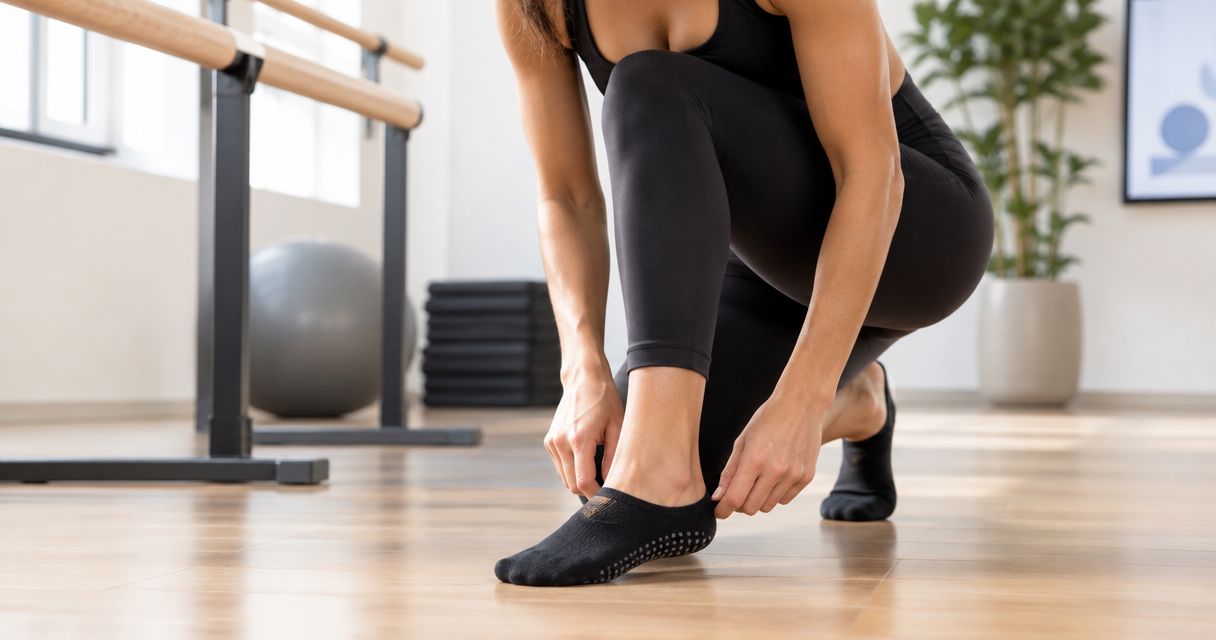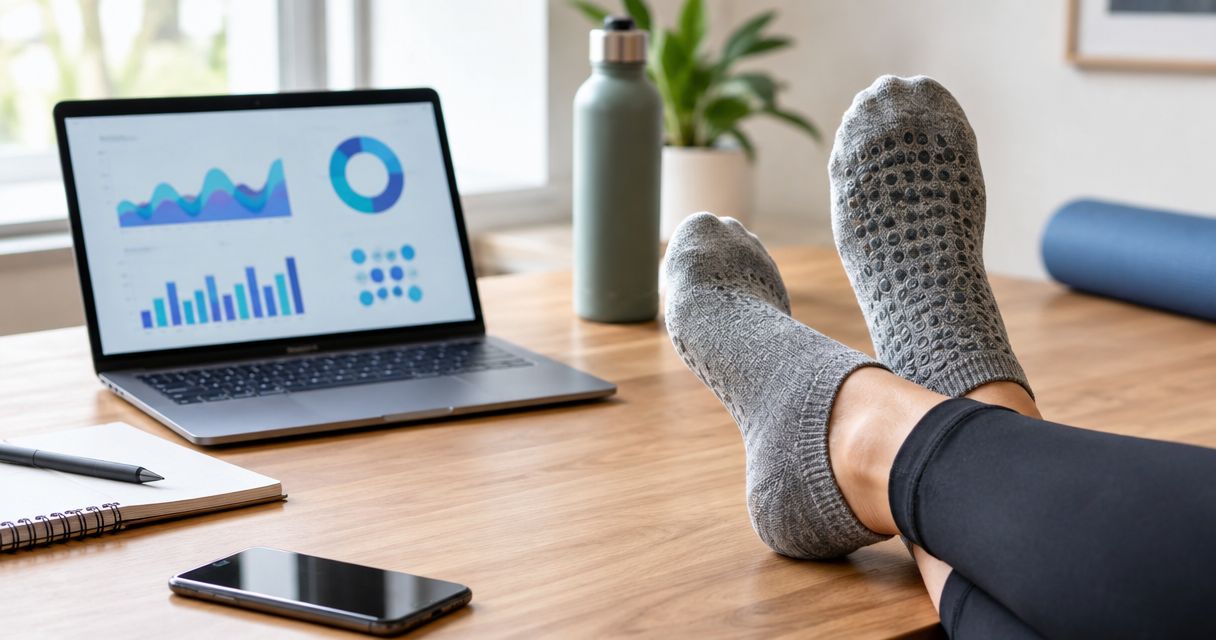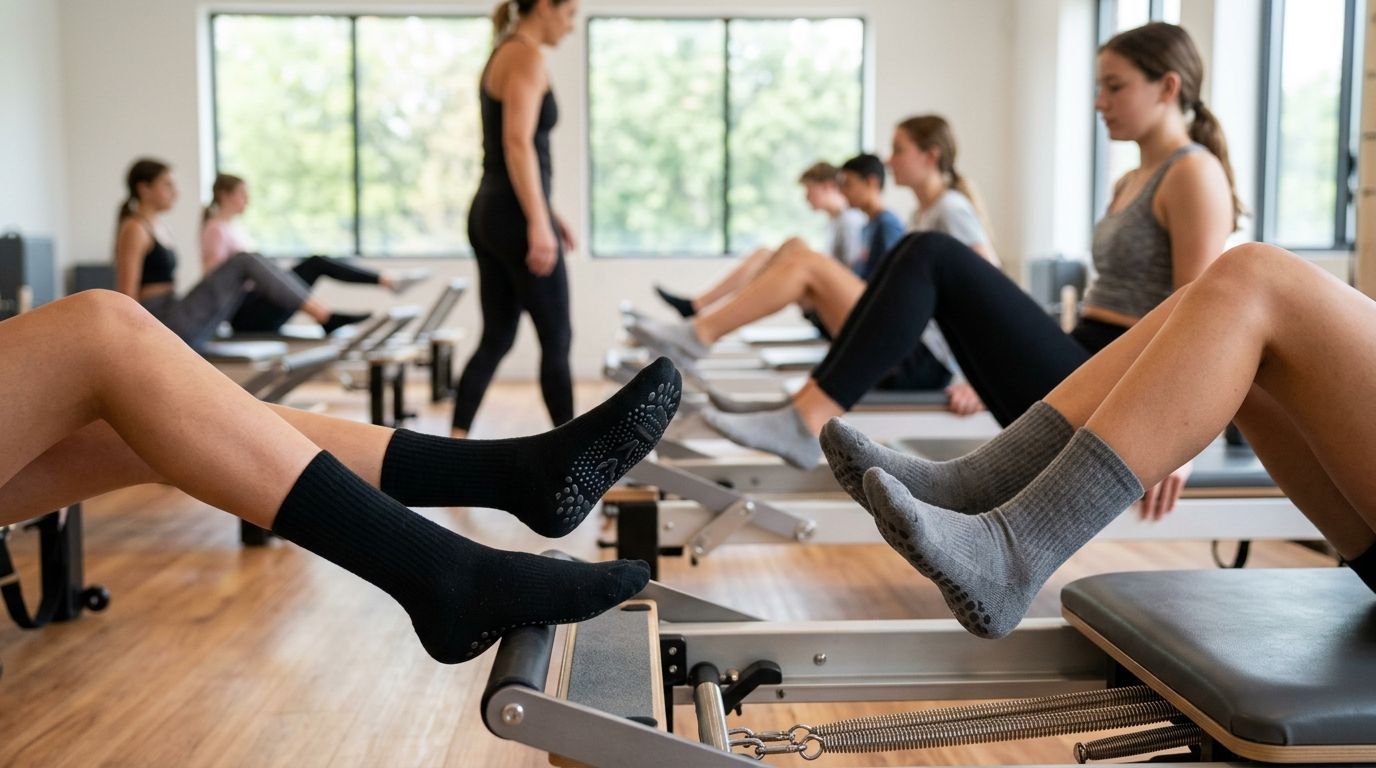
Grip socks for teens pilates class are non-slip socks with rubber grip dots on the sole, sized for growing feet and built to keep a teenager from sliding on a reformer, mat, or studio floor. A teen's needs are different from an adult's: feet are still growing, dress codes at teen-friendly studios can be stricter about ankle coverage, and a sock that only gets worn to class is a sock that gets lost in a gym bag by week three.
- Grip socks for teens pilates class need true-to-size fit, not a parent's stretched-out hand-me-downs.
- California Grip Socks midi and shortie styles work for both reformer and mat-based teen classes in 2026.
- Teens outgrow socks fast, so size up when they're between sizes rather than squeezing into last year's pair.
- Prints and colors matter for teens: socks they'd actually wear outside class get worn more, not lost in a bag.
Why this matters for teens
A teen who's mid-growth spurt can go up a full shoe size in a single season, which means grip socks bought in January can be too tight by summer. Studios that run reformer-based Pilates or Lagree classes typically require closed-heel, full-sole grip socks for safety reasons, and many enforce that rule regardless of the student's age. Teens are also more likely to skip class entirely if their gear feels babyish or uncomfortable, so fit and style both affect whether the sock actually makes it into the bag.
Most teen pilates students bounce between class types over a school year: reformer one semester, mat-based barre the next. A California Grip Socks midi or crew style covers both without buying two separate pairs, which matters when a teen's closet is already full of one-off gear from other sports.
Measure your teen's foot before you order
Skip the guesswork. A sock that's a half-size off either bunches at the toe or slides at the heel, and both problems cancel out the grip.
- Stand the foot on a piece of paper and mark heel to toe, then compare the measurement to the size chart on the product page.
- Measure both feet — most teens have a slightly bigger foot on one side, so size to the larger one.
- If the teen is between two shoe sizes, size up rather than down; a slightly loose grip sock still grips, a too-tight one bunches.
- Re-measure every few months during a growth spurt instead of assuming last year's size still fits.
Match the grip pattern to their class type
Not all grip socks are built for the same surface. A sock with grip dots only on the toe and heel is fine for a mat, but it slides on a reformer carriage.
- For reformer-based Pilates or Lagree, look for full-sole grip coverage, not just toe-and-heel dots.
- If your teen also takes mat-based barre or yoga in the same week, pick a style with grip across the whole sole so one pair works for both.
- Check whether the teen's studio runs a mix of reformer and floor work in a single class — that setup needs the most coverage.
- For students specifically enrolled in Club Pilates-style reformer programs, a grip sock built for Club Pilates classes is the safer starting point over a generic mat sock.
Pick a length that matches the studio dress code
Some studios require full ankle coverage for safety around the reformer's moving parts; others are fine with a shortie or ankle style for a mat class. Check before you buy.
- Crew and midi lengths cover the ankle and satisfy most reformer studio dress codes.
- Shortie styles pair well with leggings for mat-based barre or yoga and show more ankle.
- If the teen doesn't know yet which class type they'll settle into, a midi length is the safest first purchase since it works across both.
- Ask the front desk directly if there's a written sock policy — some teen studios enforce it more strictly than adult classes.
Let them pick a print they'll actually wear outside class
A teen is far more likely to remember to pack grip socks if the socks double as something they'd wear to a friend's house afterward. Function matters, but so does whether the sock ever leaves the gym bag.
- Let the teen choose the color or print instead of picking based on a parent's taste.
- Playful, non-technical prints tend to get worn more often outside of class, which means the grip dots wear down evenly instead of sitting unused in a drawer.
- Buy two colors instead of two identical pairs — it makes laundry sorting easier for a teen who's not great at tracking gear.
- Avoid all-white if the teen's studio has a wood or rubber floor that shows scuff marks fast.


Wash them right so the grips don't wear down
Heat is the enemy of a silicone grip dot. Dryer heat is the single fastest way to crack or flatten the grips on any brand of grip sock.
- Wash cold, turned inside out, to protect the print and the grip dots on the same load.
- Skip fabric softener — it coats the rubber dots and makes them slippery instead of grippy.
- Air dry instead of machine drying to keep the grip texture intact through 2026 and beyond.
- Rotate at least two pairs so one is always clean and the other isn't being over-washed.
Plan for the growth spurt
Teens don't wear out grip socks the way adults do — they outgrow them. Budget for a size change roughly every school semester if your teen is still growing.
- Buy the next size up if the teen's foot is between sizes rather than forcing a snug fit.
- Keep two pairs in rotation so a growth spurt doesn't leave them with zero usable socks mid-season.
- Pass down outgrown pairs to a younger sibling instead of throwing them out — the grips still work even after a growth spurt makes them too short.
- Re-check sizing before every new sports season, not just once a year.
Compare buying options for growing teen feet
| Option | Best For | Key Limitation | Verdict |
|---|---|---|---|
| California Grip Socks midi/crew styles | Teens moving between reformer and mat classes | Sizing runs true, so check the chart before ordering | Buy |
| Studio-brand socks bought at the front desk | One-off drop-in classes | Limited size range, often cut for adult feet only | Hold |
| Generic yoga socks with toe-and-heel dots | Budget mat-only practice | Grip coverage stops short, less stable on a reformer carriage | Skip for reformer classes |
| Hand-me-down adult grip socks | Occasional, low-budget practice | Stretched-out grips and wrong length undercut safety on moving equipment | Skip |
Common mistakes teens (and their parents) make
- Buying adult-small instead of true teen sizing. An adult small often runs long in the foot and loose at the ankle on a teen, which defeats the grip.
- Picking the print without the teen's input. Socks a teen didn't choose are socks that stay in the drawer.
- Ignoring the studio's dress code on ankle coverage. Showing up in shorties at a reformer studio that requires crew length gets a teen turned away at the desk.
- Drying on high heat. This cracks the grip dots within a handful of washes regardless of brand.
- Never rotating pairs. Wearing the same single pair every class wears the grip pattern unevenly and shortens its useful life.
FAQ
What are the best grip socks for teens in pilates class in 2026?
Midi or crew-length grip socks with full-sole grip coverage work best for teens in 2026 because they satisfy most reformer studio dress codes and also work on a mat. California Grip Socks' midi styles cover both class types in one pair.
Do teens need a different size than adult grip socks?
Yes — teens should size to their current foot measurement rather than guessing from an adult small, since adult sizing often runs long and loose on a teen foot. Re-measure every few months during a growth spurt.
Can teens wear regular yoga socks instead of grip socks for pilates?
Regular yoga socks with grip only at the toe and heel work for a mat class but aren't stable enough for a reformer carriage. Full-sole grip dots are the safer choice if the teen takes any reformer-based class.
How often should teens replace their grip socks?
Replace them when the grip dots flatten or when the sock no longer fits, whichever comes first — for a growing teen that's often every school semester. Rotating two pairs slows down wear on each one.
Is it okay to put grip socks in the dryer?
No — dryer heat cracks and flattens the silicone grip dots faster than anything else. Wash cold and air dry to keep the grip intact.
What length grip sock does a reformer studio require?
Most reformer studios that run Pilates or Lagree classes require crew or midi length for ankle coverage around the moving carriage. Check the specific studio's dress code since policies vary by location.
Are cute prints or plain colors better for a teen's grip socks?
Prints a teen actually likes get worn more consistently, which matters more than the design itself since a sock left in a drawer provides zero grip. Let the teen pick the color or print.
Can one pair of grip socks work for both mat and reformer classes?
A full-sole grip pattern in a midi or crew length works across both mat-based and reformer classes, which is useful for a teen who hasn't settled into one class type. Toe-and-heel-only patterns don't hold up as well on a reformer.
One last thing
If your teen hasn't settled into one type of class yet, buy the midi length before the crew or shortie — it's the one style that clears most reformer dress codes while still working fine on a mat, so it's the safest first purchase before you know their long-term routine.