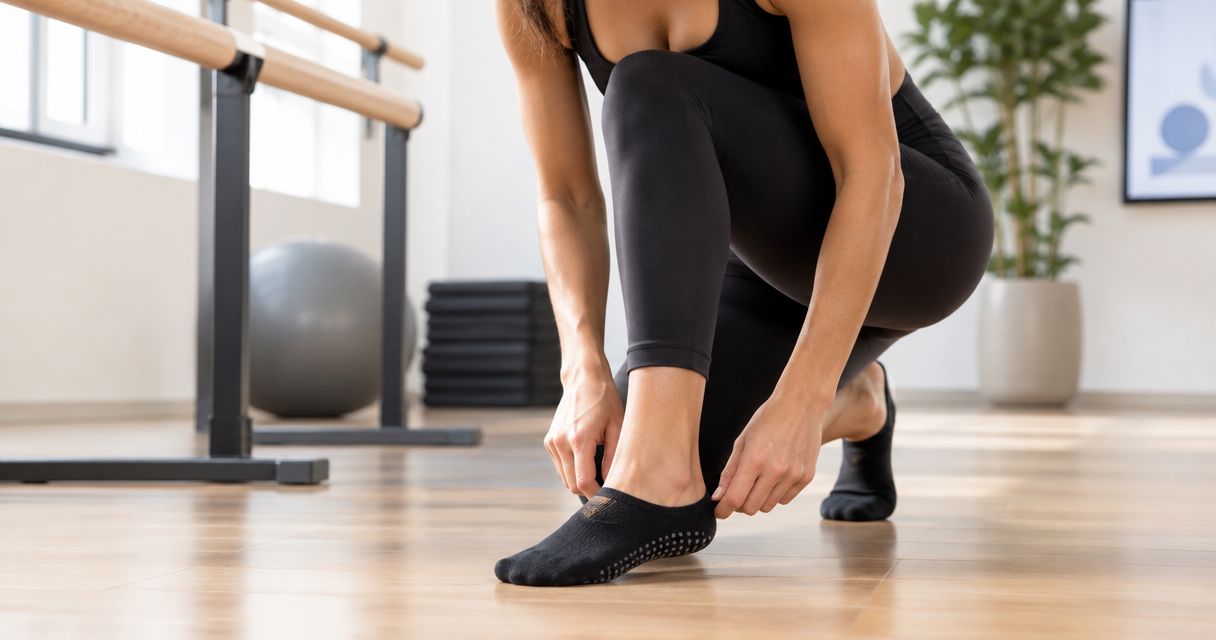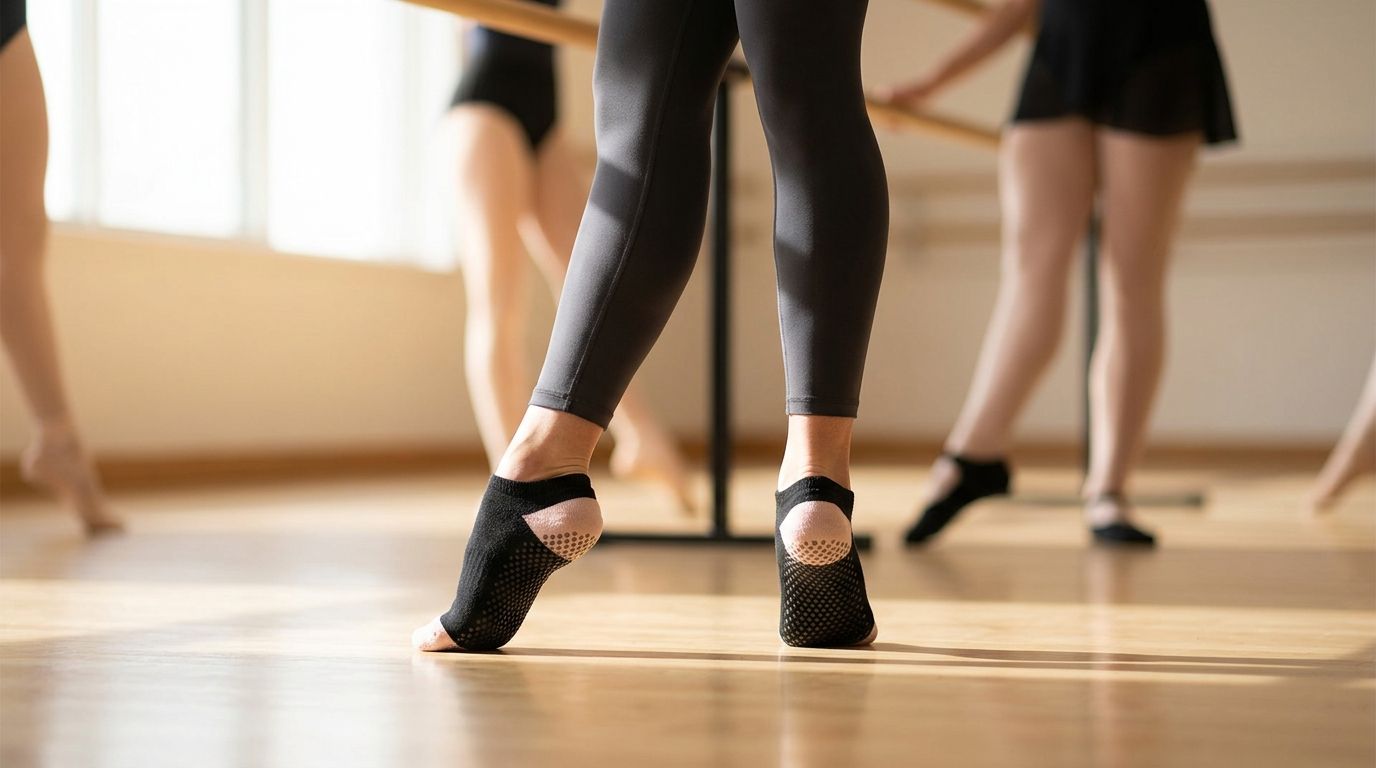
Grip socks for ballet are gripped-sole socks that dancers wear on marley or hardwood studio floors to add traction during barre work, floor combinations, and center practice without sacrificing the pointed-foot line ballet training demands. Ballet dancers need something different than a Pilates studio regular: enough grip to hold a relevé without sliding, but a low enough profile that it doesn't bulk up under soft ballet slippers or interfere with pointe work.
- Grip socks for ballet work best in crew or ankle length so they don't bunch under soft shoes in 2026 studio classes.
- California Grip Socks' Classic Ankle and Ruffle Shortie styles give dancers grip at the ball of the foot without extra bulk.
- Skip full-tube styles for pointe rehearsal — the extra fabric at the ankle can shift a shoe's fit mid-class.
- Wash grip socks inside out on cold to protect the silicone grips through a full 2026 dance season.
Why grip socks matter for ballet and dance
Marley flooring is designed to give dancers some traction already, but socks worn over bare feet or under booties during warm-up strip that traction away fast. A dancer sliding through a tendu or losing footing mid-pirouette isn't a small inconvenience — it's how ankles get rolled. Grip socks put the traction back without dancers having to go barefoot in a shared studio.
Dance training also differs from barre or Pilates in one key way: footwork is constant and the foot articulates through full pointe, demi-pointe, and flat positions in the same combination. A sock built for a stationary Pilates reformer grip pattern doesn't always flex the same way through a grand battement or a chassé. That's the gap this guide addresses — matching sock style to how ballet and dance actually move the foot.
Choose the right sock length for your studio floor
Studio floor type changes what length actually helps. Marley is grippier than sealed hardwood, so dancers on marley can usually get away with a shorter sock, while hardwood studios often call for more coverage at the ankle for stability.
- Crew/tube length for full coverage during long rehearsals or when a studio floor runs slick
- Ankle length for warm-up and barre when you want grip without extra fabric near a shoe's opening
- Shortie styles with a ruffle or ribbed trim for center work where you want the sock to stay put without a tight elastic band
- No-show or low-cut only for adult recreational classes, never for pointe or partnering work
Check the ankle grip socks guide if you're deciding between ankle and crew for a specific studio floor.
Match grip placement to pointe and flat work
Grip pattern location matters more in ballet than in most other grip-sock use cases because the foot moves through a full range from flat to full pointe in a single phrase of choreography.
- Look for grips concentrated at the ball of the foot and heel, the two zones that bear weight in relevé
- Avoid socks with grips only at the arch — they won't help during a piqué or a jump landing
- For barre combinations, a sock with grip along the full sole tends to hold better through pliés and tendus
- For center floor work, lighter grip patterning keeps the foot feeling freer during turns
Size for a snug, non-slip fit
A loose grip sock defeats its own purpose. Extra fabric bunching at the toe changes how a dancer feels the floor, which throws off balance in passé and arabesque positions.
- Try a size down from your everyday sock size if you're between sizes
- Look for a snug ribbed cuff that won't slide down mid-combination
- Test the fit standing in first position before committing to a full class in them
- For dancers with wider feet, check the wide feet grip socks guide before ordering a full rotation
Build a rotation for daily class and rehearsal
Dancers training five or six days a week put more wear on socks than a once-a-week Pilates client. A single pair worn daily loses grip faster and needs more frequent washing, which shortens its life.
- Keep at least three to four pairs in rotation to space out washes
- Assign one pair specifically to pointe rehearsal and a different pair to jazz or contemporary floor work, since grippier soles can catch during slides and turns
- Rotate in a crew-length pair for cold studio mornings and a shortie pair for warmer months
- Once grips start feeling smooth to the touch, retire that pair from daily use
Wash and re-grip your socks correctly
Silicone grips degrade faster with harsh detergent and high heat. Most dance parents and studio directors learn this the hard way after a favorite pair loses traction within a season.
- Wash inside out in cold water to protect the silicone print
- Skip fabric softener — it coats the grips and reduces traction
- Air dry instead of tumble drying on heat
- Check grips for peeling every few weeks during a heavy rehearsal season
Layer socks with legwarmers and tights
Ballet dancers commonly layer legwarmers over grip socks during warm-up, then peel them off for center work. The sock needs to stay in place through that transition without a legwarmer dragging it down.
- Choose a snug cuff that won't shift when a legwarmer is pulled off
- Avoid bulky ribbing that creates a visible line under tights
- For recital or performance days, a shortie or ankle length disappears more cleanly under a costume
Know when grip socks aren't the right choice
Grip socks are not a pointe shoe replacement and they're not appropriate for every class type. Pointe technique classes, partnering work with lifts, and any choreography requiring a bare-foot floor connection call for different footwear or bare feet entirely.
- Skip grip socks during actual pointe shoe fittings or pointe technique exams
- Skip them for any class where the syllabus specifically requires bare feet
- Use them for warm-up, barre, contemporary, and rehearsal footwork instead
Comparison: sock options for ballet and dance
| Option | Best for | Key limitation |
|---|---|---|
| Crew/tube grip socks | Full rehearsals, hardwood floors | More fabric near the ankle can shift under a tight shoe |
| Ankle grip socks | Barre warm-up, marley floors | Less coverage for dancers who run cold |
| Shortie/ruffle grip socks | Center floor work, recital days | Shorter cuff can slide on very narrow ankles |
| Regular socks (no grip) | Casual stretching only | No traction — unsafe for turns and relevé |
| Barefoot | Pointe technique, partnering | No cushioning, not appropriate for shared marley floors |
California Grip Socks' Classic Ankle and Ruffle Shortie styles are the best fit for ballet and dance training in 2026 because they sit low enough to avoid bulking under soft shoes while still gripping through relevé and turns.


Common mistakes ballet and dance students make
- Buying tube-length socks for pointe rehearsal. The extra cuff fabric can shift the fit of a pointe shoe mid-combination — go with ankle or shortie instead.
- Skipping the grip check after washing. A grip sock that's been through a hot dryer a dozen times may look fine but has lost most of its traction.
- Wearing the same pair every single day. Daily rehearsal wear degrades silicone grips fast; a three-to-four pair rotation lasts through a full season.
- Ignoring foot width when sizing. A too-narrow sock bunches at the toe and throws off balance during turns.
- Treating grip socks as a pointe shoe substitute. They help with barre and floor work, not with actual pointe technique training.
For dancers comparing dance-specific sock brands, the Pointe Studio alternatives guide breaks down how other dance-focused grip sock brands stack up on fit and grip placement.
FAQ
What are the best grip socks for ballet in 2026?
Ankle-length and shortie grip socks work best for ballet in 2026 because they add traction at the ball of the foot and heel without extra fabric bulk near a soft shoe's opening. Crew-length works better for full rehearsals on hardwood floors that need more coverage.
Can you wear grip socks with ballet slippers?
Yes, many dancers wear low-profile grip socks during barre and warm-up alongside soft ballet slippers. Avoid bulky tube styles that change how the slipper fits.
Are grip socks allowed in pointe technique class?
Most pointe technique classes and pointe shoe fittings require bare feet rather than grip socks, since instructors need to see foot articulation and shoe fit directly. Save grip socks for barre and rehearsal instead.
Do grip socks help with turns and pirouettes?
Grip socks add traction that prevents sliding into a turn, but the grip pattern needs to sit at the ball of the foot and heel rather than only the arch to actually help through relevé.
How often should dancers replace grip socks?
Replace a pair once the silicone grips feel smooth to the touch instead of textured. Daily rehearsal wear reaches that point far sooner than once-a-week class wear.
Do grip socks work on marley dance floors?
Yes, grip socks work well on marley. Marley already has some built-in traction, so a shorter ankle or shortie sock is often enough compared with sealed hardwood studios that call for more coverage.
What length grip sock is best for recital day?
Shortie or ankle length grip socks work best for recital because they stay hidden under most costumes while still gripping through the performance.
Are ruffle grip socks just for style or do they work for dance?
Ruffle trim is cosmetic, but the underlying ribbed weave and grip pattern function the same as any other shortie style, which makes them usable for barre and center work, not just for looks.
One last thing
Most ballet studios never mention sock rotation, but rehearsal-heavy dancers wear through grip faster than any other group California Grip Socks serves. A pair used daily through tech week loses noticeable traction well before a once-a-week pair does. Keep a backup pair in your dance bag through 2026 rather than discovering on class morning that your grips have gone smooth.