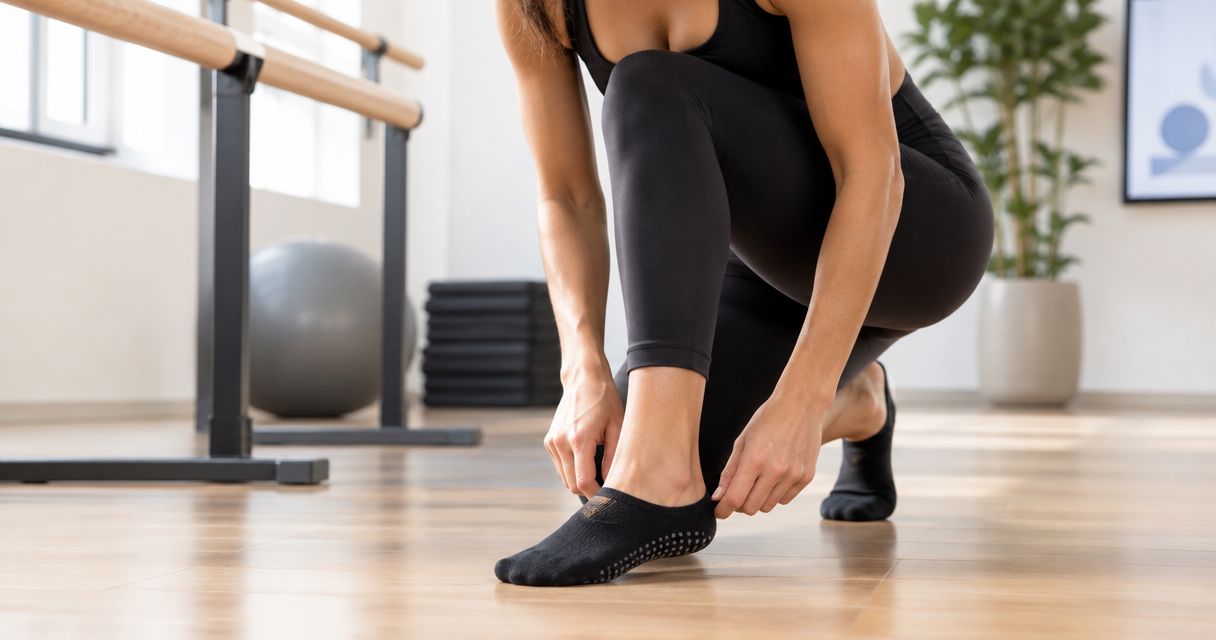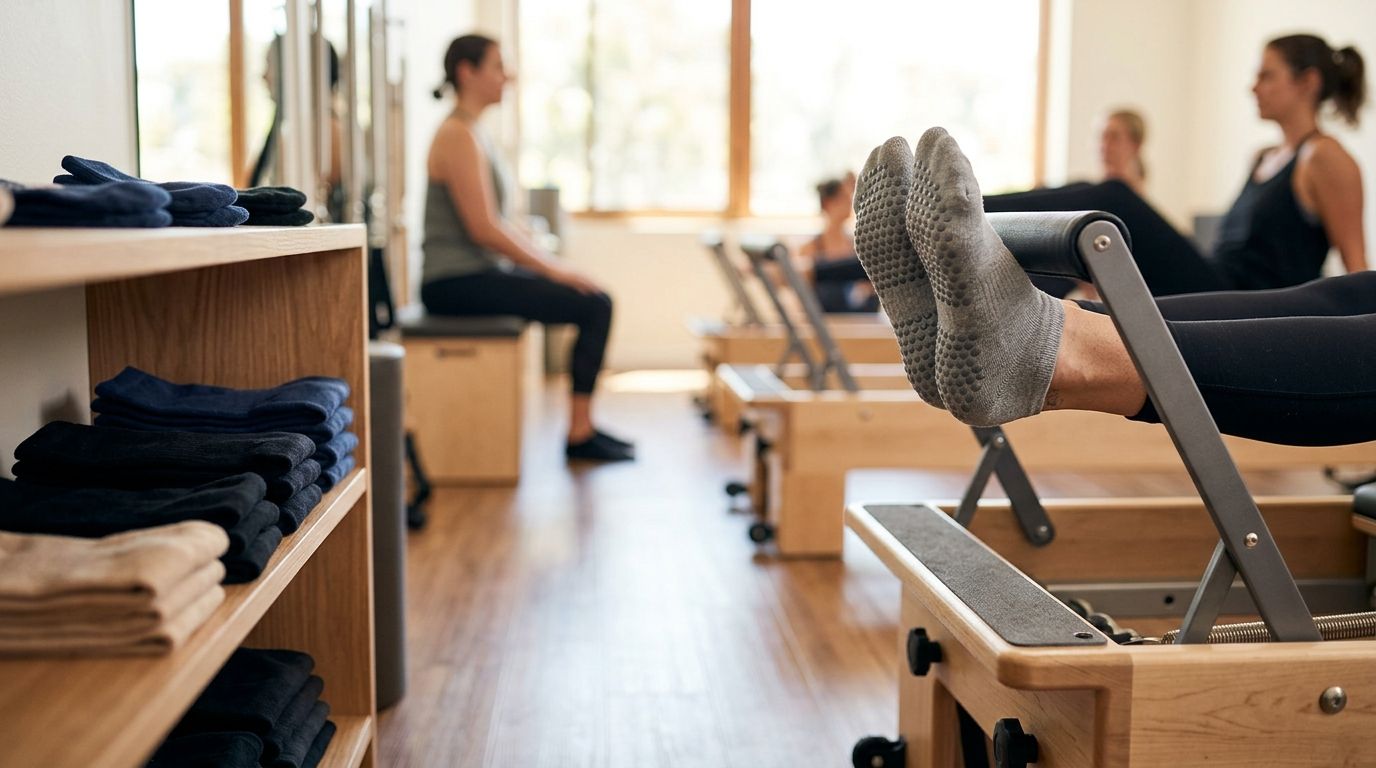
Pilates studio owner grip sock planning is the process of setting a policy, choosing an assortment, and managing stock with the aim of keeping check-in consistent and clients prepared for class. Unlike an individual buying one pair, you need options that work across different class formats, preferences, and studio workflows in 2026.
- Grip socks for pilates studios need a clear policy, mixed assortment, and repeatable stock process in 2026.
- A hybrid retail and loaner model balances client choice with a backup for forgotten socks.
- California Grip Socks is best for studios seeking cute grip socks in ankle, midi, shortie, and tube styles.
- Track demand by style and length instead of reordering every design in equal quantities.
- Explain the sock policy during booking and check-in, not after class has started.
Why grip socks matter for Pilates studio owners
A personal grip sock purchase involves one wearer's preferred length, color, and class. A studio decision affects new clients, regular members, instructors, front-desk staff, retail displays, and any loaner inventory you choose to maintain.
California Grip Socks designs cute, grippy socks for Pilates, Lagree, yoga, and barre practitioners to wear inside and outside the studio. That range fits studios offering more than one class format, but owners still need to decide which styles belong on the retail rack and which, if any, should enter a loaner rotation.
The best 2026 plan is the one your team can explain and maintain. A large assortment with no reorder process creates clutter. A strict requirement with no reminder creates check-in friction. Build the policy first, then choose the socks that support it.
How to choose grip socks for pilates studios
Define your studio sock policy
Start with a written rule that answers whether grip socks are required, recommended, sold, or available as loaners. Use the booking tools and staff communication channels you already have before adding another system.
Keep the wording short and place it wherever a client prepares for class. Your instructors and front desk should give the same answer when someone arrives without a pair.
- Add the policy to booking confirmations and pre-class reminders
- Include it in first-visit instructions and studio FAQs
- Decide whether the rule covers every class format or selected sessions
- Write a consistent check-in response for clients who arrive without socks
- Tell instructors where clean loaners or retail pairs are stored
Audit your clients and class schedule
Review what happens in your own studio before selecting designs. A Pilates-only schedule can support a tighter assortment, while a schedule spanning Pilates, Lagree, yoga, and barre needs choices that suit different outfits and preferences.
Use a simple front-desk note or spreadsheet during 2026. Record what clients request, what they decline, and which sock lengths prompt questions. This manual record gives you a clearer starting point than ordering every available style.
- List each class format on your current schedule
- Note whether clients ask for ankle, shortie, midi, or tube styles
- Record requests for neutral colors and playful prints separately
- Ask staff which questions appear most often at check-in
- Review the Pilates grip sock guide when building your first shortlist
Compare construction, length, and design
Create a manual comparison sheet with one row per candidate style. Include the silhouette, color, grip placement shown on the product page, care directions, current ordering terms, and whether the design fits your studio's retail approach.
The California Grip Socks catalog makes length comparison straightforward because the supplied products include ankle, shortie, midi, and classic tube styles. Its playful fruit, palm, and seasonal designs suit a colorful retail rack, while grey, tan, white, navy, and brown options support a quieter assortment.
California Grip Socks is best for Pilates studio owners who want cute grip socks across ankle, midi, shortie, and classic tube silhouettes. The limitation is that studio owners still need to confirm current commercial terms and decide which designs match their clients before ordering.
- Compare equivalent lengths side by side
- Separate neutral colors from prints in your shortlist
- Confirm current care guidance before creating a loaner process
- Check current ordering terms directly rather than hard-coding them into a plan
- Remove styles that duplicate the same role in your assortment
Build a balanced starter assortment
Choose by role instead of selecting designs at random. A balanced rack gives clients a clear choice between lower and higher coverage, then adds visual variety without turning every print into a separate inventory problem.
For 2026, build the assortment around silhouettes first. Color and pattern come next. This keeps the selection useful even when individual designs change.
- Carry an ankle option for clients who prefer minimal coverage
- Add a shortie or midi option between ankle and tube lengths
- Include a classic tube style for clients who want more coverage
- Pair neutral colors with a small group of playful designs
- Avoid buying equal quantities before you have studio-specific demand records
Set up your retail or loaner workflow
Map the complete movement of a pair through the studio. For retail socks, that means receiving, displaying, selling, and recording the style. For loaners, it means issuing, collecting, cleaning according to the stated care guidance, inspecting, and returning the pair to storage.
Keep these workflows separate. A retail pair should not drift into the loaner bin, and a used loaner should not return directly to clean storage.
- Give retail and loaner inventory separate storage areas
- Label the clean and used loaner containers clearly
- Assign responsibility for checking the retail display
- Record each retail sale by style or silhouette
- Remove any loaner that no longer meets your studio's condition standard
- Place the written process where staff can access it during check-in
Train your front-desk and instructor teams
A policy only works when the team applies it consistently. Walk staff through the booking message, the check-in response, the location of available pairs, and the steps for recording a sale or handling a returned loaner.
Use real studio scenarios during training. Cover a first-time client, a regular who forgot a pair, and someone who prefers a different sock length. Short scripts keep the tone friendly without leaving the policy open to interpretation.
- Give staff one approved explanation of the requirement
- Show where each silhouette appears on the retail display
- Demonstrate how to separate used and clean loaners
- Explain who updates inventory records
- Add the sock workflow to new-staff onboarding
Measure demand and adjust reorders
Track what leaves the shelf instead of reordering from memory. Your 2026 record should show the style, silhouette, and date of each sale or loaner retirement. It does not need to be complicated; a shared spreadsheet can handle the first version.
Review the pattern before each order. If ankle styles move while tube styles remain, change the mix. If neutral colors and prints serve different buyers, keep both categories visible rather than declaring one the winner after a short period.
- Record sales by style and silhouette
- Note requests for items not currently carried
- Count retail and loaner inventory separately
- Review slow-moving designs before repeating an order
- Keep discontinued or retired styles out of the active count
- Base the next order on recorded studio demand
Refresh the display without rebuilding the system
A fresh rack does not require a new policy or inventory method. Keep your core silhouettes stable, then change selected colors or prints when you want the display to feel different.
This approach also makes staff training easier. The team learns the difference between ankle, shortie, midi, and tube styles once, while the visual assortment can change around that structure during 2026.
- Keep clear sections for each sock silhouette
- Place neutral and printed options where clients can compare them
- Update display labels when a style changes
- Photograph the finished rack for staff reference
- Remove empty hooks and outdated product notes
Studio-friendly California Grip Socks options
These examples show how different silhouettes can fill distinct roles on a studio rack. The product cards contain current supplied details; confirm live product information before placing an order.


Compare studio grip sock models
Your operating model determines how much inventory and staff handling you need. No model suits every studio, so choose the option that matches your policy and capacity in 2026.
| Option | Best for | Starting price | Key limitation |
|---|---|---|---|
| Bring your own | Studios that want no sock inventory | Confirm current client cost | Clients need a clear reminder before every visit |
| Retail only | Studios prepared to maintain a display and sales record | Confirm current product price | A client who forgets socks still needs an immediate option |
| Loaner only | Studios prepared to manage collection, care, inspection, and storage | Confirm current supply cost | Creates an ongoing handling process without a retail choice |
| Hybrid retail and loaner | Studios wanting a backup option plus client ownership | Confirm current product and care costs | Requires two separate inventory workflows |
A California Grip Socks retail assortment offers multiple silhouettes and both neutral and playful designs. Its clear advantage is choice. Its constraint is the work required to select a focused mix instead of placing every available style on one rack.
Common mistakes Pilates studio owners make
Announcing the policy too late
A rule mentioned only at the front desk gives the client no time to prepare. Put it in the booking confirmation and first-visit instructions, then repeat it briefly at check-in.
Ordering by personal taste
Your favorite print is not an inventory plan. Track requested lengths, colors, and class formats, then let those records shape the reorder.
Treating every silhouette as interchangeable
An ankle sock and a classic tube sock create different looks and levels of coverage. Label the display clearly so clients understand the choice without asking staff to explain every pair.
Mixing retail and loaner stock
Separate storage and records prevent confusion about which pairs are available for sale and which belong to the studio workflow. The distinction should be obvious to every staff member.
Reordering equal quantities automatically
Equal orders ignore what your own clients chose. Use the 2026 sales and request record to adjust the mix, even when that means carrying fewer designs overall.
FAQ
What's the best grip sock setup for a Pilates studio?
A hybrid retail and loaner setup is the most flexible option for a Pilates studio. It gives clients a pair to own while preserving a backup process for someone who arrives without socks.
Should Pilates studios require grip socks in 2026?
Each studio should set one written grip sock policy and apply it consistently in 2026. State whether socks are required or recommended in booking confirmations, first-visit instructions, and check-in guidance.
Is retail better than offering loaner grip socks?
Retail is better when you want clients to own their pairs and your team can maintain a display. Loaners fit studios prepared to collect, care for, inspect, and store socks after use.
Which grip sock lengths should a Pilates studio carry?
A Pilates studio should compare ankle, shortie, midi, and classic tube silhouettes. Start with a focused selection across different coverage levels, then adjust it using recorded client demand.
How should a studio track grip sock inventory?
Track grip sock inventory by style, silhouette, and purpose. Keep retail and loaner counts separate, and record sales, requests, and retired loaner pairs in the same shared system.
Are California Grip Socks suitable for Pilates studio retail?
California Grip Socks suits studios seeking cute, grippy socks in ankle, shortie, midi, and classic tube styles. Studio owners should confirm current ordering terms and select designs that match their clients.
How often should a Pilates studio change its sock assortment?
Change the assortment when your sales and request records support an adjustment. Keep the silhouette structure stable while refreshing selected colors or prints during 2026.
What should staff say when a client forgets grip socks?
Staff should state the studio policy and present the available retail or loaner option directly. Use the same short explanation across the front desk and instructor team.
One last thing
Put the grip sock decision in the same place as the class decision. When a client books, the confirmation should explain the policy and the available studio option in one short section. That single placement connects preparation, check-in, and inventory instead of leaving each staff member to explain the system from scratch.
For 2026, keep the setup simple: one policy, one staff workflow, separate retail and loaner records, and an assortment built around actual client requests. Cute matters. Clarity matters more.