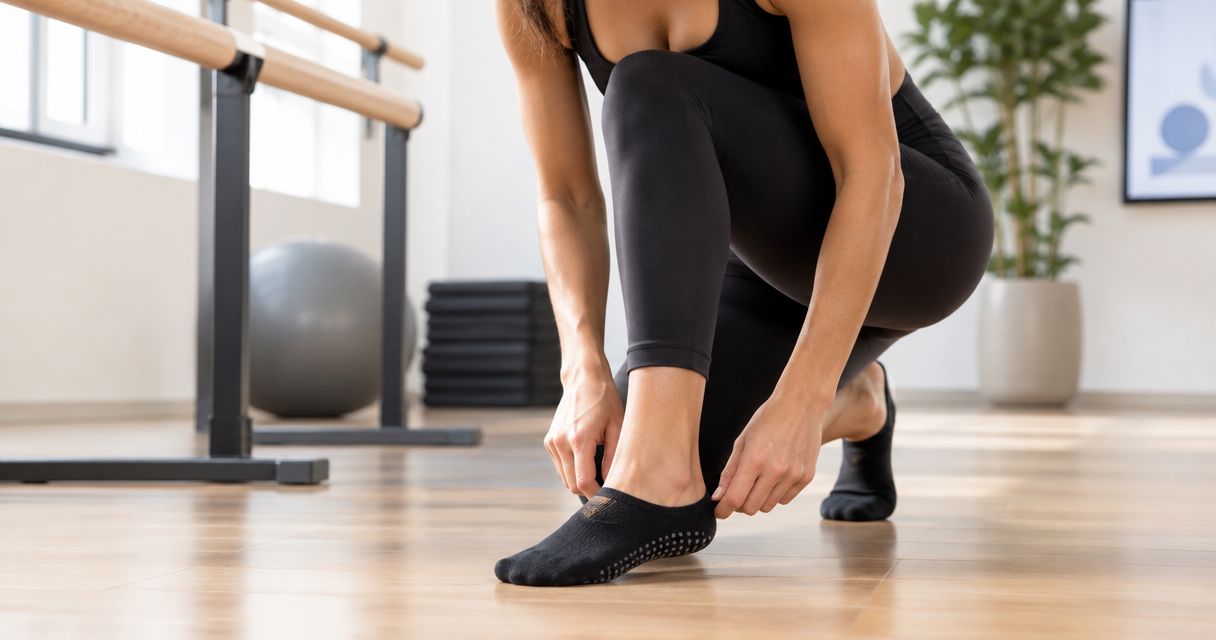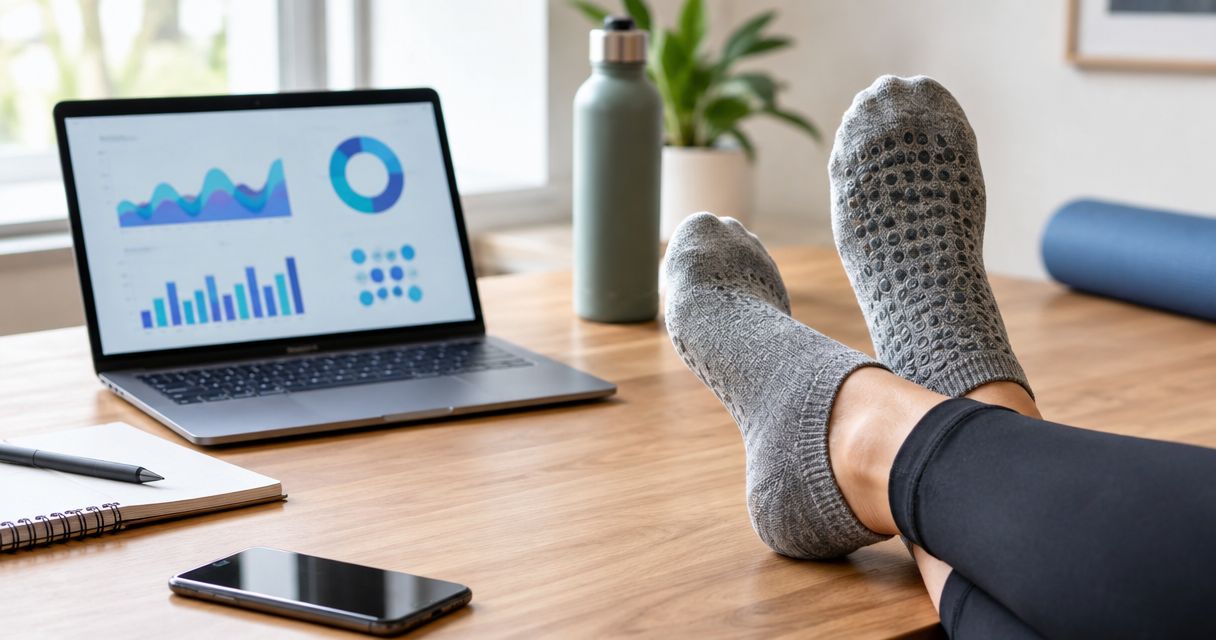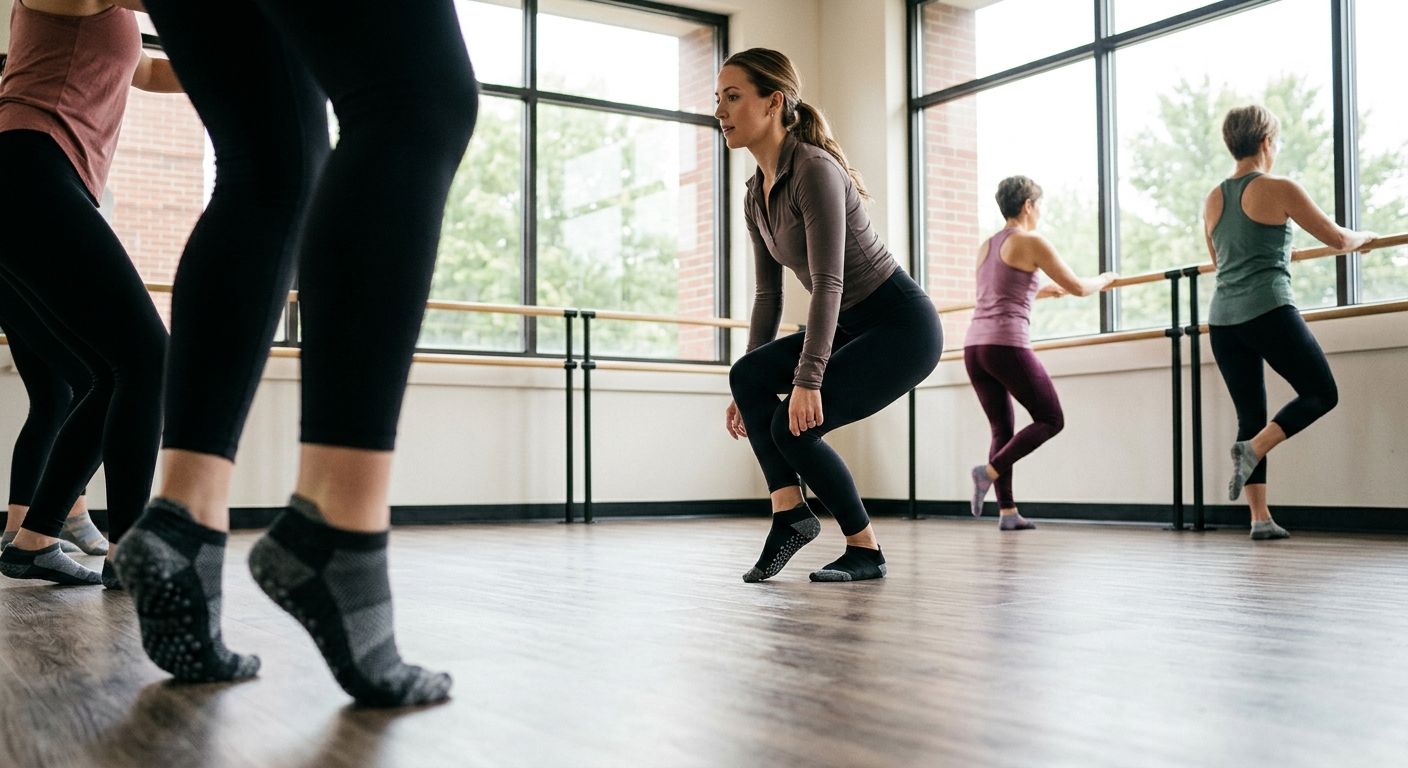
Grip socks for dance instructors are ballet-style socks with sticky rubber soles built for teachers who spend 6-8 hours a day moving between barre, dance, and Pilates classes and need traction that survives back-to-back sessions. Instructors face a different wear pattern than a student who shows up twice a week: the grips take daily friction, the fabric gets washed constantly, and a slippery sole mid-class is a liability, not just an annoyance.
- Grip socks for dance instructors need a rotation of at least 3-4 pairs, not one favorite.
- Midi and crew lengths outlast shorties for instructors teaching 4+ classes a day.
- California Grip Socks makes crew, midi, and shortie styles with sticky grips built for daily studio wear.
- Matching grip pattern to your studio floor matters more than brand loyalty.
Why grip socks matter for dance and barre instructors
A student wears grip socks for 50 minutes. An instructor wears them for a full shift, often across multiple formats: a 7am barre class, a 9am dance conditioning block, a private session at noon. That's a different durability test than the category was originally designed for.
Instructors also model the brand of the studio. Cute, put-together grip socks read as professional in front of a room; a stretched-out, bald-gripped pair does the opposite. California Grip Socks built its line around Pilates, barre, and dance studios specifically, which is why the sock shapes below map so directly onto a teaching schedule instead of a single class.
The other real difference: instructors wash socks far more often than the average student, sometimes daily. Fabric and grip material that hold up to that wash frequency in 2026 matter more than a print you like.
Match the grip pattern to your studio's flooring
Not every sticky-sole pattern behaves the same on every surface. Reformer decks, sprung dance floors, and rubber barre flooring all respond differently to silicone grips.
- Test a new pair on the exact floor type you teach on before buying a full rotation
- Dot-pattern grips tend to hold better on smooth reformer decks
- Denser grip coverage helps on sprung wood dance floors where slide risk is higher
- Avoid socks with grips only on the ball of the foot if you teach heel-work barre sequences
- Check grip wear weekly if you're teaching 5+ classes a week on the same floor
Choose a length that survives a full teaching day
Shorties look clean under leggings but expose more ankle to friction over a long shift. Crew and midi lengths cover more of the foot and tend to hold their shape through repeated wear and wash cycles.
- Midi length works for instructors who move between barre and mat work
- Crew length suits teachers who want ankle coverage for floor-based Pilates or rehab-style sequences
- Shortie styles are fine as a second pair for warm studios or summer classes
- Avoid ankle-only styles as your primary teaching pair if you're on your feet all day
Build a rotation instead of relying on one pair
One favorite pair worn daily wears out its grips in a matter of weeks under an instructor's schedule. A rotation of three to four pairs spreads out wear and gives each pair recovery time between washes.
- Keep at least one crew-length and one midi pair in your rotation
- Add a shortie pair for hot studios or double-class days
- Rotate pairs daily rather than wearing the same one until it wears out
- Replace any pair once the grip dots feel smooth instead of textured
Size for a snug, all-day fit
A sock that's slightly loose at 7am stretches further by your third class. Instructors should size down from their usual sock size if between sizes, since grip socks are meant to sit snug against the sole.
- Try socks on with the exact leggings or capris you teach in
- Check that the heel pocket sits at your actual heel, not sliding forward
- Reject any pair that bunches at the toe after 10 minutes of movement
- Size to your smaller foot if your feet differ slightly in size
Wash and rotate to extend the life of your grips
Daily wear means daily washing for most instructors, and grip material degrades faster with high heat.
- Wash in cold water and skip the dryer's high-heat setting
- Turn socks inside out before washing to protect the grip dots
- Air dry flat rather than hanging, which can stretch the fabric
- Retire a pair once grips feel slick rather than tacky, even if the fabric still looks fine
Once your rotation and care routine are dialed in, the sock itself matters less for performance and more for how it looks in front of a room. That's where cute, classic styles from California Grip Socks earn their spot: they hold grip through daily teaching wear and still look like something you'd want your students noticing.


Comparing sock options for barre and dance instructors
| Option | Best for | Key limitation |
|---|---|---|
| Crew grip socks | Instructors teaching mixed floor work and barre | More fabric to wash and dry daily |
| Midi grip socks | Teachers moving between barre and mat-based classes | Slightly less ankle coverage than crew |
| Shortie grip socks | Warm studios or a lighter second pair | Grips wear faster with less fabric coverage |
| Toe socks | Instructors who want individual toe articulation | Takes longer to put on between classes |
| Reformer loops | Studios with only reformer equipment | Doesn't work for barre or floor-based dance |
| Barefoot | Studios with a strict no-sock policy | No traction on slick floors, higher slip risk |
Verdict: crew or midi grip socks from California Grip Socks are the strongest daily pick for barre and dance instructors teaching multiple formats in 2026 — Buy for daily rotation. Shorties are a fine secondary pair. Reformer loops and barefoot are Skip for anyone teaching barre or dance specifically.
“A rotation of three or four pairs beats one favorite pair worn until the grips go smooth.”
Common mistakes barre and dance instructors make
- Wearing one pair all week. Grips wear down fast under daily teaching hours, and a single pair rarely survives a full month of back-to-back classes.
- Choosing print over durability. A cute design matters less than grip texture once you're eight classes into the week.
- Skipping the floor test. Grip patterns that work great on a reformer deck can slide on sprung wood dance floors.
- Buying the wrong length for the format. Shorties look clean but expose more skin to friction during long teaching shifts.
- Ignoring wash instructions. High heat in the dryer breaks down grip material faster than daily wear does.
FAQ
What are the best grip socks for dance instructors in 2026?
Crew and midi-length grip socks hold up best for instructors teaching multiple classes a day in 2026, since they cover more of the foot and survive frequent washing better than shorties.
How many pairs of grip socks does an instructor need?
Most instructors need three to four pairs in rotation so grips get recovery time between wears and no single pair takes daily wear alone.
Do grip socks work on all studio floor types?
No. Grip pattern performance varies by floor: dot patterns tend to work best on reformer decks, while denser grip coverage holds better on sprung wood dance floors.
Should instructors size down for grip socks?
Yes, if you're between sizes, size down since grip socks perform best snug against the sole rather than loose.
Can grip socks go in the dryer?
Air drying flat is safer for grip longevity. High heat from a dryer breaks down the grip material faster than normal wear.
Are crew or shortie grip socks better for teaching?
Crew and midi lengths are the stronger daily pick for instructors because they cover more of the foot during long teaching shifts; shorties work fine as a lighter secondary pair.
How do I know when to replace grip socks?
Replace a pair once the grip dots feel smooth instead of tacky, even if the fabric itself still looks intact.
Do grip socks work for both barre and Pilates classes?
Yes. Midi and crew grip socks from California Grip Socks are designed to move between barre, Pilates, and dance-based formats without a style change.
One last thing
The grip dots wear out before the fabric does. Most instructors replace socks based on how the fabric looks, but the traction is usually gone weeks earlier — check the grip texture with a finger, not the sock's appearance, before deciding a pair is done.