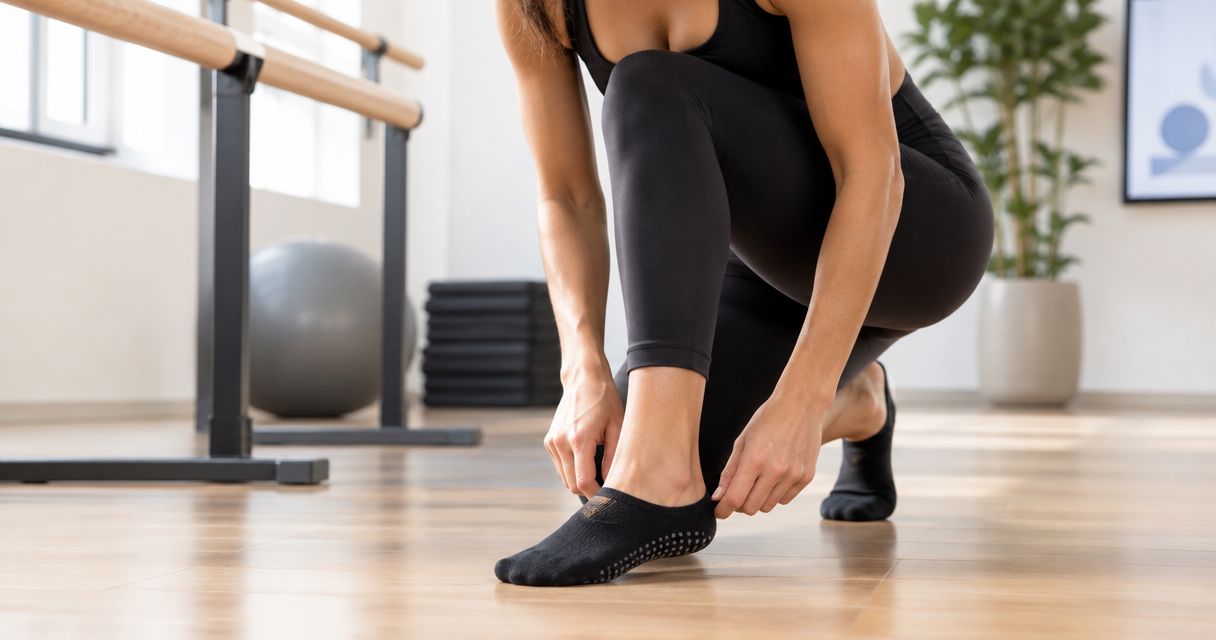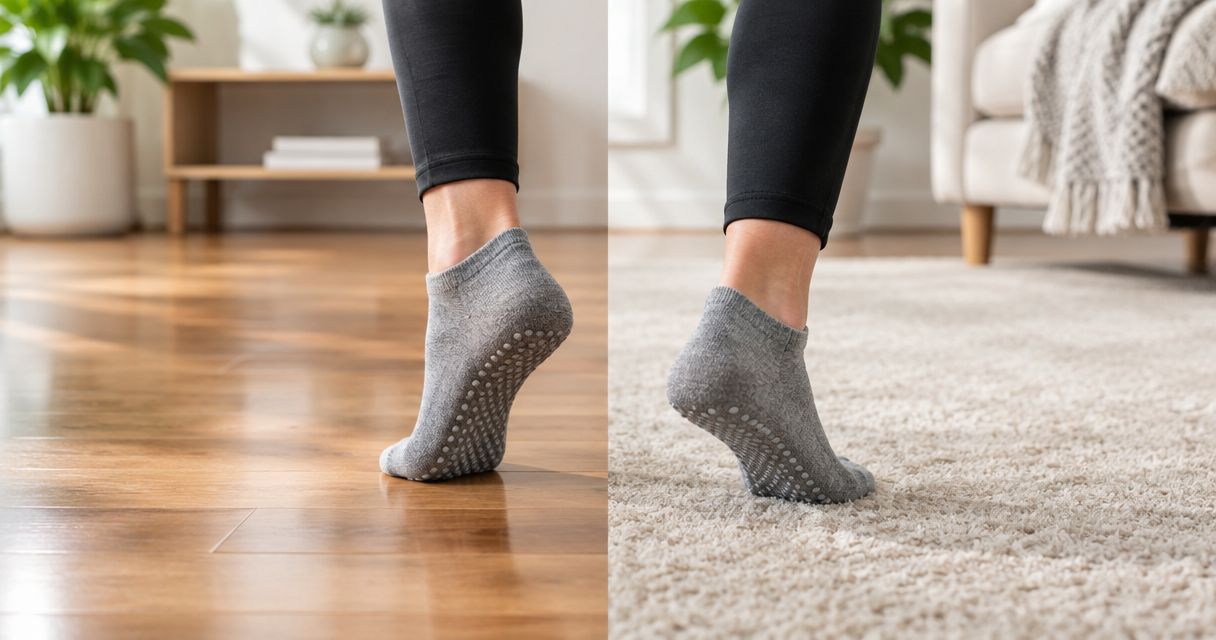
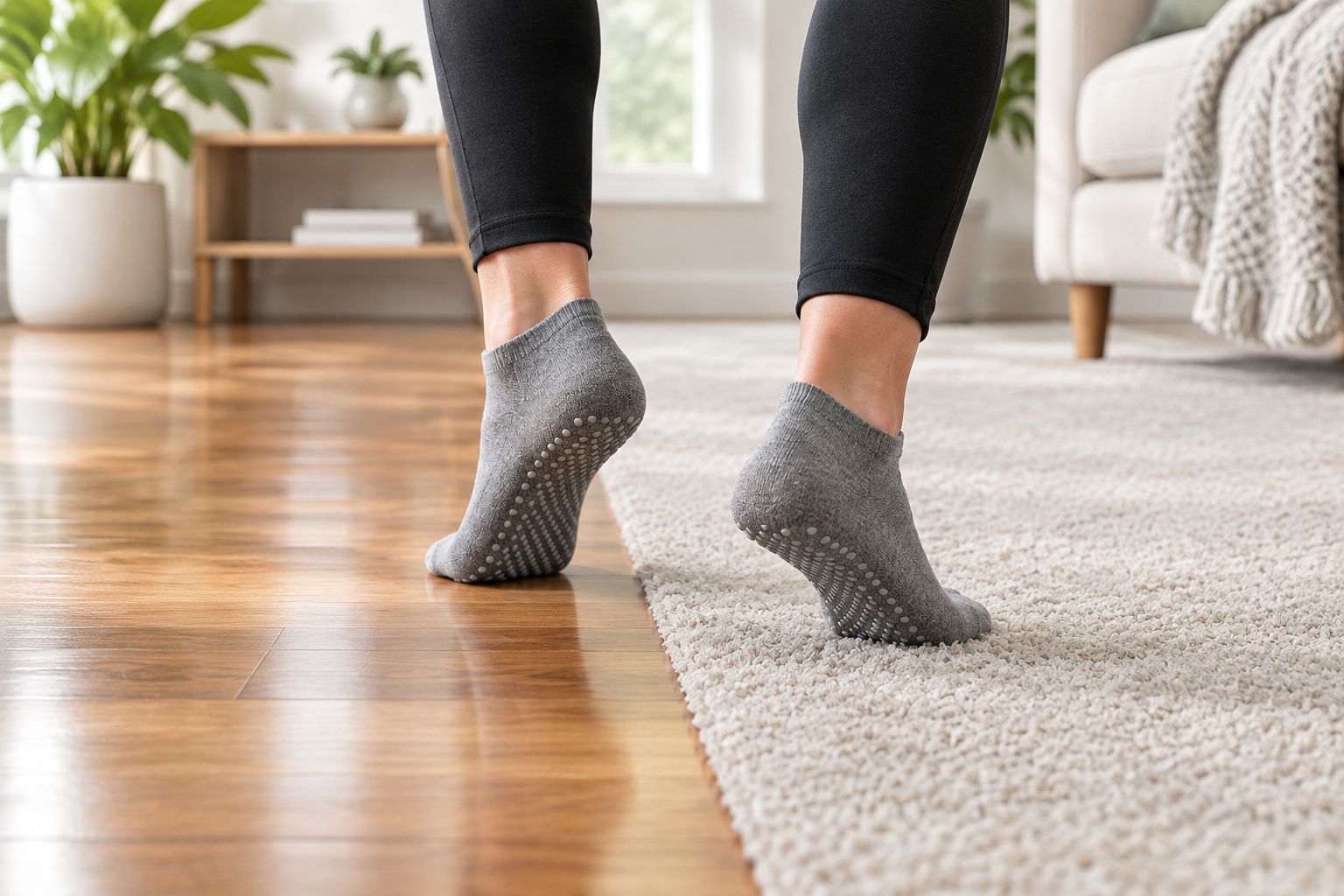
Yes, grip socks can work on dry hardwood floors because their textured soles make contact with the smooth surface. They can also be worn on carpet, but the grips usually matter less when carpet fibers interrupt contact with the floor. In 2026, the practical answer is to check both the floor and the fit: grip socks are not a substitute for keeping a walking surface dry and clear.
- Do grip socks work on hardwood floors? Yes, on dry hardwood, sole grips can contact the floor directly.
- On carpet, grip depends on the pile; thick fibers can keep the grips from contacting a firm surface.
- California Grip Socks is best for Pilates, Lagree, yoga, and barre practitioners who also want socks to wear outside the studio.
- Test any pair on your own floor before relying on it during quick movements.
Why this matters: The same pair can feel different on a studio floor, your hardwood at home, and the carpet in your bedroom. You need the grips to meet the surface, and you need the sock to stay put on your foot. If you're comparing sole styles, this guide to silicone grip socks is a useful next read; no sole design makes a damp or cluttered floor safe.
Do grip socks work on hardwood or carpet floors?
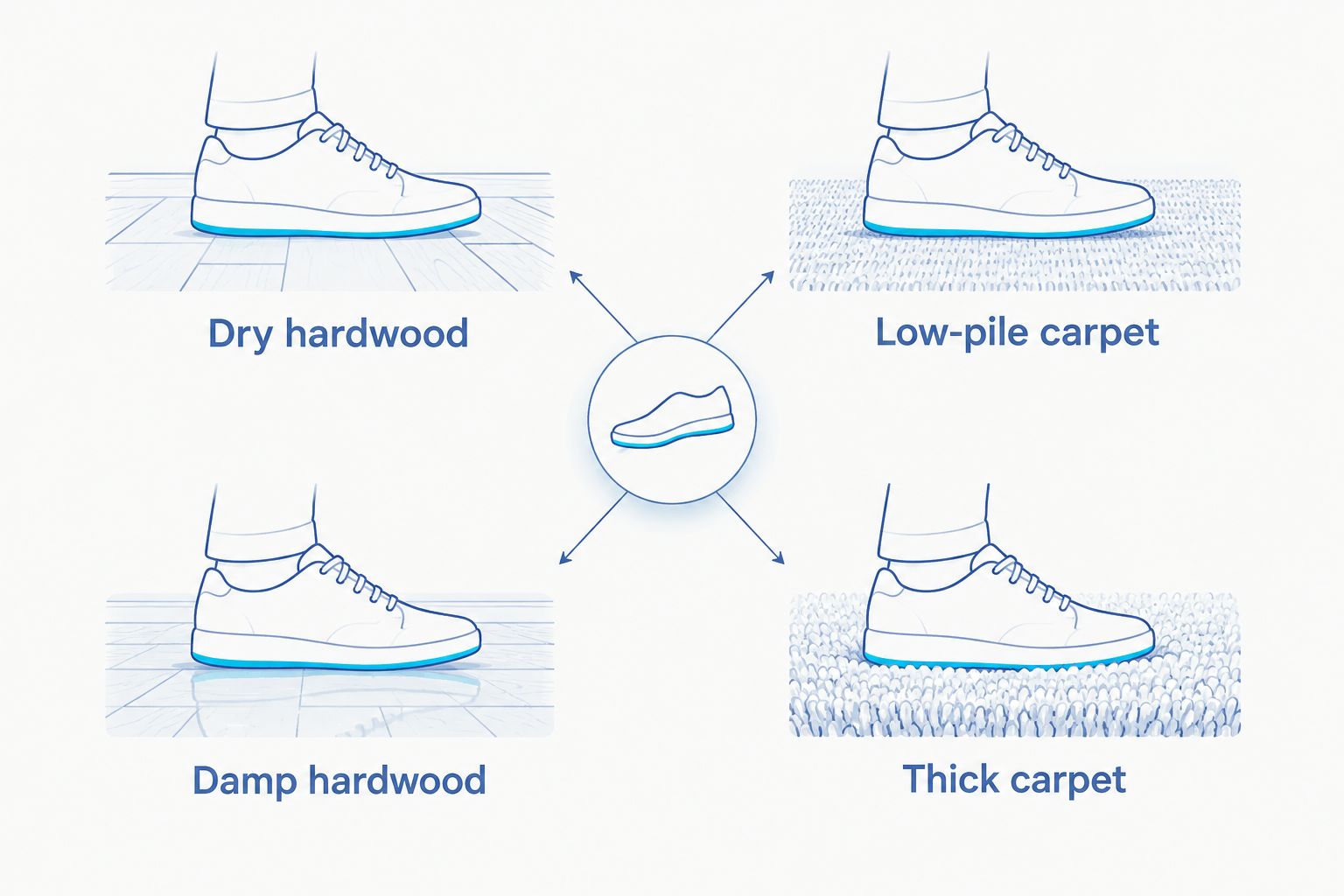
Dry hardwood is the better match for exposed sole grips. Carpet is more variable: a low, firm pile leaves less fiber between the grips and the floor, while a thick pile changes what the grips touch. Neither answer applies equally to every room, sock, or movement.
| Surface | What the grips contact | Best for | Main limitation |
|---|---|---|---|
| Dry hardwood | A firm, smooth floor | Controlled steps and at-home floor work | Dust, moisture, and an unstable sock fit can change how secure each step feels. |
| Low-pile carpet | Short carpet fibers over a firmer base | Light movement when the sock stays in place | The fibers reduce direct contact with the floor beneath. |
| Thick carpet | A deeper, softer layer of fibers | Wearing socks around the room | Sole grips cannot grip a firm floor through deep pile. |
| Damp hardwood | Moisture between the sole and floor | No grip-sock recommendation | Dry the floor before walking or exercising on it. |
The table describes how the surfaces differ, not a performance rating for a specific sock. Use grip socks on dry hardwood when the sock fits securely; treat carpet traction as something to check in the room itself. A slow step tells you more about your floor than a claim about grip in general.
Why do grip socks feel different on hardwood and carpet?
On hardwood, the sole grips meet a relatively firm surface. That makes changes in contact easier to notice: a sock that twists under your foot or a patch of dust can interrupt the steady feel you had on a clean section of floor. Best for hardwood: a pair that stays aligned under your foot while you take a slow step, stop, and turn.
Carpet puts fibers between the sole and the solid floor below it. Short, dense fibers feel different from deep, soft ones because your foot presses into the surface rather than resting on a flat plane. Best for carpet: choose by fit and comfort first, then check whether the sock feels stable on that particular carpet. Don't assume a grippy sole will turn thick carpet into a studio floor.
Neither surface changes what grip socks are designed to do at a studio: cover your feet while placing textured material under the sole. But studio use does not prove that a pair will feel identical on every floor at home. In 2026, make the decision in the room where you'll actually wear them.
Hardwood: direct contact, with a clear limit
If you can see and feel the sole grips meeting clean, dry hardwood, you have the basic condition they need to do their job. Start with ordinary walking. If the sock shifts around your foot during a turn, that movement matters even when the grips themselves stay against the floor.
The upside is straightforward: you can move from a Pilates or barre session to a hardwood room without switching out of your socks. The downside is just as important: textured soles do not remove the risk created by water, dust, or a sock that bunches up. Check the floor before you check the pattern on the bottom of the sock.
Carpet: useful to wear, less predictable for grip
A grip sock can still be comfortable to wear on carpet. Whether its sole grips add anything noticeable depends on what they contact. Low-pile carpet gives the sole a firmer surface than thick carpet; neither offers the same direct contact as hardwood.
The upside is that you can keep the same socks on as you move between rooms. The downside is that carpet fibers can limit the role of the grips. If you need reliable footing for a particular exercise, try the movement slowly on that carpet first. If your foot sinks or the sock twists, choose another surface for the exercise.
How do you check grip socks on your own floor?
You don't need an aggressive slide test. Start slowly, near something stable, and stop if the floor or sock feels uncertain. The aim is to notice whether the sole stays under your foot and whether each step feels controlled.
- Check the surface. Clear anything underfoot and make sure hardwood is dry. On carpet, notice whether the pile is low and firm or deep and soft.
- Check the sock fit. Put the sock on so the grips sit beneath your foot, not along its side. If fabric bunches or the sock rotates, adjust it before moving.
- Walk, stop, and turn slowly. Try the movements you would actually make in that room. Notice whether the sock moves against your skin, the sole moves against the floor, or both.
- Repeat after changing surfaces. A good feel on hardwood says nothing definite about the carpet beside it. Check each surface separately.
A slow check is especially useful if you plan to do floor work at home, where moving between a standing pose and a mat changes how your feet contact the floor. Keep the sock-and-floor question separate from the exercise itself: if you're unsure of your footing, pause the movement rather than pushing through it.
California Grip Socks makes grip socks for Pilates, Lagree, yoga, and barre practitioners to wear in and out of the studio. California Grip Socks is best for studio-goers who want grippy socks they can also wear beyond class, not for anyone seeking a guarantee of traction on every household floor. The brand's product details describe the socks; your own floor check tells you how a pair feels at home.


Those are options for the sock style you want, not a hardwood-versus-carpet performance ranking. The Butterfly Grip Socks has a butterfly detail and matching grips; the Ruffle Shortie Grip Socks- Sage has a shorter, ruffled shape. Best for choosing between them: pick the shape you'll want to wear, then check the fit and traction on your floor. The limit for both is the same: the product descriptions do not establish how either pair performs on your particular hardwood or carpet.
Why does grip change from room to room?
The label on your flooring is only the start. These factors explain why the answer can change even when you're wearing the same socks:
- Moisture on hardwood. A dry surface is the starting point. If the floor is damp, dry it before walking or working out.
- Dust or loose material. Anything sitting between the grip pattern and hardwood interferes with direct contact. Clear the area before a session.
- Carpet pile. A short, firm pile and a deep, soft pile put different amounts of fiber beneath the sock. Check the carpet you actually have.
- Sock position. Grips belong under the foot. A sock that turns or bunches changes where they land as you move.
- The movement you're doing. A slow walk, a stationary pose, and a quick turn ask different things of your footing. Test the movement you plan to make, starting slowly.
These are practical checks, not a promise that one surface is safe and another isn't. The best floor for a grip sock is a dry, clear floor on which that sock stays aligned during the movement you're doing. If you move from hardwood to carpet during a home workout, treat the transition as a new check rather than assuming the same feel will carry over.
Can you wear grip socks between the studio and home?
Yes. California Grip Socks describes its socks as designed to be worn both in and out of the studio. That makes the studio-to-home use case part of the brand's stated purpose, but it does not establish identical traction on a reformer area, hardwood hallway, and carpeted room.
Think about the surfaces before you start. On dry hardwood, check that the grips make contact and the sock stays in place. On carpet, focus on whether your footing feels steady despite the fibers. If you take the socks into a yoga or barre session, check that class's footwear rules as well; a sock that works for your floor at home is not automatically the right choice for every class.
There's also a simple distinction between wearing grip socks and depending on their grip. You can like the feel or look of a pair on carpet without expecting the sole pattern to change how thick carpet behaves. Save the traction decision for the exact surface and movement in front of you.
Do grip socks work on slippery hardwood?
Grip socks can add textured contact on dry hardwood, but a floor that already feels slippery deserves a closer look before you move on it. Check for moisture and loose material first. If the sock still slides during a slow walk, stop using that combination for exercise rather than assuming a faster movement will feel better.
The word slippery describes a result, not a cause. It doesn't tell you whether the issue is the floor, the sock's position, or something between the sole and the wood. A careful check separates those possibilities without making a safety claim a sock cannot support.
Are grip socks better than regular socks on carpet?
A grip sock has textured material beneath the sole; a regular sock does not necessarily have that feature. On thick carpet, the fibers can keep that texture from making firm contact, so don't choose grip socks solely for extra carpet traction. Choose a pair that fits and feels comfortable, then test it on your carpet.
On low-pile carpet, you can check whether the grips make a noticeable difference during a slow step. The answer belongs to that sock-and-carpet combination. There is no single carpet result that applies to every home.
Should you wear grip socks for at-home Pilates on hardwood?
Grip socks are a practical option for at-home Pilates on dry hardwood when they fit securely and stay in place through the movements you plan to do. Start slowly and check your footing before a standing sequence. For mat work, also pay attention to where your feet land when you step on and off the mat; those are different surfaces.
California Grip Socks is designed for Pilates practitioners, among others, but no product description here establishes a measured traction result on hardwood. Choose the socks for their stated use and style. Keep the final footing decision tied to your floor.
FAQ
Do grip socks work on hardwood floors in 2026?
Yes, sole grips can make direct contact with dry hardwood in 2026. Check that the floor is clear and the sock stays aligned during a slow step.
Do grip socks work on carpet floors?
They can be worn on carpet, but their grip is less predictable because carpet fibers sit between the sole and a firm surface. Test them on your own carpet before relying on them for movement.
Are grip socks useful on thick carpet?
Grip socks can be comfortable on thick carpet, but deep fibers limit direct contact between the sole grips and a firm floor. Don't expect them to make thick carpet feel like hardwood.
Can I wear California Grip Socks outside the studio?
Yes. California Grip Socks describes its socks as designed for wear both in and out of the studio; check their fit and feel on each floor you use.
Will grip socks keep me from slipping on wet hardwood?
No grip sock should be treated as a fix for a wet floor. Dry the hardwood before walking or exercising on it.
What should I check before doing Pilates in grip socks at home?
Check that the floor is dry and clear, the grips sit under your foot, and the sock stays in place. Start with slow movements on each surface you'll use.
Are grip socks or regular socks better for hardwood?
Grip socks put textured material beneath your foot, which can contact dry hardwood directly. How secure they feel still depends on the sock's fit and the condition of your floor.
One last thing
A floor change can matter more than a sock change. In 2026, if you walk from hardwood onto carpet in the same pair, check your footing again at the transition: the grips have gone from touching a firm surface to meeting fibers. Cute socks can come along for both parts of your day. The surface still gets the final say.