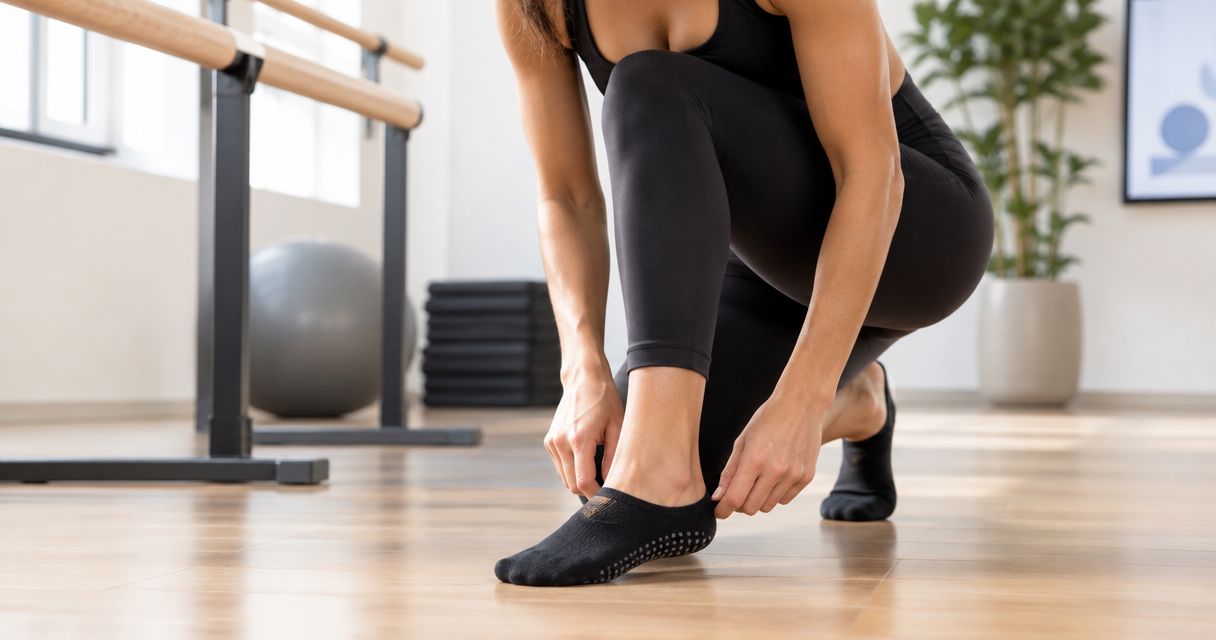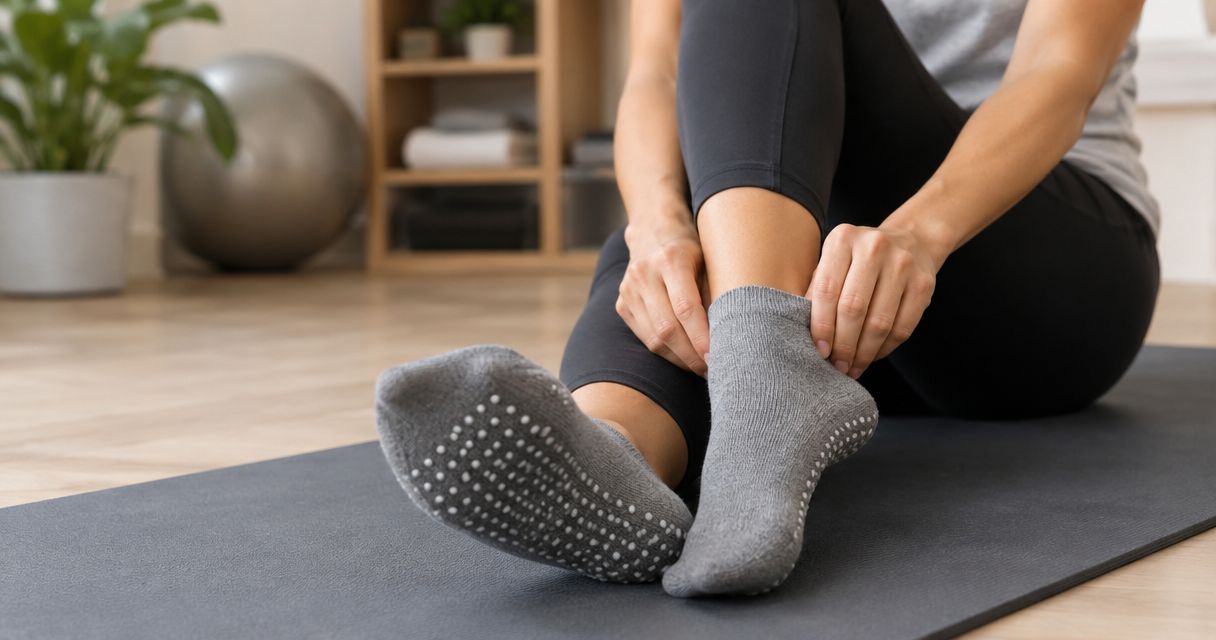
Yes, you can wear grip socks with sweaty feet in 2026. The grips contact the floor or equipment, but they do not stop your feet from sweating or guarantee that your foot will stay still inside the sock. For Pilates, Lagree, yoga, or barre, the deciding factor is whether the sock stays comfortably in place once your feet get warm.
- Yes, you can wear grip socks with sweaty feet; check both the sock’s fit and its contact with the floor.
- California Grip Socks is a style-focused option for Pilates and barre, not a treatment for foot sweat.
- If your foot slides inside the sock, sole grips alone will not fix the fit.
- Start class with a clean, dry pair and change socks if they become uncomfortably damp.
Can you wear grip socks with sweaty feet?
Yes. Sweat does not rule out grip socks, but it changes what you need to check. There are two separate points of contact: your foot against the inside of the sock, and the grips against the surface beneath you. A grippy sole addresses the second contact point; it does not automatically secure the first.
| Option | Best for | What works | What to watch |
|---|---|---|---|
| Grip socks | Studio sessions where you want a sock barrier and sole grips | Grips contact the floor or equipment | A damp foot can still shift inside a loose sock |
| Bare feet | Sessions where your studio permits them and you prefer direct floor contact | No sock to move around your foot | Sweat can affect how your skin feels against the surface |
| Regular socks | Wearing shoes to and from class | A familiar layer inside your shoes | They lack the purpose-built sole grips used on grip socks |
If your studio has a footwear rule, follow it. If it gives you a choice, judge grip socks by how they feel during the movements you actually do, not by how firmly the sole grips feel when you hold them in your hand.
Why this matters
A sweaty-foot problem can look like a grip problem when the sock is actually moving around your foot. You plant your foot, the sock stays against the surface, and your foot shifts inside it. Adding more attention to the sole will not solve a fit issue at the top or toe.
California Grip Socks sells grippy socks for Pilates, Lagree, yoga, and barre that are also designed to be worn outside the studio. For someone choosing a pair in 2026, that makes the practical question simple: does the style you like also stay put on your foot through class? Cute counts. So does a fit you do not have to keep adjusting.
How to check your grip socks before class
- Put on a clean, dry pair. Check that the heel sits at your heel and the toe area lies comfortably against your foot. Do not start by pulling a loose sock so far back that it feels tight elsewhere.
- Stand on the surface you will use, if the studio permits it. Shift your weight gently from one foot to the other. Notice whether the sock stays aligned with your foot and whether the grips remain in contact with the surface.
- Try a movement that resembles your class. A controlled rise onto your toes or a small weight shift tells you more than standing still. Stop if the movement feels uncertain; this is a fit check, not a test of how far you can push the grip.
- Check again after you warm up. Sweat is the part you cannot assess fully while your feet are dry. If your foot starts sliding inside the sock, change the sock or choose the permitted alternative rather than repeatedly tugging it back into place.
The check has two outcomes, and they call for different fixes. If the sock moves on the surface, look at the grips and the surface. If your foot moves inside the sock, look at fit and dampness. Naming the right problem saves you from blaming every slip on the same thing.
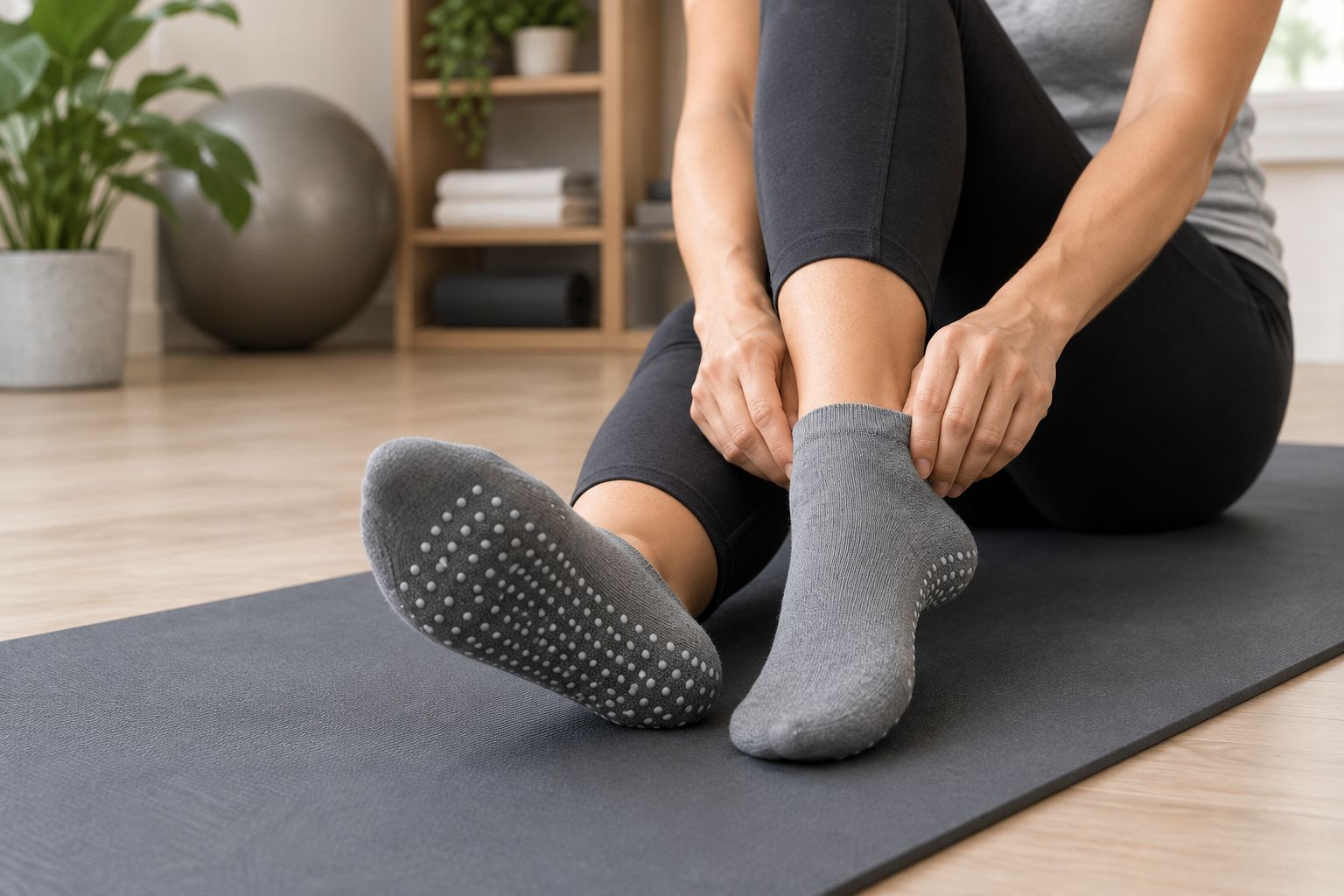
A pair that feels secure while you stand still can feel different once you start shifting your weight. In 2026, make that warm-up check part of your routine, especially if you know your feet sweat during class.
Grip socks for Pilates and Lagree
Best for: You want a sock barrier during class and your pair stays aligned with your foot as you move. Pilates and Lagree both give you opportunities to notice a poor fit when you change positions or press through your feet. A grip sock is useful only when the sock and your foot move together.
The advantage is direct: the sole grips are there where your sock meets the surface. The limitation is just as direct: those grips do not absorb every bit of sweat or lock your foot inside the fabric. If you keep curling your toes to hold the sock in place, pause and reassess the fit instead of treating that effort as a normal part of class.
California Grip Socks offers different sock styles, including shortie and tube designs. Neither length is proven here to work better for sweaty feet; choose the shape that sits comfortably on your foot, then do the movement check. The best grip sock for sweaty feet is the one that remains secure after your feet warm up.
Grip socks for yoga and barre
Best for: You want grippy socks and your class allows them. Yoga and barre involve different movements, so do not assume a pair that felt fine in one class will feel identical in the other. Check the studio’s rule first, then pay attention to the moments when your weight shifts across your feet.
A sock can feel comfortable during a standing pose yet need adjustment later. That does not mean sweaty feet make grip socks unusable. It means your own fit check matters more than a blanket recommendation for all yoga or barre classes.
Bare feet are a reasonable comparison when your studio permits them. They remove the possibility of a foot sliding inside a sock, but they also remove the sock barrier and sole grips. Pick the option that feels controlled in the class you are taking; do not keep wearing a slipping sock just because it is labeled grippy.
Why the experience varies
- Fit around your foot: Extra fabric can shift even when the sole stays against the floor. Check the heel and toe area before class and again once you are warm.
- How damp the sock gets: A pair that feels secure at the start can feel different later. Notice the change rather than waiting until you have to keep adjusting it.
- The movement: Standing still does not tell you how a sock behaves when you rise onto your toes, change direction, or press through a foot.
- The contact surface: A studio floor, mat, and piece of equipment are not the same surface. Assess your footing on what you are actually using, within the studio’s rules.
- The condition of the pair: Check the grips and the fabric. If the sole looks worn or the sock no longer fits as it used to, a fresh fit check matters more than how well it worked when new.
These factors are more useful than a universal sweat rating, which the supplied product details do not provide. Do not treat a visible grip pattern as proof that a sock will stay secure on your foot. The pattern tells you what is on the sole; wearing the sock through movement tells you how the whole pair behaves.
What should you do if your feet slide inside grip socks?
If your feet slide inside grip socks, check fit and dampness first. Make sure the heel has not shifted and that excess fabric is not bunching under your toes. If the slipping continues after you adjust the sock, change pairs or use another option your studio permits. A sole that stays planted cannot correct a foot moving within the sock.
Do not try to compensate by gripping with your toes throughout class. That changes how you move without fixing the underlying issue. Your sock should work with your foot, not demand constant attention.
Should you change grip socks after a sweaty class?
Yes, change out of a damp pair after class if it feels uncomfortable. Put the worn pair aside for washing and start your next session with a clean, dry pair. Follow the care directions for the socks you own; the information here does not establish a special wash method for every grip material.
A fresh pair also makes the next fit check easier to interpret. If the sock shifts when it is dry, sweat is not the only factor. Look at its size, shape, and condition before deciding whether that style works for you.
Can you wear the same grip socks outside the studio?
Yes, if the pair is intended for wear outside the studio and remains comfortable for you. California Grip Socks describes its socks as designed for wear both in and out of class. That does not mean a pair worn throughout the day will feel fresh for an evening workout; bring a clean, dry pair when that distinction matters to you.
In 2026, the useful habit is to separate style from the fit question. Wear the look you like, then reassess the pair for your next class rather than assuming it will perform the same after hours on your feet.
Choosing a style without guessing about sweat performance
California Grip Socks has pictured shortie and tube styles. The product descriptions identify their shape and design, not a measured sweat-management difference. Compare those visible features, then judge fit on your own feet. A shorter sock is not automatically cooler, and a taller sock is not automatically more secure.
If you are deciding between a shortie and a tube style, ask which one you can put on without bunching or repeated adjustment. The answer is personal and testable. The following styles show the available shapes; neither comes with a claim that it prevents sweaty feet.


FAQ
Can you wear grip socks with sweaty feet in 2026?
Yes, you can wear grip socks with sweaty feet in 2026. Check whether your foot stays in place inside the sock after you warm up; sole grips do not control that movement.
Do grip socks stop your feet from sweating?
No, grip socks do not stop your feet from sweating. Their grippy soles address contact with a surface, not the cause of sweat.
Are grip socks or bare feet better for a sweaty yoga class?
Choose the option that feels secure and is permitted by your studio. Bare feet remove the chance of sliding inside a sock, while grip socks add a sock barrier and sole grips.
Why do my feet slip inside grip socks?
A foot can shift inside a sock because the fit is loose or the sock feels damp during movement. Check the heel and toe area, then change pairs if adjusting the sock does not help.
Should I put on fresh grip socks before Pilates?
Start Pilates with a clean, dry pair if your feet tend to sweat. That gives you a clear starting point for checking how the pair fits once class gets underway.
Can I wear grip socks for Lagree if my feet sweat?
Yes, you can wear grip socks for Lagree if they stay comfortably aligned with your feet during class. Check your studio’s rule and reassess the fit as you warm up.
Does a taller grip sock work better for sweaty feet?
A taller grip sock is not established here as better for sweaty feet. Choose a shape that fits without bunching, then test whether it stays in place during your usual movements.
One last thing
The most revealing slip is the one you cannot see from the sole. If the grips remain against the floor while your foot moves inside the sock, changing surfaces will not fix the fit. For your next 2026 class, notice which layer moves first. That observation gives you a clear next move: reassess the sock, rather than assuming sweaty feet and grip socks cannot mix.