Yes, you can add new grip to worn socks with a coating specifically labeled for use on sock soles, but that does not restore the original factory-applied silicone. Follow the coating maker’s fabric, application, and curing instructions rather than treating any silicone or craft paint as a suitable substitute. For Pilates, Lagree, or barre, replace socks that slip instead of relying on an unverified DIY repair.
- Can you regrip socks after silicone wears off? Yes, but a DIY coating does not recreate factory-applied grip.
- Clean intact grip before deciding it needs repair; washing cannot replace missing silicone.
- Use only a coating explicitly intended for sock soles, following its application and curing instructions.
- California Grip Socks offers purpose-made grip socks for Pilates, Lagree, yoga, and barre—not a DIY repair system.
Why this matters
Your favorite socks can still look cute when their soles are ready to retire from class. Separate those decisions: keeping the fabric does not mean keeping the pair in your workout rotation.
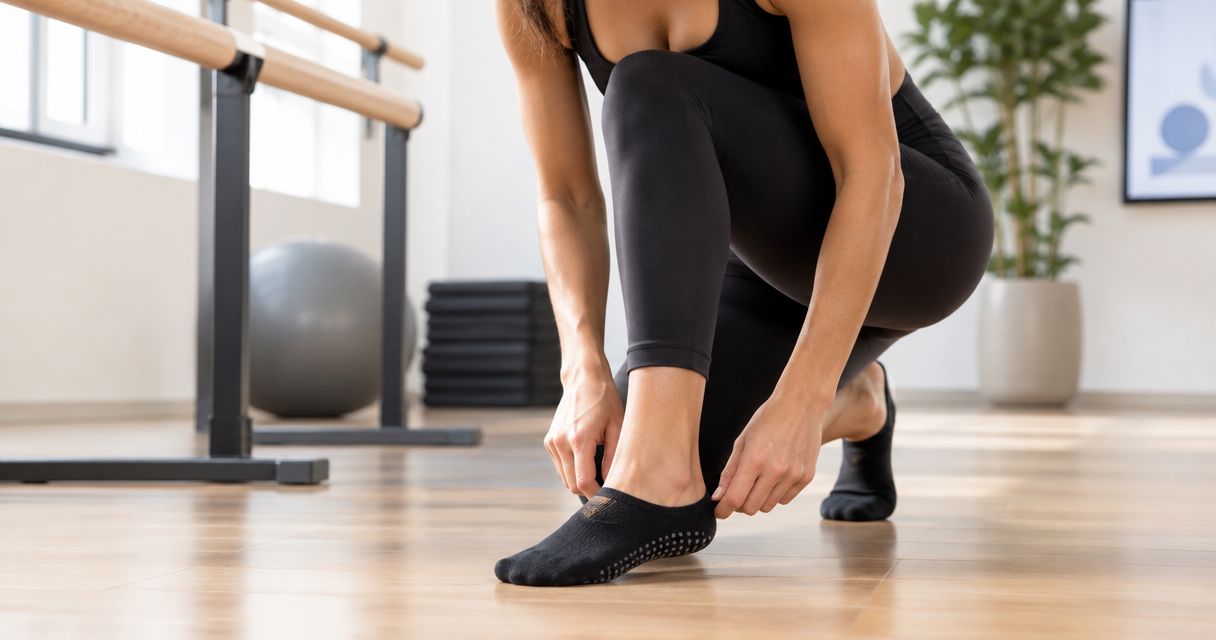
California Grip Socks sells grip socks designed for Pilates, Lagree, yoga, and barre, with styles intended for wear in and out of the studio. That makes a replacement relevant when your old pair no longer grips, but a new purchase is not the first answer to every slippery sock. Start by checking what actually changed.
For your 2026 workout routine, use a simple rule: clean what is dirty, replace what is missing, and stop using what slips. Adding a coating is a separate craft project—not proof that a worn sock is ready for a reformer.
Can you regrip socks after silicone wears off?
You can apply a new sock-compatible grip coating to suitable fabric. You cannot wash, heat, or stretch missing silicone back into place, and adding fresh material does not establish that the repaired sock performs like the original.
Before choosing a route, compare the condition of the sole with the condition of the sock itself. A pair with intact dots and surface dirt needs a different response from a pair with bare patches and a loose heel.
| Option | Best for | Main advantage | Main limitation |
|---|---|---|---|
| Clean the existing grip | Socks with intact grip and surface dirt | Keeps the original sole without adding material | Cannot replace worn-away grip |
| Apply a sock-compatible coating | A DIY project on otherwise sound socks | Adds material without discarding the fabric | Does not verify workout traction or recreate the original sole |
| Replace the pair | Socks that slip during studio use | Avoids depending on a homemade repair | Retires the old pair from grip-dependent workouts |
| Keep them as regular socks | Comfortable fabric with ineffective grip | Gives the fabric another use | Does not make the socks suitable for a grip-required class |
Choose the route by condition, not by how much you love the print. An intact sock body is useful, but it is only part of the decision.
Check both socks before choosing a repair
Inspect both socks separately. Turn each sole toward good light and look for missing material, lifting edges, or areas where fabric shows through the grip pattern.
Then check the fit. If your heel moves inside the sock or the fabric twists around your foot, an extra coating underneath does not fix that problem. Grip against the floor and fit around your foot are separate checks.
Do not deliberately slide across a floor to assess traction. If a pair has already slipped during normal use, stop using it for that activity rather than repeating the movement to see whether it happens again.
Clean intact grip before adding anything
If the grip is still attached, clean the socks according to their care label before considering repair. Remove visible lint gently rather than scraping the sole or pulling at the edges of the grip.
The goal is modest: remove surface dirt, not promise a return to brand-new traction. Washing cannot fill bare spots or reattach detached pieces. Once the socks are clean and dry, inspect them again.
Use the guide to washing grip socks without losing the grip alongside the instructions supplied with your actual pair. A general care guide does not override a product-specific label.
For a 2026 care routine, skip blanket advice such as always using hot water or always putting socks in the dryer. The care label decides the washing method. If the grip remains patchy after cleaning, more washing is not a repair strategy.
How do you add new grip to old socks?
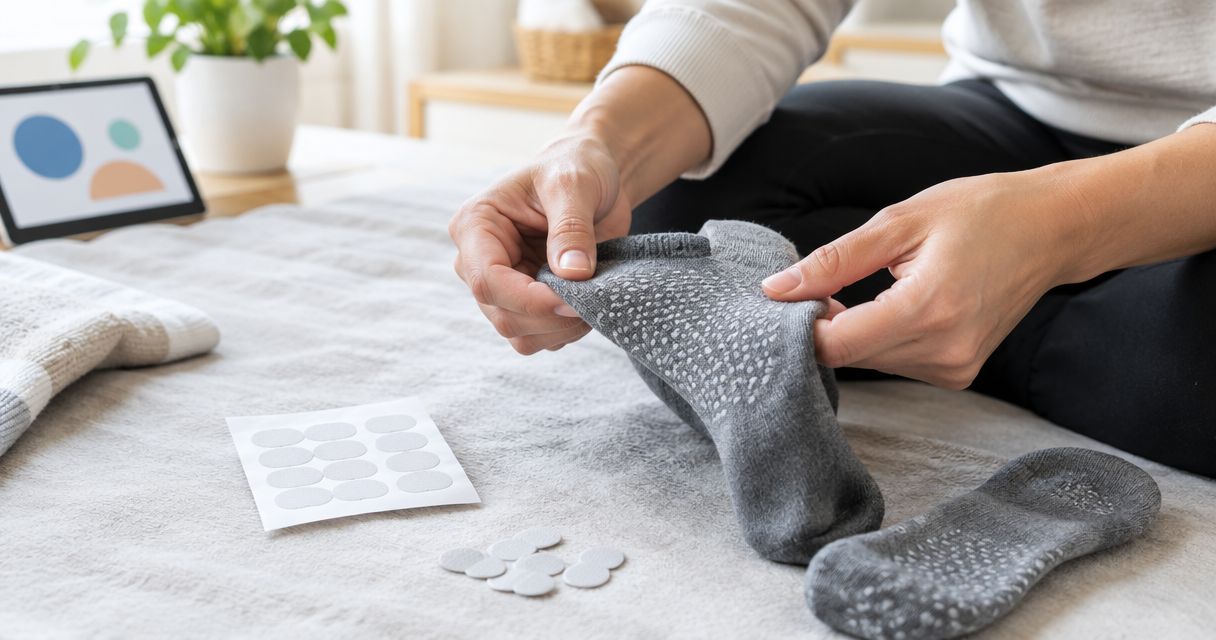
Treat regripping as a materials project. Start only when the coating maker explicitly identifies sock soles as an intended use and provides instructions you can follow.
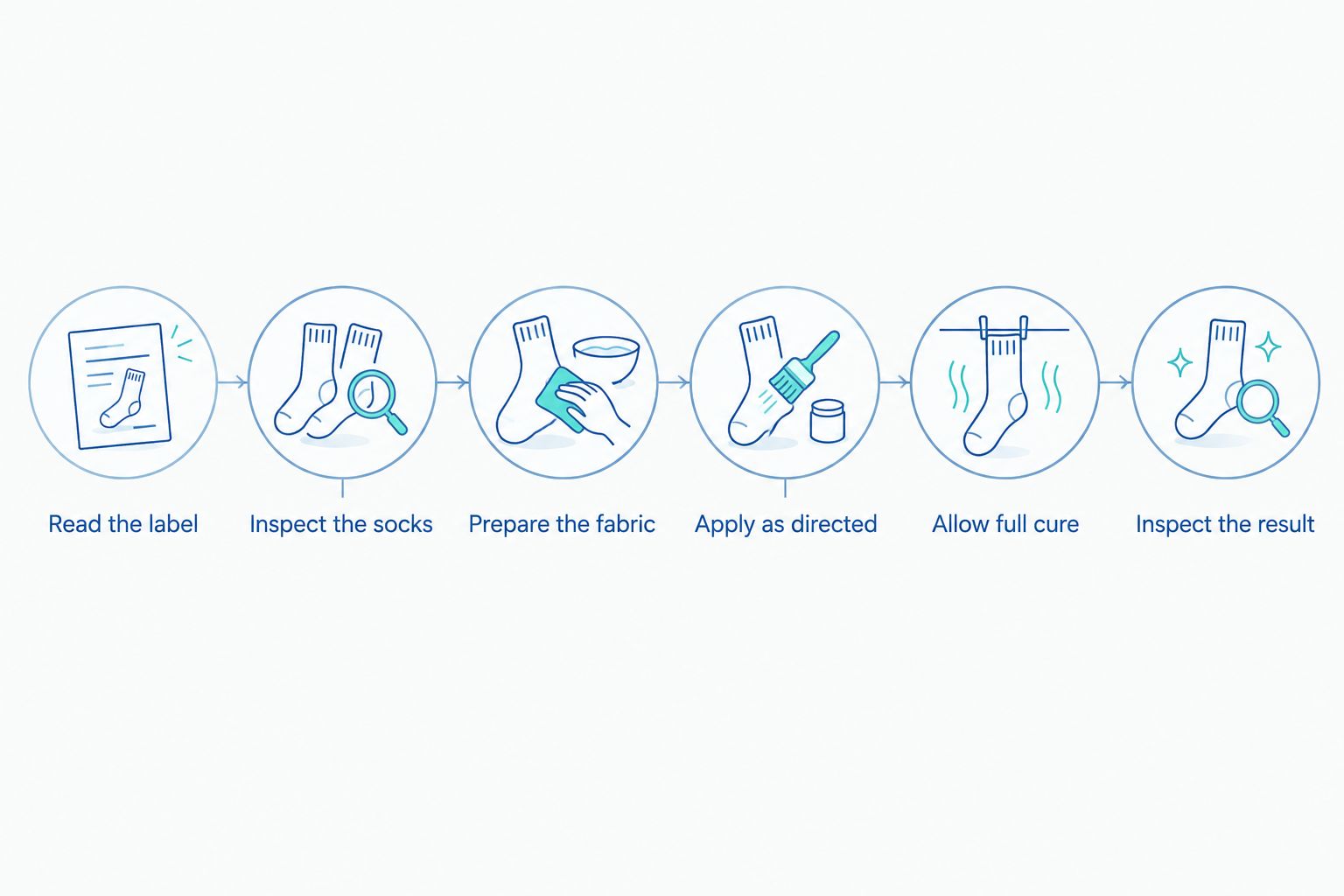
Follow these steps in order
- Read the label. Check the intended use, compatible fabrics, preparation requirements, application method, and curing instructions. A label that only says silicone or fabric paint is not enough.
- Inspect the socks. Set aside pairs with holes, loose fit, twisted fabric, or detached material that the coating instructions do not address. New grip does not repair those issues.
- Prepare the fabric. Clean and dry the socks as directed. Follow any instructions for supporting the sole while applying the coating; do not assume you should coat the sock while wearing it.
- Apply as directed. Follow the stated pattern, thickness, and method. Do not invent a thicker layer or combine coatings to make the result seem stronger.
- Allow the full cure. Use the manufacturer’s stated curing conditions and time. Dry to the touch is not a substitute for the required cure.
- Inspect the result. Look for lifting, cracking, loose material, or uncomfortable ridges. Stop using the repaired pair if the coating separates or the sock slips.
Those steps organize the job; they do not certify the finished socks for exercise. Do not use a reformer, balance exercise, or fast-moving class as your first trial of a homemade sole.
What should you avoid using?
Do not substitute household sealant, ordinary glue, or an unspecified craft product simply because it looks similar to the existing dots. A material’s appearance does not establish that it belongs on a flexible sock sole.
Avoid any shortcut that leaves you without clear instructions for fabric compatibility, skin contact, curing, or washing. You should not have to guess how to finish a coating before putting the sock back on your foot.
In 2026, the useful question is not whether a product is called silicone. It is whether the manufacturer explicitly supports the use you have in mind. If that answer is absent, skip the repair material.
When should you replace grip socks instead?
Replace the pair for studio use when it slips, when substantial grip is missing, or when the sock no longer fits securely. A familiar pair is not automatically a dependable pair.
Replacement also makes sense when a previous repair has lifted or left uncomfortable lumps. Adding another layer hides the existing problem without resolving uncertainty about the repaired sole.
California Grip Socks is for Pilates, Lagree, yoga, and barre practitioners who want purpose-made grip socks rather than a DIY sole project. The relevant advantage is choosing socks intended for those activities; the limitation is that buying a replacement does not restore your old pair or remove the need to check fit and follow care instructions.
Do not treat any replacement as permission to ignore studio rules. Ask your studio what it requires, especially if you plan to bring repaired socks. A homemade coating is not automatically accepted just because it has a dotted pattern.
Why regripping results vary
There is no single repair recipe that fits every sock and every coating. These factors determine which instructions apply and whether repair is a sensible project:
- Remaining grip: Intact material, missing material, and lifting material are different starting conditions. Follow the coating maker’s guidance about existing coatings rather than assuming a new layer belongs over them.
- Fabric compatibility: The sock’s material must match the coating’s stated uses. A product intended for another surface is not a substitute.
- Sock condition: Holes, loose fit, and twisted fabric remain problems after coating. Inspect the sock body as well as the sole.
- Application requirements: Pattern and thickness belong to the product instructions. More material is not evidence of better traction.
- Curing requirements: Follow the specified time and conditions. There is no universal overnight rule for every repair product.
- Intended activity: A casual craft project and a grip-dependent workout are different decisions. Do not infer exercise suitability from how the repaired sole looks.
Use this checklist when reviewing a repair tutorial in 2026. If it skips the coating’s instructions or promises guaranteed grip from a generic household material, choose a different approach.
Can I restore the grip by washing my socks?
Washing can remove surface dirt from intact grip, but it cannot replace silicone that has worn away. Check the clean, dry sole before deciding whether the problem is dirt or missing material.
Keep the two issues separate. A cleaner sock is not necessarily a repaired sock, and a visible grip pattern is not a reason to keep using a pair that slips.
Will DIY grip work as well as the original silicone?
Do not assume a DIY coating works as well as the original silicone. Applying material at home does not establish equivalent adhesion, flexibility, or traction.
Use the repair product’s stated purpose and instructions to guide the craft project. For class, choose a purpose-made pair rather than treating a homemade coating as an equivalent replacement.
Can I keep wearing the socks if only some dots are missing?
Missing dots do not give you a reliable pass-or-fail threshold. There is no supported percentage of missing grip that proves a pair is still suitable for your workout.
Look at the whole pair: remaining grip, fit, loose material, and any slipping during normal use. Retire slipping socks from the activity even when some dots remain.
What should you check before your next class?
Give each sock 3 checks: sole condition, foot fit, and intended use. Look underneath, put the sock on, and confirm that it suits the activity and your studio’s requirements.
Check all 2 socks, not just the one that first caught your attention. If you replace the pair, inspect the replacement too; the point is a repeatable habit, not blind trust in a fresh purchase.
Keep that check in your 2026 class routine. A quick look before leaving home is more useful than discovering a peeling repair while setting up for class.
FAQ
Can you regrip socks after silicone wears off?
Yes, you can add a coating specifically intended for sock soles, but it does not recreate the original factory-applied silicone. Follow the coating maker’s instructions and do not assume the repair is suitable for studio workouts.
Can I use household silicone sealant to repair grip socks?
Do not use household silicone sealant unless its manufacturer explicitly supports use on sock soles. The word silicone alone does not establish fabric compatibility or suitability for wearing.
How long should I let a DIY sock coating cure?
Use the curing time and conditions stated by the coating manufacturer. There is no universal curing time for every sock-repair product, and dry to the touch does not replace the required cure.
Does washing bring worn silicone grip back?
Washing does not replace worn-away silicone. It can remove surface dirt from intact grip when you follow the sock’s care instructions.
Can I wear repaired grip socks to Pilates?
Do not assume repaired socks are suitable for Pilates or accepted by your studio. Ask about the studio’s requirements and replace socks that slip rather than testing a repair on a reformer.
Should I throw away socks when their grip wears out?
You do not have to discard comfortable, intact fabric just because the grip has worn out. Keep the pair as regular socks if appropriate, but stop treating it as dependable workout grip.
Does California Grip Socks sell socks for studio workouts?
California Grip Socks sells grip socks designed for Pilates, Lagree, yoga, and barre practitioners. Choose a pair for its intended use and fit, then follow its care instructions.
One last thing
The repair decision does not have to be repair or throw away. You can retire a pair from class without retiring it from your drawer. If the fabric remains comfortable and intact, give it a use that does not depend on its worn sole gripping the floor.
Keep your class pair separate from that retired pair so you do not grab the wrong socks while packing. Cute socks can stay favorites without staying workout equipment.