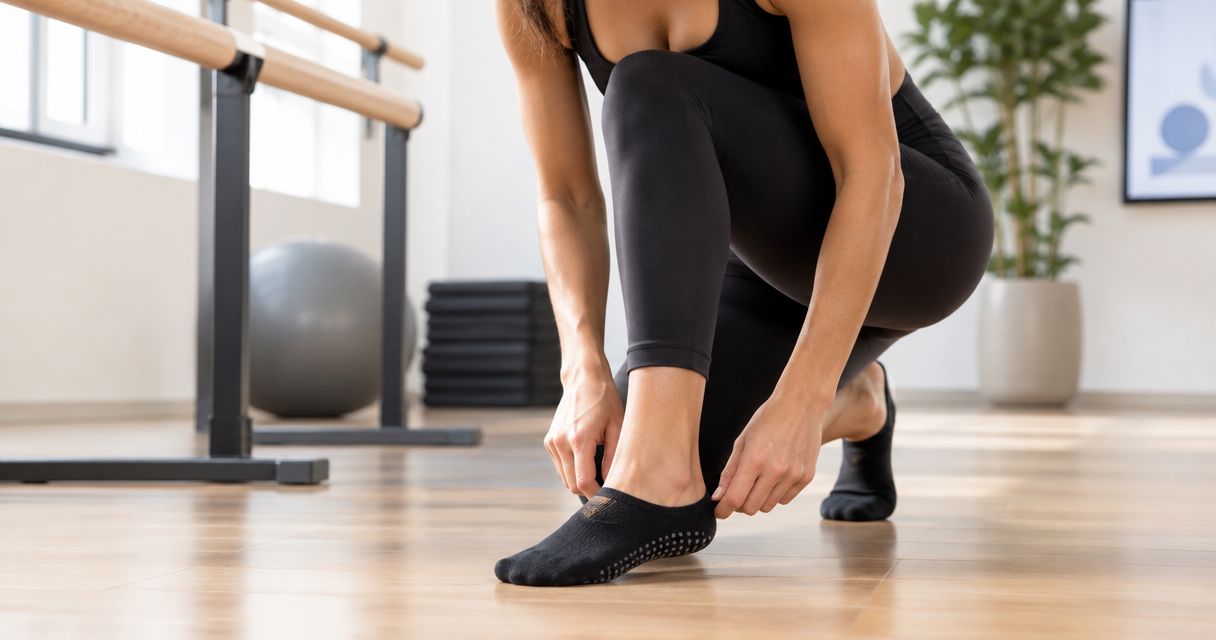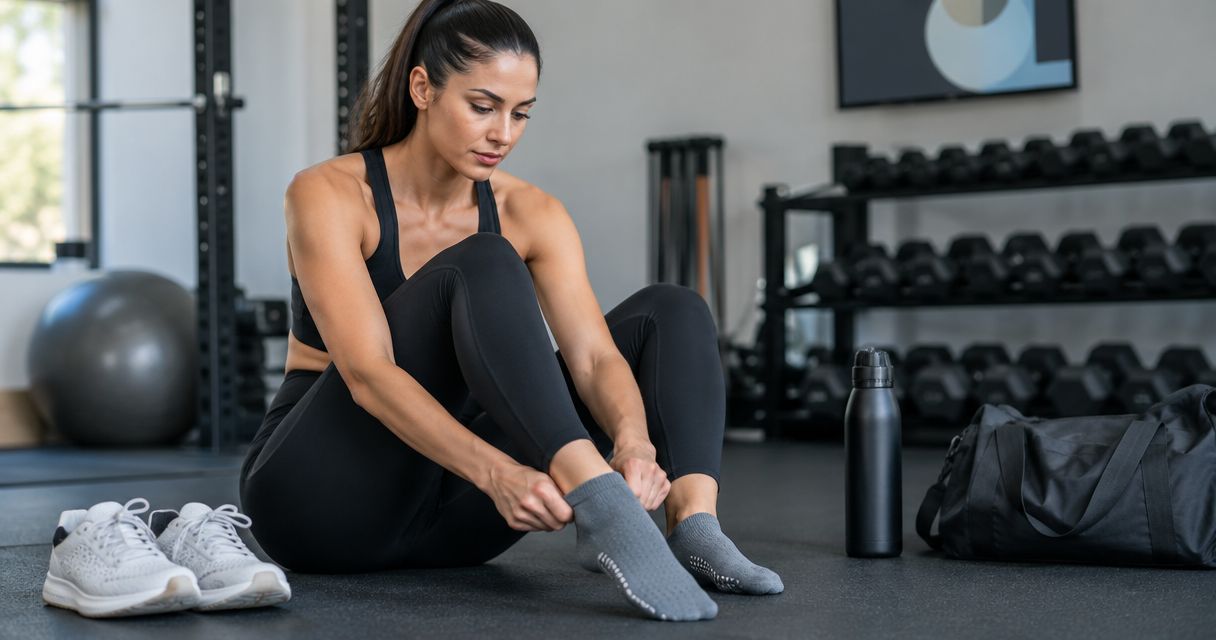
Yes, you can wear grip socks for running in 2026, but they are not the best default inside running shoes. The grips sit against the shoe’s interior rather than the ground; they do not replace a shoe that fits securely or grips the running surface. For a run, choose socks that stay put in your running shoes. Save grip socks for studio work or gym exercises where your socked feet contact the floor.
- Can you wear grip socks for running? Yes, but choose socks that fit securely inside your running shoes instead.
- California Grip Socks is best for Pilates, Lagree, yoga, and barre, where the grips contact the floor.
- For the gym, match your socks to the exercise: shoes for running, grip socks for suitable floor work.
Can you wear grip socks for running or the gym?
You can wear them, but the better choice depends on what touches the floor. California Grip Socks sells grip socks for studio practice; running shoes serve a different purpose. This comparison gives you the short answer before you pack your gym bag.
| Activity | Better starting choice | What works | What to watch |
|---|---|---|---|
| Running in shoes | Socks that fit securely inside your running shoes | Your shoes provide the contact with the running surface | Grips on a sock do not fix a loose shoe or poor shoe fit |
| Gym exercises in shoes | Socks that feel secure in your training shoes | You can keep the same footwear on for shod exercises | Check whether grip patches feel uncomfortable inside the shoe |
| Suitable sock-only floor work | Grip socks | The grips can contact the floor directly | Check the class or gym footwear rules first |
| Pilates, Lagree, yoga, or barre | Grip socks when the class permits or calls for them | The grips meet the studio surface during socked movements | A sock that twists or bunches is a poor fit, grips or not |
This is a choice between traction under a shoe and traction under a sock. On a run, your shoe’s outsole meets the ground. In a sock-only class, the bottom of your sock meets the floor. The same grip pattern cannot do the same job in both settings.
Why this matters
A sock can feel secure while you stand still and distracting once you move. In 2026, the useful question is not whether a sock is labeled for workouts; it is whether it stays comfortable during your workout. If the sock slides, bunches, or pulls at your foot inside a shoe, change socks rather than treating the grips as a fix.
The distinction also keeps a gym session simple. You do not need to treat a treadmill run, a shod strength exercise, and a permitted sock-only floor class as one footwear decision. Check the activity, check the venue’s rules, and bring the socks that suit the part where your feet actually meet the surface.
What changes when grip socks go inside running shoes?
With grip socks on a studio floor, the grippy side touches the surface you are moving on. Inside running shoes, it touches the shoe’s interior. That contact can change how the sock feels, but it does not turn the sock into an outsole or make an ill-fitting shoe fit correctly.
You can still run in grip socks if they sit smoothly on your feet and feel comfortable in your shoes. There is no need to stop a run solely because the socks have grips. But if you are choosing socks specifically for running, prioritize a secure fit in the shoe over a grip pattern designed to contact the floor.
Before a run, put on the socks with the shoes you plan to wear. Walk, then move at an easy pace. Notice whether the heel stays in place, the fabric gathers under your toes, or a grip patch creates a spot of pressure. If the combination feels wrong, switch socks before heading out; do not expect the feeling to disappear once you are running.
There is a limit to what this check tells you. A comfortable walk does not promise comfort throughout a run. It does, however, give you a direct answer about the pairing you actually own, without assuming that every grip sock or every running shoe fits alike.
Which socks make sense for a mixed gym workout?
Start with the session plan, not the sock drawer. A workout that stays in shoes calls for socks that feel good in those shoes. A class with sock-only floor work gives the grippy sole a different job, provided the instructor and venue permit that footwear.
- Running shoes: Wear socks that sit smoothly inside them. Grip socks are an option if comfortable, not a substitute for secure shoe fit.
- Training shoes: Check the sock-and-shoe combination during the movements you plan to do. A visible grip pattern says little about how the sock will feel inside that particular shoe.
- Studio floor: Consider grip socks when your feet will contact the floor without shoes. Check the instructor’s footwear guidance rather than assuming every class has the same rule.
- A session with both: Bring the footwear and socks each part requires. Do not assume a sock suited to the floor is automatically your favorite choice for the run there or back.
For a shoe-based gym session, shoe fit wins the decision. For permitted sock-only work, underfoot grip becomes relevant. That is the practical split in 2026, whether your workout happens in one room or moves between spaces.
Where do grip socks help, and where do running shoes help?
The answer follows the contact point. With running shoes on, the shoe is between the sock and the ground. With shoes off, the sock itself can contact the floor. This is why a grippy sole is useful to consider for studio practice but does not answer whether your running shoes fit.
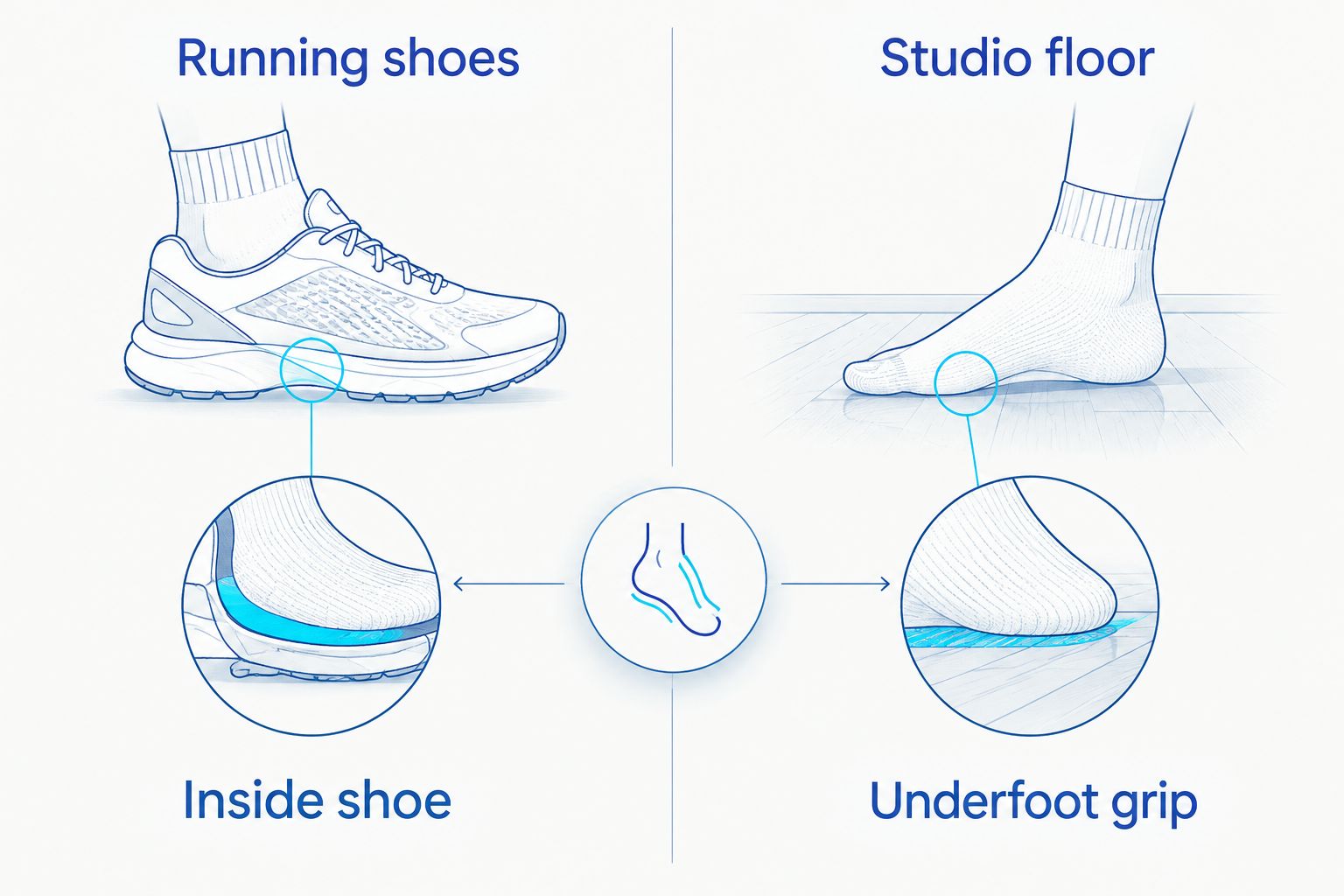
That difference does not make grip socks bad running socks by definition. It makes the grips a less useful reason to choose them for running. Judge a sock inside a shoe by its fit and feel; judge a studio grip sock by its fit and how it behaves on the permitted floor surface.
How should you choose between grip socks and running socks?
Use the activity you do most in that pair. If you are getting dressed for a run, try the socks inside your running shoes and pay attention to movement and pressure. If you are getting dressed for Pilates, Lagree, yoga, or barre, check the class guidance and make sure the sock stays aligned on your foot.
For studio wear, California Grip Socks offers grip socks in different visible styles, including The Classic Ankle Grip Socks - Grey and The Ruffle Shortie Grip Socks- Sage. The ankle pair suits someone who wants less sock above the ankle; the shortie pair has a ruffle trim. Neither name or style tells you how that sock will feel on a run, so choose running footwear separately by fit.


Want to compare grip styles before choosing a studio pair? The guide to silicone grip socks is a better next read than treating every grippy sole as a running feature. Keep the decision tied to where you will wear the socks.
Why does the right choice vary?
The same pair can make sense for one activity and feel wrong for another. These are the factors that change the answer; none requires a performance claim based on the sock’s appearance.
- Where your foot meets the surface. In shoes, the outsole contacts the ground. Without shoes, the sock can contact the studio floor. That determines whether the grips are doing the job you bought them for.
- How the sock fits your foot. Check for twisting, a heel that drifts, or fabric that gathers. A grip pattern does not hold a badly fitting sock in place on your foot.
- How the sock feels inside your shoes. Try the exact pairing you plan to wear. If the sole feels uneven or creates pressure, use a different sock for that shoe.
- Which parts of the workout require shoes. A treadmill segment and a sock-only studio segment call for different checks. Choose for each part rather than assuming one pair must cover both.
- What the venue permits. A studio’s sock guidance and a gym’s footwear rules decide what you can wear on that floor. Check before arriving if the class format is new to you.
In 2026, fit, contact surface, and class rules settle this question more reliably than a product label. California Grip Socks is best for Pilates, Lagree, yoga, and barre practitioners who want grip underfoot in class, not for runners seeking a substitute for well-fitting shoes.
Can you wear grip socks on a treadmill?
Yes, inside running shoes, if the combination fits comfortably. On a treadmill, your shoes still contact the moving belt; the grips on your socks do not. If the socks bunch, twist, or create pressure in those shoes, change socks before your run.
The treadmill does not create a special need for a grippy sock sole. Make the same decision you would for another shoe-based run: choose the pair that feels secure inside the running shoes you are wearing.
Do you need separate socks for running and Pilates?
No, but separate pairs make sense if the same socks do not suit both activities. Pilates puts a grip sock in a setting where its sole can contact studio equipment or the floor; running puts that sole inside a shoe. If your grip socks feel good in your running shoes and meet your studio’s guidance, you can wear the same pair. If not, pack a different pair for the run.
That is a comfort and use-case decision, not a rule that every Pilates participant must buy an extra category of sock. Check your class’s footwear instructions first, then decide what works inside your running shoes.
FAQ
Can you wear grip socks for running?
Yes, you can wear grip socks for running inside shoes if they fit comfortably. Their underfoot grips do not replace secure running-shoe fit or the shoe’s contact with the ground.
Are grip socks better than running socks for a run?
No, underfoot grip alone does not make a sock better for running in shoes. Choose the pair that stays smooth and comfortable inside your running shoes.
Can I wear grip socks at the gym?
Yes, you can wear grip socks at the gym when they suit the activity and the venue’s rules. For exercises in shoes, check comfort inside the shoes; for permitted sock-only floor work, the grips can contact the floor.
Should I wear grip socks on a treadmill?
Wear grip socks on a treadmill only if they feel comfortable inside your running shoes. The shoes, not the sock grips, contact the treadmill belt.
Can grip socks replace running shoes?
No, grip socks do not replace running shoes for a shoe-based run. A grippy sock sole cannot perform the role of a running shoe’s outsole.
What if my grip socks slide inside my shoes?
Change to socks that fit more securely in those shoes. Grips on the bottom do not correct a sock that twists or bunches around your foot.
Are California Grip Socks for running or Pilates?
California Grip Socks is positioned for Pilates, Lagree, yoga, and barre, with wear both in and out of the studio. For running in shoes, judge any pair by its fit and comfort inside your running footwear.
One last thing
The surprising part is where the grip goes during a run: against the inside of your shoe, not the running surface. That makes a grippy sole a poor shortcut for choosing running socks. For your next mixed workout in 2026, check the class footwear rule, try your socks inside your running shoes, and pack another pair if either part of the session calls for a different fit.